A good day in cybersecurity is remarkably bad television. Nobody sprints down a corridor. No red light rotates above a server rack. A developer ships code, an employee opens the file she needs, a finance team closes the quarter, and everyone makes it home in time for dinner. The absence of drama is the product. Kate Reed’s job is to make that absence visible.
As chief marketing officer of Delinea, Reed works in the thicket of identity security, privileged access and the growing population of machine and AI identities. The machinery is intricate because the problem is intricate: give legitimate people and systems the right access at the right moment, without leaving doors propped open for an attacker. The customer, reasonably enough, would prefer not to study the machinery. The customer would like Tuesday to remain Tuesday.
That tension has followed Reed through a career spent translating enterprise technology into consequences a human can feel. More than 15 years at IBM carried her across software marketing and into the top marketing job at IBM Security. She then became CMO at the data-management company Syniti, the security-analytics company Devo and, in February 2024, Delinea. The nouns changed. The underlying assignment did not: find the clean sentence inside the complicated system.
A storyteller trained in systems
Reed did not begin by collecting acronyms. At the University of Massachusetts Amherst, she studied history and political science. Later, while building her early career, she earned a master’s degree in communication from Clark University. That combination looks increasingly useful in retrospect. History asks why systems change. Politics asks who has power. Communication asks whether anybody understood the answer.
IBM supplied the large canvas. Reed spent more than 15 years there and eventually ran marketing for the company’s $2.5 billion cybersecurity division, leading a global organization of more than 200 people. She also wrote publicly about the smaller mechanics that keep such an organization from becoming a pageant of meetings: agile marketing, in-person team building, education and the sudden shift to remote work.
In one 2020 essay, she described Massachusetts colleagues taking over an IBM Security Slack channel for weekly work-from-home photo challenges. It is a minor anecdote, and that is why it matters. Reed’s public philosophy of work is not built only from quarterly targets. Teams require rituals, jokes, shared context and moments that remind a person there are other people beyond the glowing rectangle.
“For me, work is always about the people.”Kate Reed, marking her first year at Delinea
Her next chapters tested those habits at a different scale. At Syniti, she led an agile marketing team through a brand transformation that the company connected with its highest-ever revenue quarter at the time. At Devo, she oversaw field marketing, demand generation, product marketing, branding and communications. She was back inside cybersecurity, a field she has said she loves because it is “always changing and presenting new challenges.” For an anxious person, constant change is a tax. For a marketer with an appetite for translation, it is renewable material.
The spreadsheet needs a plot
Reed is a storyteller, but she is not sentimental about evidence. Asked how her marketing organization used analytics, she offered a brisk answer: “The short answer is we use analytics all the time.” The more revealing part came next. Metrics begin with alignment across sales, finance and customer success. A team must understand the company’s goals and how marketing contributes before it can allocate resources or measure outcomes.
This sounds less thrilling than a new attribution dashboard because it is more important. Numbers can describe activity with exquisite precision while saying very little about progress. Reed’s sequence places the shared business question first, the allocation decision second and the metric third. The dashboard becomes an instrument, not a shrine.
There is also an editorial instinct inside this operating loop. A CMO decides what the market should remember, then designs a system capable of repeating and proving it. Most enterprise software can describe itself in several hundred features. Very few buyers want to receive all several hundred at once. Clarity is an act of omission, conducted under revenue pressure.
How to sell an uneventful Tuesday
When Reed joined Delinea in 2024, the company described her assignment broadly: lead every marketing function and help expand its global footprint. Her own language was more specific. Privileged access management needed to be effective and accessible, and Delinea’s software story had to make its value in the identity market clear.
The first visible expression was “We’re On It,” a campaign Reed explained as a promise to anticipate identity risks before they become incidents. It spoke in an active voice. Threats change; identities multiply; Delinea stays alert. The customer is not buying panic. The customer is buying another party’s sustained attention.
By 2026, the framing grew quieter. “Nothing Happening is Everything” turned the lack of an incident into the headline. Reed described the idea plainly: when identity security works, developers keep building and AI initiatives keep moving. A CISO gets strong controls without becoming the department that slows the business. Security recedes into the background while work advances in the foreground.
“When identity security works as it should, you don’t notice it.”Kate Reed on Delinea’s 2026 campaign
It is a neat solution to a stubborn marketing problem. Prevention has no wreckage to photograph. Reliability produces few anecdotes. A company can always count alerts, blocked attempts and managed credentials, but the executive buyer ultimately wants continuity: the launch happened, the customer got served, the AI agent stayed within bounds. Reed’s campaign gives that continuity a name.
The idea also reflects a maturation in cybersecurity’s public language. Fear remains an easy lever, but it is exhausting, and exhaustion is a poor basis for trust. Calm can be more demanding. To promise calm, a company must be willing to discuss integration, policy, automation and access in language that does not require a decoder ring. The wit of “nothing happening” works because there is a great deal happening underneath.
The durable playbook
Reed once titled an essay “Embracing Transformation in Marketing Doesn’t Mean Rewriting the Whole Playbook.” The line could serve as a caption for her career. She has moved from a technology giant to specialist enterprise companies, from data management to analytics to identity security, without treating every new post as an excuse for corporate arson.
- More than 15 years across IBM software marketing, culminating in leadership of IBM Security marketing.
- CMO at Syniti, steering an agile team and a brand transformation.
- CMO at Devo, returning to security and overseeing the full marketing mix.
- CMO at Delinea, shaping how the identity-security company explains access, trust and growth.
The durable parts are visible. Begin with the business goal. Connect marketing to the functions around it. Use analytics throughout the work, not as a ceremonial autopsy. Give people enough context to act. Make the product story shorter without making it false. And preserve enough humor that a global organization still feels inhabited.
That last quality appears often around Reed’s public profile. A conference biography once introduced her as a technology CMO and cheese lover who brought passion, humor and creativity to work and home. It noted skiing and family road trips to ninja tournaments. Her volunteer record includes mentoring an IBM women’s group and serving youth and community organizations in Massachusetts. The details do not turn a CMO into a character from a brand deck. They make the career’s scale less abstract.
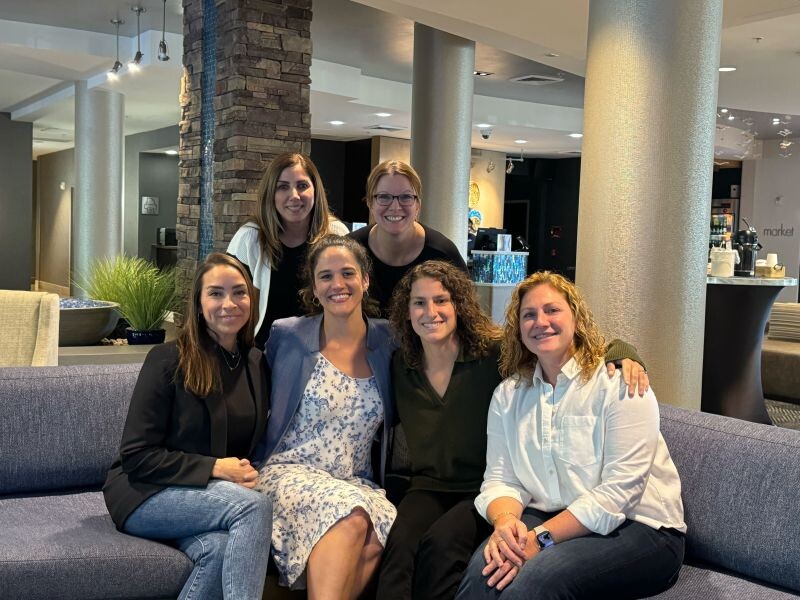
In 2026, Reed posted about welcoming new members of Delinea’s Boston marketing team and hearing CEO Art Gilliland speak about the company’s direction. She ended with a declaration: Boston is home. After a career spent helping global companies narrate change, the sentence was strikingly local.
It also hints at why her preferred unit of change is the team. Reed has written about making time for people to gather in person and about setting learning goals with the specific aim of becoming more educated. Neither habit photographs as well as a product launch. Both compound. A team that can learn together can revise a message without losing the plot; a team that trusts one another can disagree before a weak idea reaches the market. In a category built around permissions, there is a pleasing symmetry here. Good operators think carefully about access to systems. Good leaders think just as carefully about access to context.
Perhaps that is the useful paradox in Reed’s work. The systems keep getting larger: more identities, more clouds, more autonomous agents, more ways for access to sprawl. The story must get closer. One person needs something. Another person is accountable. A team wants to keep working. The security succeeds, the day stays ordinary, and ordinary turns out to be worth quite a lot.