The furniture is the first clue. Nearly 15 years before Dealer-FX joined the Snap-on family, Gary Kalk called Kate Colacelli and asked her to join his startup as employee number three. They rented an office with two chairs and a table. Then, as Colacelli later put it, they got to work. It is a wonderfully unpolished origin for a career now crowded with the language of customer data platforms, programmatic media, clean records and artificial intelligence.
Colacelli's route to the chief marketing officer's chair at PureCars is really a story about translation. She has spent more than two decades turning automotive software into an answer to a recognizable problem. A service adviser needs approval while a vehicle is still on the lift. A salesperson is busy with someone in the showroom when an email arrives. A dealership owns years of customer records, but duplicates and gaps make those records hard to use. Her marketing starts in these small, expensive moments.
She studied health promotion at Brock University, graduating in 1998, and later completed postgraduate work in corporate communications. The degree and the career may look like a lane change. Yet both fields ask a similar question: how do you turn information into action? Before Dealer-FX, she worked as a marketing manager at Marketrend Interactive. Then came the phone call, the sparse office and the long apprenticeship of building a company while building its vocabulary.
Chapter one
Turning raw ideas into a company people could understand
At an early-stage software company, marketing is rarely confined to campaigns. The product is moving, the category is still forming, and customers may describe the problem differently than the builders do. Colacelli led marketing for Dealer-FX from its beginning through its acquisition by Snap-on in 2021. Her remit grew across marketing and product teams, digital and social strategy, brand work and public relations.
Her own account of the acquisition avoided tidy mythology. She remembered hard work, some tears, many laughs and the good fortune of making friends. A former colleague added a revealing compliment: she had taken the company's raw ideas and turned them into marketing. That is a better description of the craft than most job specifications. The material arrives unfinished. The marketer finds its shape without sanding away what makes it useful.
“We rented an office, with two chairs and a table, and got to work.”Kate Colacelli, reflecting on Dealer-FX
Dealer-FX lived in the service lane, a part of the dealership where vague promises meet clocks, lifts and repair orders. Colacelli's public advice was correspondingly concrete. Text a customer for approval so a technician does not have to move the vehicle and wait. Automate follow-up on declined work because staff naturally focus on customers already walking through the door. Let people schedule and pay on a phone, because the rest of retail has taught them to expect it.
These sound like modest improvements. Together, they alter the rhythm of the operation. A quick approval protects a technician's time. A remembered recommendation creates a second chance at service revenue. A simple mobile payment removes one last queue. Colacelli's instinct is to explain technology through the interruption it removes.
Chapter two
A CMO brief measured in handoffs
PureCars appointed Colacelli chief marketing officer in September 2021. The official brief covered go-to-market strategy, brand building and lead generation. The less official challenge was larger: make a growing stack of advertising, market intelligence and customer data tools feel like one coherent answer for automotive retailers.
Within months, PureCars had announced partnerships with Disney, Amazon and Spotify and earned Google Premier Partner status for 2022. At that year's NADA show, Colacelli and colleague Justin Dabiri described a deliberate focus on doing what the company did well instead of attempting a thin version of everything. The partnerships widened the places a dealership could reach a customer. The discipline lay in connecting those channels to useful data and measurable demand.
The useful automation loop
That same logic appears in her discussion of AutoMiner, PureCars' customer data platform. The work begins by cleaning and segmenting a dealership's first-party records, then making those records useful for targeting and outreach. The phrase “first-party data” can feel sterile. In practice, it is memory: who bought what, who needs service, who may be ready to return and whether the dealership can recognize the same person across systems.
Memory becomes especially important when staff changes. At NADA 2025, Colacelli spoke about RylieAI, PureCars' conversational assistant. Her case for it was grounded in continuity. Dealerships face turnover; employees get busy; leads do not politely arrive during a quiet hour. An automated assistant can retain information, handle routine texts and emails, and move a conversation toward an appointment before handing it to the appropriate person.
“The people in the dealership have better things to do. They need to take care of the customers that are in the store.”Kate Colacelli on routine automation
The sentence sets a boundary as much as it makes a pitch. The purpose of automation is to cover repetitive administrative work and reduce dropped balls. The human remains at the important end of the handoff, taking care of the customer who has arrived. It is a pragmatic view of AI: less stage magic, more reliable colleague for the tasks most likely to be forgotten.
The operating playbook
Four things marketers can borrow
Walk the workflow
Find the approval, delay or handoff before writing the campaign. A concrete moment gives the product a reason to exist.
Clean before clever
Automation inherits the quality of the records beneath it. Reliable identity and context are part of the customer experience.
Translate into time
Explain technical value as minutes saved, follow-ups completed and fewer occasions when a customer must repeat the story.
Design the handoff
Decide where automation should stop and a person should begin. Good continuity makes both sides more useful.
Colacelli also writes. Her 2015 publication for Ontario Dealer Magazine covered social media management tools; in 2024, she contributed an article to CBT News on automotive advertising technology trends. Across that span, the channels changed from managed social feeds to connected television, retail media and AI. The recurring obligation did not: know where the customer is, understand the signal, and make the next interaction more relevant.
The people around those chapters help map the industry she has moved through. Gary Kalk recruited her into Dealer-FX. Bill Lucchini later credited her with turning the young company's raw ideas into marketing. Jeremy Anspach, then PureCars' chief executive, brought her into the executive team with a mandate to advance its strategy and brand. At industry events she has appeared beside colleagues including Lauren Donalson, Justin Dabiri and Hannah Lifson, making the work a conversation among product, customer experience, partnerships and marketing rather than a solo CMO performance.
That collaborative pattern matters in automotive retail because no customer journey belongs to a single department. An advertisement may create the first signal, a website may capture it, a customer record may enrich it, and a salesperson or service adviser may complete the exchange. A break between any two of those points can make an expensive campaign look ineffective or a familiar customer feel unknown. Colacelli's subjects keep crossing those departmental borders: shared data, connected media, automated outreach and reporting that ties activity back to an outcome.
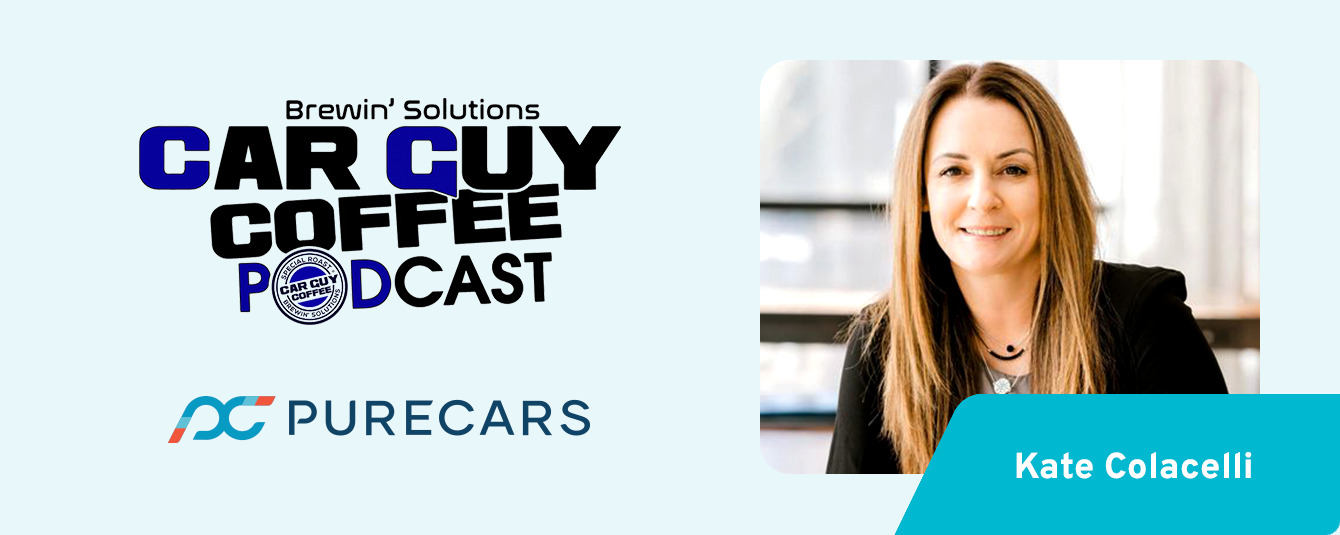
By January 2026, in another Car Guy Coffee conversation ahead of NADA, she and Lifson were talking about change in the industry and the persistence of relationships. It is an apt pairing. Marketing technology races toward faster identification, prediction and response, while the trade show still gathers people into booths and interviews. The channels evolve; trust still has to move between people. Colacelli's public work treats those facts as compatible. Better systems can remember more of the relationship, and better operators can decide what to do with that memory.
There is a temptation in marketing technology to confuse a longer feature list with a clearer future. Colacelli's career offers a useful corrective. Dealer-FX began with a table, two chairs and a small team close enough to hear every problem. PureCars operates across a much broader field of media and data, but her strongest explanations still return to the service adviser, the busy manager and the customer waiting for an answer.
That may be the durable skill underneath the titles. She can stand inside the complexity without writing from its point of view. The customer does not wake up hoping to experience a customer data platform. The employee does not dream of navigating another dashboard. They want the right detail to survive the handoff, the message to arrive while it matters and the work to keep moving.
A career can accumulate technology without becoming about technology. Colacelli's began with unfinished ideas in a nearly empty office. It now includes AI conversations, identity resolution and cross-channel campaigns. The through-line is simpler: listen for where the operation loses time or memory, then make the product understandable by showing how it gives some of both back.