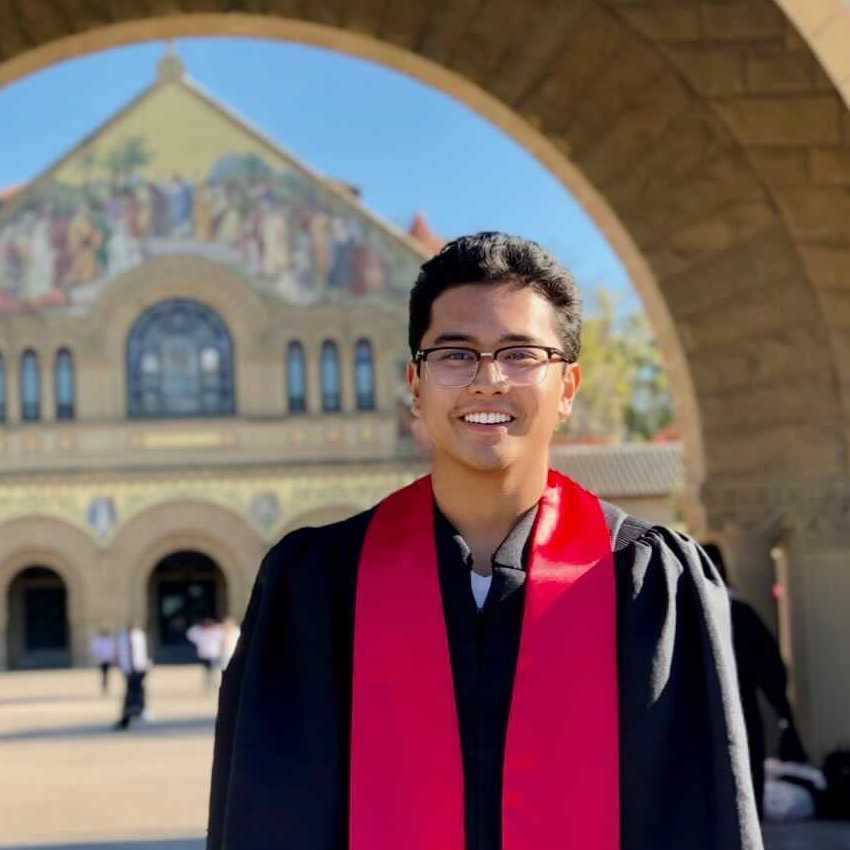
Compliance is where startups go to wait. A SOC 2 report can take months, a stack of screenshots, and a lawyer's worth of billable hours. Karun Kaushik runs Delve, the San Francisco company betting that all of that is a software problem in disguise - and that AI agents, not junior consultants, should be the ones chasing evidence across your Slack, your Google Drive, and your email.
Delve gives companies AI agents that behave like a new hire who actually read the handbook. They learn the shape of a business, wander through its fragmented systems, and handle SOC 2, HIPAA and ISO 27001 work from start to finish. The pitch is speed: get compliant in days, not months. Kaushik's framing for why the old way breaks is tidy.
“
Compliance frameworks are standardized. Businesses aren't. That mismatch is why traditional software breaks down and teams fall back to duct-taped workflows across email, Slack, and shared drives.
Karun Kaushik, CEO of Delve
He likes to compare Delve to what TurboTax did for tax law - a platform built on top of a rulebook so ordinary people don't have to become experts in the rulebook. The longer view is bigger than checkboxes. Kaushik talks about closing the gap between security and innovation, so founders can build in regulated industries without treating regulation as a wall.
“Very few people are building strongly in the regulatory space,” he has said. “It's like, how do we actually safely build products that change the world?”
The pivot that made the company
Delve was not supposed to be a compliance company. In 2023, Kaushik and his co-founder Selin Kocalar were building an AI medical scribe - software to take clinical notes off a doctor's hands. The product worked. The paperwork didn't. When they hit HIPAA compliance head-on and found it costly, opaque, and slow, they did the thing good founders do: they treated their own pain as the actual market.
The scribe became the story of the pivot, and compliance became the company. They applied to Y Combinator, dropped out of MIT, and started building the thing that had been blocking them.
Impact = Value × Volume
Kaushik's operating equation, verbatim
That equation is how he talks about what to build. “It's a function of how many people can you touch and at what magnitude,” he says. Compliance touches almost every company that wants to sell to a bigger company. High volume, real value. The math, by his own rule, works.
The unconventional runway
Kaushik didn't arrive at MIT the usual way. He left a competitive high school and stacked roughly 25 community college classes instead. He did AI research - including work on detecting COVID and pneumonia from chest X-rays - before enrolling at MIT as a pre-med. There he met Kocalar in their first week. Two years later they were gone, building out of a dorm room.
The through-line from X-rays to audit trails is more coherent than it looks. Both are about taking a hard, high-stakes, expert-only process and making it legible to a machine - and then to everyone else.
The speed, and the scrutiny
What happened next was fast even by San Francisco standards. Y Combinator's Winter 2024 batch. Hundreds, then more than a thousand customers. A New York Times feature. In July 2025, a $32 million Series A led by Insight Partners at a reported $300 million valuation. In early 2026, both founders landed on the Forbes 30 Under 30 list for AI.
Speed cuts both ways. In 2026 Delve became the subject of anonymous whistleblower posts questioning its audit practices, and the company was removed from the Y Combinator directory. Kaushik pushed back publicly, characterizing the posts as a targeted attack built on fabricated and cherry-picked claims rather than a good-faith account. The dispute is unresolved in public - a reminder that in compliance, the product and the promise are the same thing.
On the record
In 2026, Delve faced anonymous online allegations about its compliance and audit practices and was removed from the Y Combinator directory. Kaushik denied wrongdoing, calling the posts a targeted cyberattack with fabricated and cherry-picked claims. These allegations are contested and, as of this writing, publicly unresolved.
How he sells
Kaushik is unapologetically sales-forward. His most quoted line about product conviction runs through family: “If your product is the best, then you wouldn't let your uncle buy another product because he's just going to have a worse experience.” Sell to your uncle. Believe the thing you're selling is genuinely the better deal, or don't sell it. It is either a founder's north star or a hostage to fortune, depending on the week.
And the persistence gospel, the one every young founder eventually preaches: “The single biggest factor into whether you succeed or not is if you just kept going through the process.” He would know. He kept going through two schools before he found the process worth finishing.