A cup of coffee can buy a surprising amount of office space, provided you drink it slowly enough. Kajetan von Armansperg remembers spending hours in Berlin cafés with a single cup while he and Jenny von Podewils worked on their young company. He allows that the owners were less delighted by this arrangement. Leapsome’s early economics were already producing a difference of opinion.
The neat version of the story would make those hours the opening move in a carefully designed plan. Armansperg offers a less polished explanation: “We stumbled into bootstrapping.” They wanted enough progress to show investors. Customers began paying. The next version of the product became possible. Eventually, the business could fund its own growth.
The product leader notices the missing conversation
Before Leapsome, Armansperg led the product team at Funding Circle, a marketplace connecting small businesses with capital. He had studied at HEC Paris and the University of Mannheim. His working life put him close to the machinery of a growing technology company: what gets built, what customers need, and how teams organize themselves to deliver it.
The question that led him toward Leapsome concerned the people doing that work. He and Podewils had encountered shortcomings in feedback and development in their previous management roles, at Funding Circle and ZEIT respectively. Skills were changing. People needed to keep learning. The everyday arrangements for helping them do so had not kept pace.
In 2016, they founded Leapsome in Berlin. By 2018, Armansperg was describing a platform that combined feedback, reviews, surveys, goals, and coaching conversations. Employees could give each other feedback visible to the recipient; development recommendations would help make that feedback useful. The premise was practical: a conversation about improvement should lead somewhere.
Work produces plenty of information about people. Turning it into something a colleague can act on takes more care. That gap gave the founders a problem substantial enough to build a company around, and familiar enough to recognize in their own working days.
Ten years of acquaintance, one shared document
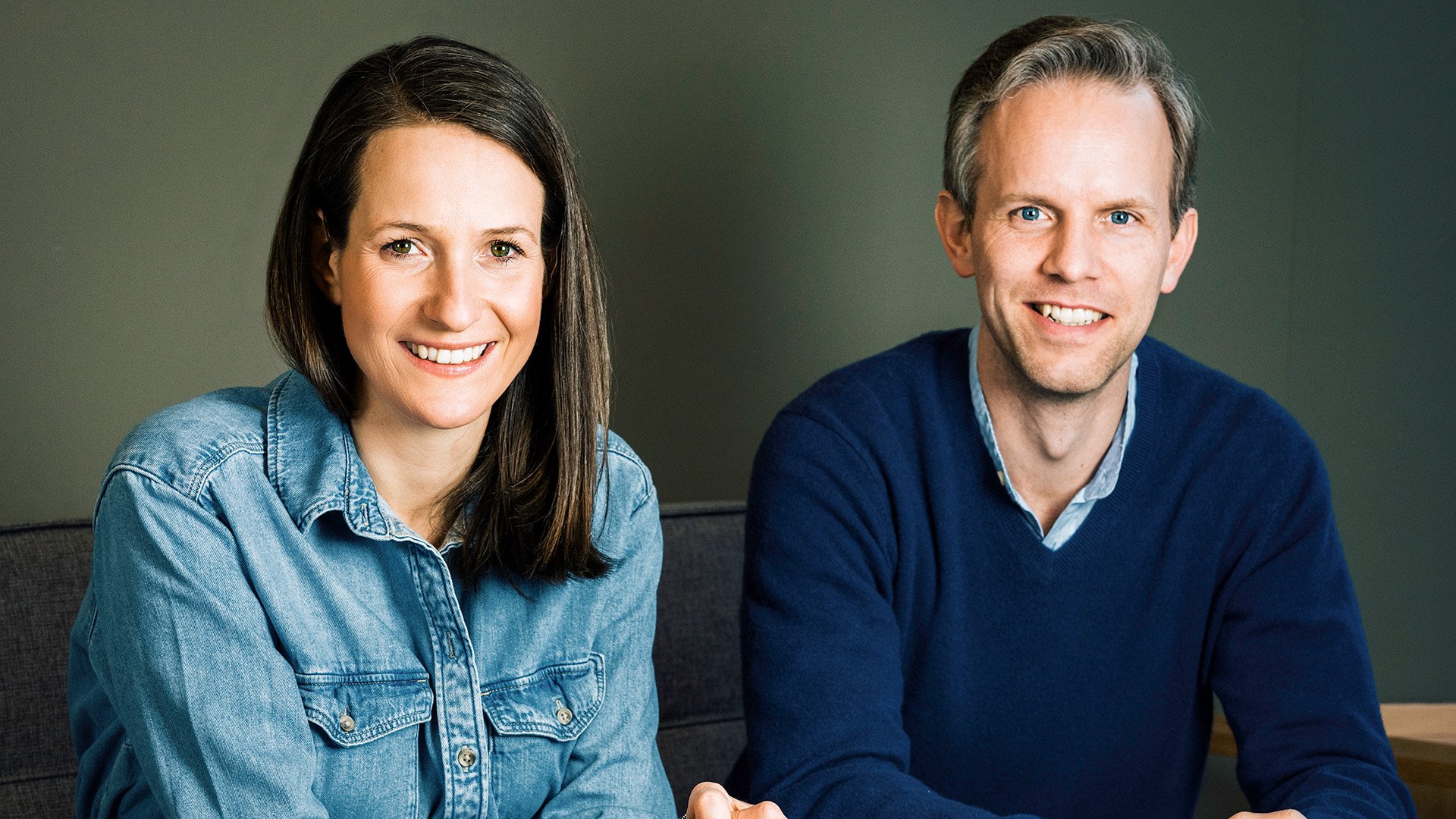
Armansperg and Podewils had met by chance ten years before starting Leapsome. They stayed in touch. When both became ready to take a business risk, the acquaintance became a partnership. Knowing someone for years, however, does not automatically settle who will handle a difficult customer or how a disagreement will end.
On a grey November afternoon in Berlin, they sat down with tea and a Google document. They recorded their reasons for building the company, the values they wanted to uphold, and their responsibilities. Podewils would focus on sales, people, and operations. Armansperg would concentrate on product, marketing, and customer success. They agreed on equal ownership and considered how to resolve a deadlock.
They also made room for regular feedback. Armansperg admits that his tendency toward brevity could leave people without enough context. Podewils pointed it out early. Here was the co-founder of a feedback business receiving a useful demonstration of its underlying purpose.
There is something pleasingly unceremonious about this foundation. The founders had a document to refer to and conversations in which to test it. Their relationship needed attention alongside the product. A company selling better communication would have looked rather odd if its two creators had relied entirely on telepathy.
The company learns to take notes
Another habit emerged from the limits of a two-person team. Both founders could not attend every useful conversation. They split up customer meetings and user testing, wrote down what they heard, and read each other’s notes the following morning over coffee. A conversation one founder missed could still change what the other understood.
The resulting Google documents ran to hundreds of pages. Later, the company moved its shared knowledge into Notion and linked material to onboarding checklists. Armansperg compared the detail of its internal documentation to an Apollo Lunar Module manual. He also acknowledged that information aged quickly and parts of the collection needed better organization. Even a moon-module metaphor requires maintenance.
The method gave learning a life beyond the person who first acquired it. Notes could help a new colleague, clarify a recurring question, or spare someone another meeting. This was particularly useful in a business that had to make a small team’s time go further.
Documentation rarely gets the glamorous chair at the startup dinner party. In Armansperg’s account, it earns a seat by doing a job. The company could remember what it had learned. Its founders could spend more time listening to customers and less time retelling yesterday’s conversation.
conversations→Shared
notes→Morning
reading→Product
revisions
Customers buy the next chapter
By March 2022, Leapsome had more than 1,000 customers across Europe, the United States, Asia, and Australia. Spotify, Unity, and Mercedes-Benz were among them. The company reported that it was profitable and that revenue had tripled in 2021. The café work had become a business with an international customer base.
Customer revenue had paid for that progress. For a software company, the arrangement has an appealingly direct logic: businesses pay to use a product, and those payments support its improvement. It also imposes a demanding rhythm. Hiring, development, and expansion must fit the resources the company actually has.
Armansperg did not treat this history as an oath against investment. He described it as a pragmatic approach when Leapsome announced its first funding round. The founders had continued to assess when outside capital would be useful.
A planned New York office and further American expansion changed the calculation. In March 2022, Insight Partners led a $60 million Series A, with Creandum and Visionaries Club participating. A funding announcement can make the earlier years look like a waiting room. Those years had already produced the product, the customers, and a reason to expand.
“We have always been bootstrapping pragmatically, and not dogmatically”
Kajetan von Armansperg · March 2022
Eight weeks on the fundraising clock
When Armansperg later shared the fundraising story, he included the pitch deck. He described a process with a deadline: two weeks of preparation, two weeks talking to investors, and four weeks of due diligence. The founders consulted people with more experience and selected investors for their fit with the company, software experience, and presence in the United States.
His account contains a small indignity familiar to anyone who has labored over a presentation. The deck carefully developed its argument. Viewing data then suggested that readers hurried past much of it and spent their time on the business metrics and the team. The slides had an audience with its own editorial priorities.
Most pitches took place over Zoom, with the founders in separate phone booths. The preparation was useful; the meetings still had to be done. Armansperg also stressed the importance of the moment: this happened in early 2022, under funding conditions that would soon change.
His willingness to share the materials gives the achievement some working parts. Other founders can see the questions, the preparation, and the limits of the example. A successful round becomes something more useful than a photograph of a large number.
preparing
with investors
of due diligence
The year the smooth curve wobbled
The following chapter complicates the tidy upward line. Looking back on 2023, Armansperg said Leapsome had continued to grow, but more moderately and unevenly. It had lost relatively few customers. Winning new ones had fallen short of the plan.
After years of strong growth, that required an adjustment. So did the company’s own expansion. Many new colleagues had arrived after the funding round, and internal processes needed time to work at the larger scale. A company devoted to helping organizations develop was having to develop its own organization.
There were tangible gains, too: a New York office, a carefully furnished Berlin workplace, and a gathering near Berlin that brought the two teams together. He recalled the meeting as a striking moment, given how recently Leapsome had been a much smaller group.
Armansperg’s retrospective allows both things to stand. The company had expanded. Some expectations had proved harder to meet. He continued to value the discipline of scarce capital: small teams, a clear focus, and pressure to use resources efficiently. Money had changed the company’s options; it had not removed the work of choosing among them.
An AI enthusiast with a people problem to solve
In that same retrospective, Armansperg described having acquired an internal reputation as an AI enthusiast. He pointed to concrete tasks: summarizing survey comments, helping formulate feedback, and drafting goals. His interest had a recognizable product manager’s shape. Which part of the work could become easier?
In October 2024, he announced Leapsome’s HRIS in early access. An HR information system supplies the employee records and administrative processes around which other people tools can operate. He described the move as a response to what HR leaders had been telling the company: disconnected systems created extra work and made a coherent people strategy harder to execute.
That widens the problem he started with. Feedback and development sit inside an organization full of records, workflows, and decisions. Connecting those pieces is a larger software task. As Leapsome’s scope grows, the original question remains recognizable: can the tools help people understand their work and make better use of the time they spend doing it?
A choir director joins the agenda
Armansperg’s interest in company life also extends to activities with less tidy outputs. In an account of a Leapsome gathering in Portugal’s Alentejo region, he described roughly 120 colleagues from Berlin and New York spending a few days together. A choir instructor helped them attempt an impromptu performance. He expressed relief that no recording survived.
Recalling other offsites, he mentioned short films, a pub quiz, wine tasting, and games. He gave special attention to the conversations that happen between scheduled activities: over lunch, during a morning run, or beside the pool. Those encounters do not arrive with a clear measurement attached.
He also described changing his own approach to founder presentations. After a period of meticulous preparation, he had returned to more improvisation and felt it landed more naturally. Even the person giving the strategy talk could learn to leave a little space around it.
The detail belongs beside the documents and the software. Armansperg likes writing; he once kept travel diaries, saving drafts carefully against internet-café power cuts. He now writes about building a company while acknowledging that public thought leadership does not come naturally to him. His useful material comes from things he has actually tried.
That makes the choir a fitting place to leave him. There is preparation, a room full of colleagues, and an outcome he cannot entirely control. For a founder whose business began with feedback, another opportunity to listen seems a reasonable use of the afternoon.
Keep reading, keep listening
Essays, conversations, and the work in progress.
- Leapsome · official website
- Kajetan on LinkedIn
- His essays on Medium
- The early coffee account
- How the founders work together
- Notes, documentation, and learning
- The first fundraise and pitch deck
- The 2018 founder interview
- The March 2022 funding announcement
- His account of 2023
- The HRIS announcement
- Team offsite reflections · reposted by Offside
- Venture Europe · interview with Kajetan