The useful thing about a long career is that, eventually, the detours begin to look like the route. Julie-Ann Cabana started in 1998 at Origenix Technologies, a biotechnology company in Montreal. The job was administrative. The destination was not yet marketing, much less the executive team of a research organization. She had studied kinesiology on a pre-med path and had been accepted to medical school, but chose the business side of life sciences. That choice gave her a different kind of laboratory: clients, teams, sales conversations, and the difficult work of explaining what a technical organization can actually do.
By 2003, at CTBR Bio-Research, she was in account management. That role placed her close to the exchange where most corporate language gets tested. A capability deck can be immaculate, yet a buyer still needs to know who will answer the phone, how a handoff will work, and whether the promised coordination is real. Cabana moved from those conversations into leading marketing for the Montreal facility, carrying the texture of the sale with her.
Her career has since crossed preclinical services, global marketing, business development, and commercial integration. The common craft is translation. She translates scientific complexity into a proposition, operations into a promise, and groups of specialists into a story a client can remember. That work became especially visible in 2019, when she helped several businesses speak under the Altasciences name.
“No matter where you are in the world, the most impactful messages are those that feel human.”Julie-Ann Cabana
The six-year detour
In 2008, Charles River Laboratories sent Cabana to China to help establish its Shanghai location. She served as Director of Business Development, then as Head of Global Marketing for the company's preclinical division. What might have been a finite overseas assignment expanded. In 2011, she joined WuXi AppTec in Suzhou as Executive Director of Business Development for Preclinical Services, managing people in China and the United States.
She has said she loved living in China and did not want to leave. The move home came through a durable professional connection: Chris Perkin, her former boss and mentor, had become Altasciences' CEO and offered her an opportunity in 2014. She returned to North America as Executive Director of Business Development, initially leading that work for the Kansas City operation.
There is an operator's logic in the sequence. Cabana did not learn the business from one function or one market. She saw how the same expertise had to be understood by teams separated by geography, culture, and incentives. Marketing arrived after account management and beside sales, not above them. Years later, she described moving fully into marketing as the chapter that felt most natural because it let her work with sales and operations, then turn capabilities and accomplishments into stories that made sense.
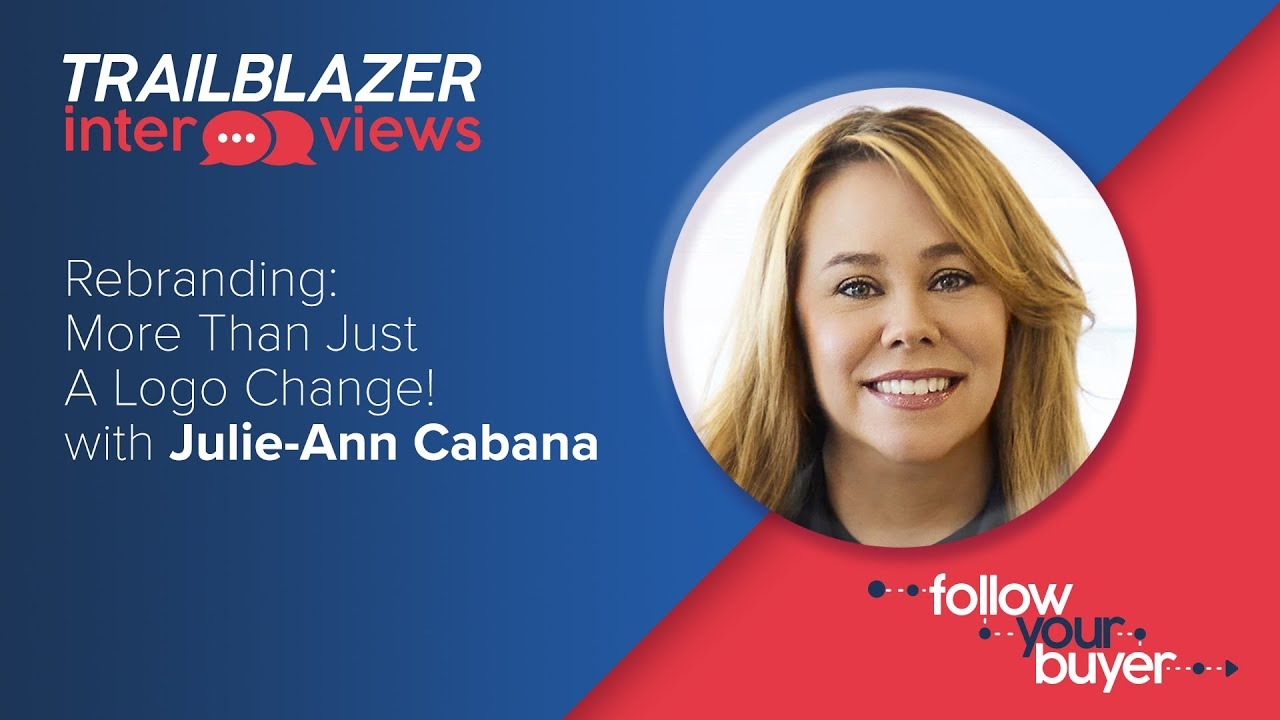
One name, several realities
By 2017, Cabana was Vice President of Marketing and Commercial Integration. The title contained the assignment. Altasciences had brought together capabilities in preclinical work, clinical pharmacology, bioanalysis, formulation, manufacturing, and supporting services. The company wanted clients to experience those capabilities as a coordinated whole. Its identity, however, still carried the seams.
The 2019 rebrand was a bid to make the outside match the inside. Client and third-party feedback indicated that the existing identity did not fully convey the company's personal approach or its effort to integrate sites and services. Cabana's team built the message around “Moving in Unison.” The visual mark used green ribbons joining to form an A. Green carried associations of life, growth, harmony, and success, while also creating distance from the sector's familiar blue palette.
The brand operating system
The bars above are an editorial model, not company performance data. They show the priorities visible in Cabana's public explanation of the work: first make the integrated model understandable, then give it a human voice, then make its visual language recognizable. The order matters. Distinctive design can attract a glance, but it cannot repair a proposition that the organization itself does not support.
Cabana framed the intention plainly at launch: reflect the everyday scientific heroes who make the work possible, highlight partnership, and keep the human aspect visible. Lifestyle imagery replaced anonymous technical abstraction. The message described coordination rather than merely listing services. A logo change became evidence of a larger commercial integration project.
The most transferable part of the exercise is the research beneath the reveal. The company did not begin with a mood board and work backward. Feedback had identified a gap between the business clients experienced and the identity they encountered. That gap became the brief. The new language needed to hold scientific standards, flexibility, coordination, and personal service in the same frame. It also needed to work across sites whose histories had not begun together.
This is where Cabana's commercial-integration remit mattered. A pure communications exercise might have polished each capability separately. Integration asks a more demanding question: what changes for the client when these capabilities belong to one coordinated organization? The answer was fewer seams, a clearer path, and teams moving together. “Moving in Unison” could function as a line in an advertisement because it first described an intended way of working.
“The intention of our brand is to reflect the everyday scientific heroes that make drug development a reality.”Julie-Ann Cabana, at the 2019 brand launch
A marketer close to the machinery
The phrase “human-centered marketing” can become soft unless someone attaches it to choices. Cabana's choices are concrete. Put faces to expertise. Let scientific and operational staff speak. Use video, audio, social posts, and accessible formats alongside technical papers. Show people whose work would otherwise be compressed into a capability label. Keep humor available without making light of the work.
This is not an argument for removing detail. It is an argument for giving detail a guide. In complex business-to-business sales, the audience may include scientists, operators, procurement teams, founders, and investors. Each needs a different entry point, yet all need confidence that the organization behind the message can execute. Cabana's background helps her build both halves: a story with a person in it and an operating model beneath it.
Her public writing offers the same lens on management. She praises colleagues who challenge her thinking, ask the next question, and notice what she misses. The foundation, she writes, is trust, candor, and a shared belief that one person's win can belong to the group. This is a revealing management preference. Agreement is less valuable than productive friction, provided care holds the room together.
When she appeared on a 2025 industry magazine cover, Cabana redirected the recognition to the team. She described the moment as a reflection of the marketing group's collective creativity and dedication. The group is deliberately mixed: strategists, creators, designers, digital specialists, and collaborators. Its leverage comes from the combination, not from pretending each person can do the same job.
That composition also explains the range of outputs around the brand. A technical article can establish depth. A short video can make an expert familiar. A podcast creates room for a longer conversation. A conference appearance brings the company into a professional community. None of these formats replaces the others. Together they let the same operating truth meet audiences at different levels of attention. Cabana's role is less like running a campaign factory and more like conducting a translation system.
The lesson worth stealing
Cabana's career makes a useful case for proximity. Stay close to the client long enough to learn which claims survive contact. Stay close to operations long enough to know which promises can be kept. Work across enough contexts to separate local habit from universal need. Then use marketing to make the resulting truth easy to recognize.
The temptation in a technical company is to equate seriousness with distance. Cabana's work suggests another route. Expertise can be rigorous and still have a face. A brand can be warm without becoming vague. A team can use personality while respecting the complexity of what it sells. Those are not cosmetic decisions. They change whether a buyer understands the organization and whether employees recognize themselves in its story.
Her personal maxim is “Take a chance, give it your best, and you'll never have regrets.” It fits the geography of her career, but it also fits the choices inside the Altasciences brand: move to another continent, choose an unexpected color, invite technical colleagues into the foreground, and let a compact team experiment with formats that a conservative category might avoid.
The detours now form a clean line. An administrative beginning taught her the value of access. Account management taught her the buyer's questions. China widened the frame. Business development connected the offer to the market. Commercial integration revealed what the brand needed to explain. By the time Cabana became Chief Marketing Officer in 2021, the title named work she had been approaching for more than two decades: helping complicated people do complicated work, then finding words simple enough to travel.