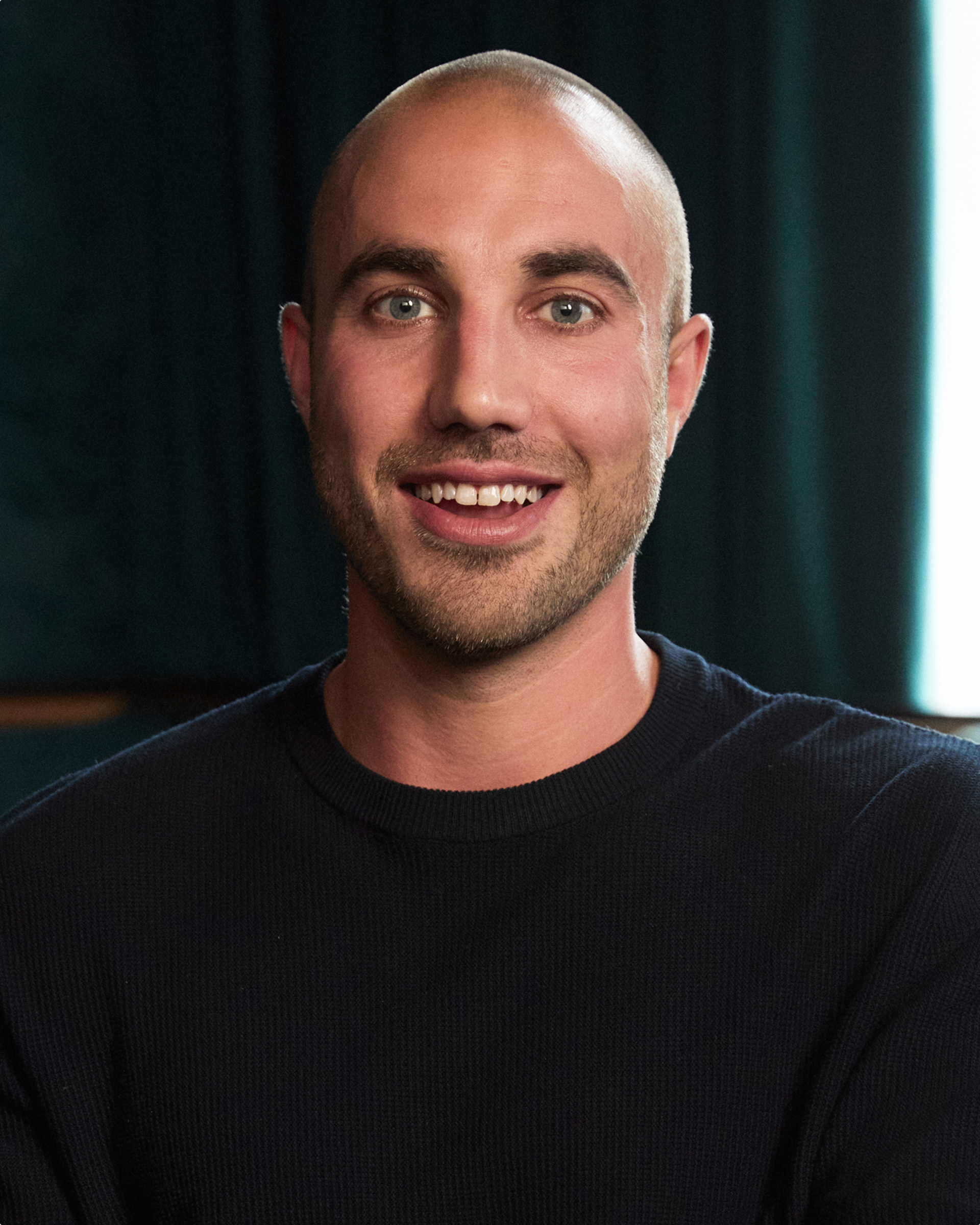
He made sandwiches at Subway. Not as a metaphor - as his first job. Then he went to UC Davis, studied International Relations and Cultural Anthropology, and somehow ended up on the shortlist of people you call when a Series B company has a world-class product and a go-to-market strategy that isn't working.
Joubin Mirzadegan has spent his career at the unglamorous seam where great technology meets the real world. Not in a boardroom debating TAM. In the field, building sales teams, hiring reps, drilling pipeline, and turning technical founders' brilliant ideas into something that actually scales. The two acquisitions - Bracket Computing (by VMware) and Evident.io (by Palo Alto Networks) - were not accidents. They were the residue of a relentlessly well-built go-to-market engine, running at every company Joubin touched.
At Palo Alto Networks, he ran the Central US cloud business. He inherited one enterprise account executive and $2M in ARR. Four quarters later, he had twelve reps and $50M. That's not a typo. That's not a rounding error. That's what happens when someone who deeply understands how buyers think, how sellers fail, and how organizations actually make purchasing decisions gets to run the play his way.
Kleiner Perkins came calling in 2019. They didn't need another investor who could read a cap table. They needed someone who could sit across from a brilliant technical founder and help them understand why their product, as good as it was, wasn't selling. Joubin joined as Go-to-Market Operating Partner - a title that undersells the actual job, which is closer to: coach, therapist, strategist, and occasional truth-teller to some of the most successful founders in Silicon Valley.
He speaks English, Farsi, and Spanish. He moved through Chicago, San Diego, and San Francisco, calling each home. He has an anthropologist's instinct for how organizations and communities actually work - which, if you think about it, is exactly what sales is. Every deal is a small civilization with its own politics, customs, and value systems. Joubin grew up studying how those systems function. Then he figured out how to sell to them.
The Grit podcast started as a deliberate strategy. He wanted a reason to call the CROs he was trying to recruit for KP portfolio companies. The show gave him a door in. He committed to 100 episodes before evaluating whether it worked - a discipline that most podcasters cannot maintain and most VCs would not attempt. It worked. Grit is now a top-1%-worldwide podcast. His guests have included John Doerr (KP's own legendary investor), Evan Spiegel (who turned down Facebook's $3 billion and built Snap anyway), Michelle Zatlyn (Cloudflare's co-founder), and Bret Taylor (who co-created Google Maps, was CTO at Facebook, and is now building AI agents). He does not send questions in advance. He controls the room temperature and the lighting. He rolls cameras before anyone's settled. The result is conversations that feel different - more honest, more specific, more useful.
Then, in late 2025, he made the move that changes the entire story. He co-founded Roadrunner - alongside Ajay Natarajan and Eugene Shao - and became its CEO. It's Kleiner Perkins' first incubation since Glean. The product is AI-native CPQ: the ugly, mission-critical infrastructure that enterprise sales teams use to configure pricing and generate quotes. The kind of software that every salesperson hates but every deal depends on. Roadrunner is rebuilding the data model from scratch, using AI to recommend deal structures the way your best rep would - except it never sleeps, never misquotes, and doesn't ask for 60-day lead times.
Mamoon Hamid put Joubin in the guest seat for a special "Reverse Grit" episode when the news broke. The man who had interviewed 150+ founders about what it means to build had finally gone back into the arena. "Building this company has brought me the most energy I've ever felt in my career," he said on the episode. You believe him. Not because it's a nice thing to say, but because the whole arc of the career points here - to a person who spent years helping other people's companies succeed and finally decided to try his hand at his own.