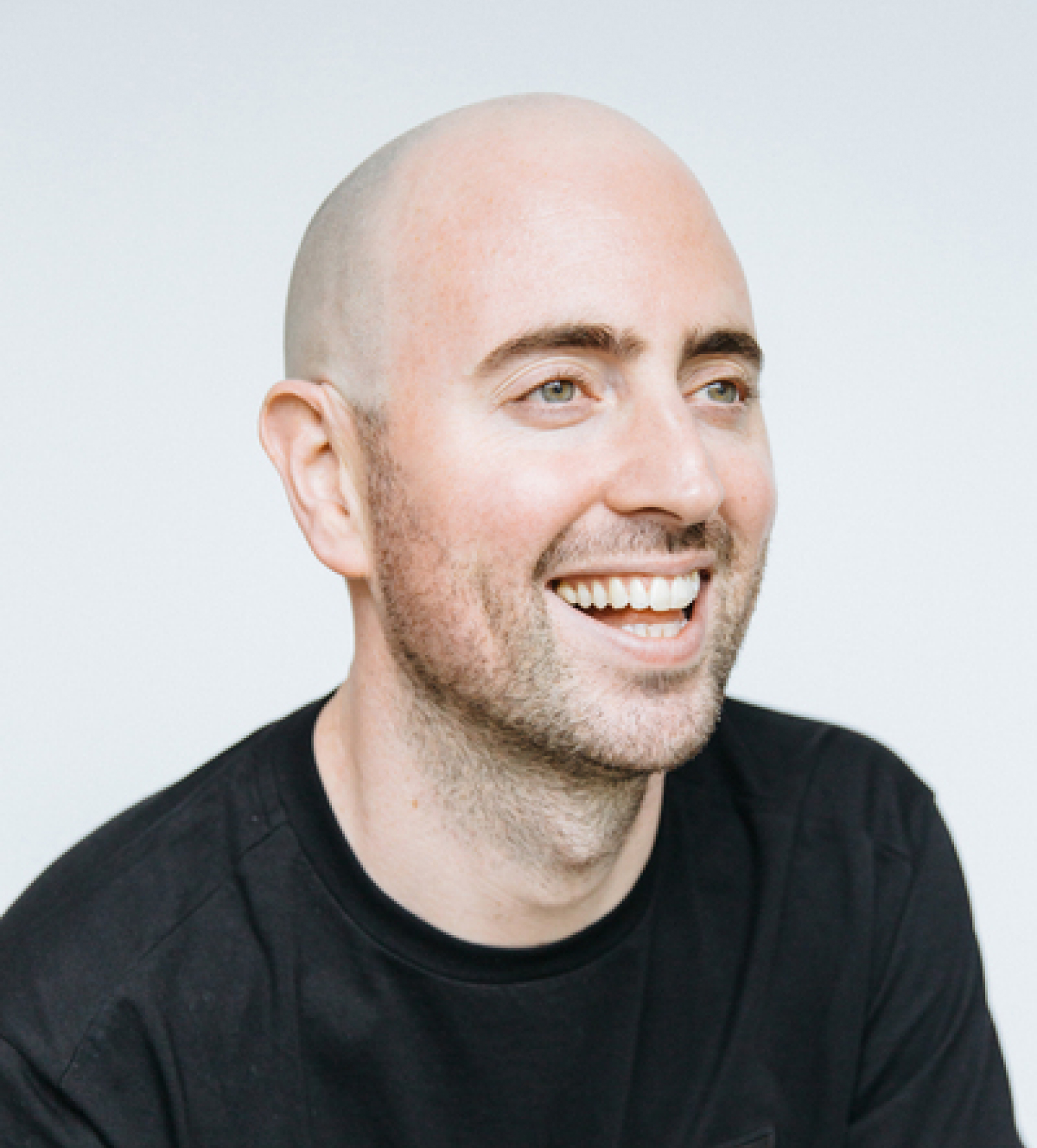
He Left. He Came Back. The Timing Was Absurd.
Eoghan McCabe returned as CEO of Intercom on October 6, 2022. Fifty-two days later, OpenAI released ChatGPT. He had been back in the building for less than two months when the entire software industry lurched sideways, and McCabe was already writing the code for Fin - Intercom's AI support agent - before most founders had finished reading the blog post.
That is not luck. That is what happens when someone has been in a conversation about human-computer communication for 15 years and recognizes the signal the moment it arrives.
Within six weeks of ChatGPT launching, Intercom had a working prototype of Fin. McCabe had returned to the CEO chair fewer than six weeks earlier. The timing was, in his own words, "fortuitous." What he did with it was not accidental.
Today, Intercom is an AI-first customer service platform. Fin - the product, not the founder - handles support tickets at Anthropic, Amazon, Fidelity, and Pfizer. The company pulled in an estimated $343 million in revenue in 2024, a 25% jump from the year before, after years of single-digit growth. In March 2026, Intercom closed $250 million in debt financing from Hercules Capital and announced plans to hire 650 people globally.
"These agents will be sellers and advisers, teachers and experts - they will allow what was heretofore impossible with humans: truly perfect customer experiences."
Eoghan McCabe, 2024A Childhood in Dublin, a Website About Ducks, and EUR 126.97
Eoghan McCabe grew up in a Dublin suburb of about 10,000 people. One of his first memories of the internet involves the official website of the Mighty Ducks of Anaheim. He watched the Disney movie. He found the URL. He connected with something 5,000 miles away, from a small town, through a browser window. He found that remarkable. He never really got over it.
At age 16, in 2000, he built a local portal for his hometown - one of his first internet businesses. He coded his way through a Computer Science degree at Trinity College Dublin, where, for his final-year project, he built what he believed was the world's first real-time webcam face tracker. He won the Ludgate Award. The prize: EUR 126.97.
The day he graduated, he founded a company. Not six months later. Not after a gap year. The same day. He named it Eoghan McCabe Ltd. His first product, FoldSpy - a JavaScript analytics tool - measured one billion screens in its first three months.
FoldSpy became Contrast, a software design consultancy he built with Paul Campbell, David Rice, and Des Traynor. By 2006, they were winning awards and building software for serious companies. By 2009, they had spun out Exceptional - a SaaS bug-tracking product that Rackspace bought in 2011. The acquisition money, relatively modest, became the seed capital for Intercom.
He was 27 years old. He had already built three companies. He started the fourth.
From Mighty Ducks to $343M ARR
The Intercom Bet: Talk to Your Users
The founding insight for Intercom - which sounds obvious now and sounded radical in 2011 - was that SaaS companies had stopped talking to their users once they signed up. You'd build a product. People would use it. And then the relationship became tickets and FAQs and dead email addresses. McCabe, Traynor, Lee, and Barrett thought that was insane.
Intercom put a small widget in the bottom-right corner of software applications. It let companies message users in real time - in the product, not in a support inbox. That widget became the beachhead for a platform that now handles sales, marketing, and support messaging at scale for thousands of businesses.
By the time McCabe stepped away in 2020, Intercom was a unicorn with a $1.3 billion valuation and over $150 million in ARR. The problem was that growth had started to slow. The company had accumulated the organizational weight that slows every maturing SaaS business: too many priorities, too many teams pulling in different directions, too much hedging.
When he came back in October 2022, McCabe made two decisions fast. First: AI was not an add-on feature. It was the product. Second: the organization needed to be smaller, faster, and more willing to bet everything on one direction. He cut roughly 40% of staff. He refocused the entire engineering org on building Fin. He told anyone who would listen that the next era of customer service would be run by AI agents, not human support teams.
"I never regretted coming back, but I have many moments where I don't enjoy the job. It was deeply cathartic for me when I realized that a founder running away from their business is a failure mode, not a freedom."
Eoghan McCabe, Lenny's NewsletterFin: The Bet That Paid Off
Fin is Intercom's AI support agent. It resolves customer queries autonomously - no human in the loop for the vast majority of tickets. It is built on top of large language models, including Anthropic's Claude. It charges $0.99 per resolved ticket. It is deployed at companies including Amazon, Fidelity, Pfizer, and Anthropic itself - which is the kind of customer reference that closes enterprise deals.
Fin 2 launched in 2024, with a deeper integration with Claude and more sophisticated reasoning. McCabe committed $94 million specifically to AI R&D that same year. He called for "aggression on all fronts" in public statements. He was not speaking metaphorically.
Intercom recorded its largest-ever quarter by net new ARR in Q1 FY2026. Nine consecutive quarters of NNARR growth. The acceleration started the moment Fin shipped.
The AI pivot is also a thesis about where software is going. McCabe believes that AI agents will replace not just support queues but entire customer-facing functions: sales, advice, education, expert consultation. If he is right, Intercom is early. If he is right and Intercom executes, the $343M revenue figure is a rounding error compared to what comes next.
"I don't think you can have leadership without purpose or a strong grounding in a mission."
"For me, money is exciting because it is a resource that I can put to ever-greater use."
"Being and becoming your authentic self is a lifelong endeavor."
"Diluting shareholders for capital obtainable at a fraction of the cost with debt is undisciplined."
"For me personally, the big lessons are all about trusting my instinct and my principles."
"Silicon Valley is a phenomenal amount of young people with no experience - great things are produced in a very messy way."
Therapy, Gluten, and EUR 126.97
McCabe is not the type of founder who keeps his inner life at arm's length from his professional identity. He has been in therapy for 12+ years. He talks about "ego death" - a period in which he says he dismantled the version of himself that was running on pride and fear and replaced it with something more durable. He believes that transformation is what made him a better leader the second time.
In 2018, he got seriously ill. He was diagnosed with a neurological autoimmune disorder that affected his ability to function at the level he expected of himself. It contributed to his decision to step down in 2020. He says he has largely healed - primarily by eliminating gluten from his diet. This is not the kind of detail most tech executives discuss publicly. McCabe does, because he is constitutionally incapable of pretending things are fine when they are not.
While still a student at Trinity, McCabe read 37signals' book "Getting Real" cover to cover. Multiple times. He dreamed of building a company like Basecamp. What he built instead was a real-time messaging widget that became a $1.3B unicorn. Close enough.
His Twitter handle is @eoghan. One word. No numbers. No underscores. Getting that handle on a platform with 600 million users is either extraordinarily good timing or the kind of quiet flex that requires no explanation.
On Instagram, he describes himself as "Person. And CEO of Intercom." In that order.
Betting on Others
McCabe invests. His portfolio includes companies that went on to become defining software products of their generation. He backed Figma before it became the design tool. He was in Stripe and Notion and Superhuman and Productboard early. For someone whose own company took 15 years to reach escape velocity, he has a good eye for escape velocity in other people's companies.
The Controversies He Doesn't Dodge
In 2019, The Information reported that multiple employees had left Intercom following what were described as harassment allegations against McCabe. An internal investigation found that McCabe's own account of his actions was accurate. He apologized for what he called "poor judgment."
In 2023, he publicly committed to being "more thoughtful" in his Twitter engagement after drawing criticism for controversial likes and retweets. He is the kind of person who makes that commitment and then continues to express strong opinions - which means the commitment was about tone, not content.
In 2024, he donated $200,000 to Trump-related committees and attended a fundraiser hosted by David Sacks in San Francisco. He posted a photo with Trump. This put him at odds with most of his San Francisco peer group, which he appeared to find entirely acceptable.
In September 2025, following the killing of Ukrainian refugee Iryna Zarutska on a North Carolina train, McCabe posted on X calling for "rapid, public executions." The post sparked a public controversy and was criticized by other tech executives.