Joshua Goldbard was thinking about your wallet before he started a cryptocurrency company. In 2012, while working at 2600Hz, he wrote about the phone as an instrument of identity. It was already something businesspeople carried everywhere. It connected them, authenticated them, announced whether they were available. Why couldn’t it pay for things? Why did they need to carry a wallet as well?
The questions appeared in a post about telecommunications, five years before MobileCoin was founded. They give his career an unusually legible thread. The objects change: a handset, a communications network, a cryptocurrency, a digital wallet. The underlying curiosity survives. What should a phone let its owner do, and how much of that owner’s life should everyone else be allowed to see?
There is a practical streak beneath the philosophical one. Goldbard’s working life has included selling phones, developing business around phone systems, product work and investing. He has spent time on both sides of the counter: explaining a product to a customer and trying to make the machinery behind it behave. A payment that requires its user to understand the machinery is a rather demanding sort of convenience.
The shop that called back
Goldbard grew up on the peninsula south of San Francisco, in Millbrae. His entry into retail was straightforward. He took résumés along Burlingame Avenue and left one at every store. AT&T was the place that called him back. The job was less a carefully arranged first rung on a career ladder than an available opening. He took it.
Then the iPhone arrived. In his recollection, customers lined up for a phone with an enthusiasm that changed the atmosphere of selling one. He would later receive a 2007 Platinum Club sales award, listed on his LinkedIn profile as number one in the West Region. Timing helped: he had found himself at the counter when people suddenly wanted what was on it.
That scene is useful to keep in mind when considering his later interest in crypto. The iPhone gave him a view of technology becoming a consumer object. People could want something intensely without knowing its technical architecture. The queue outside the store was a verdict on the thing they could use. A customer need not study radio networks before making a call.
His subsequent roles took him further into that architecture. He worked at 2600Hz, then held product roles at DAQRI and Ultra Mobile. His Wellfound profile treats several earlier business jobs with comic economy, calling them “Business Nonsense.” The joke is his; the work history behind it spans sales, communications and technical product management.
A phone knows too much
The 2012 essay is striking because it pairs functionality with restraint. Goldbard wanted the phone to do more, while asking how it could supply useful information without damaging personal privacy. Its owner, in his argument, should control what it shared. The potential of connected devices came with a question about permission.
That concern helps explain why his eventual payments project centered on privacy. A phone can be a wonderfully convenient way to organize a life. It can also be a wonderfully convenient way for someone else to examine it. Adding money to the device makes the question harder: purchases and transfers are another record of where a person goes and whom they know.
“Privacy is a fundamental human right.”
Joshua Goldbard, 2021
By September 2021, Goldbard was making that case publicly as MobileCoin’s CEO. He presented privacy as part of the payment experience, alongside the speed of a transaction and the ease of making it. That combination mattered. A private product that people found exhausting to use would still have trouble becoming a daily habit.
Investing was the detour
Before MobileCoin, there was Crypto Lotus. In July 2017, the fund’s partners included Goldbard, trader Kevin Fischer and security engineer Apneet Jolly. Its proposed approach included investments in currencies it considered philosophically sound, a basket of alternative coins and arbitrage. Goldbard had moved from telecom product work into an industry whose basic assumptions were still being negotiated.
Investing offered one way to participate. Building a consumer payment system offered another. The distinction is consequential in his story: making money from digital assets did not answer the question he had asked about the phone. It left the work of designing an ordinary payment experience to somebody else.
In 2017, Goldbard co-founded MobileCoin with Shane Glynn. The name put its intended setting in plain sight. This was a currency project meant for phones, with the possibility of payments inside messaging applications. Goldbard and technical adviser Moxie Marlinspike, the creator of Signal, were working on a problem where communications and money met.
The idea asks a lot of a short interaction. A sender needs to identify the right recipient. The payment needs to complete promptly. The network needs to verify what happened. The user needs appropriate control over the information left behind. The product has to make all of that feel less complicated than this paragraph.
A conceptual view of his product priorities, rather than a technical map of the network.
The messenger opens its wallet
In April 2021, Signal began testing payments with MobileCoin in the United Kingdom. For Goldbard, the original thought about paying through a phone had acquired a concrete setting: a messenger already associated with private conversation. Money could sit beside the exchange of messages.
The integration also brought scrutiny. Users and developers asked about the choice of currency and the relationship between Signal and MobileCoin. A privacy claim does not settle every question about a financial product. Availability, design decisions and trust still matter. Bringing payments into a familiar application gives the payments project a new audience, along with that audience’s expectations.
Goldbard’s ambition was expansive. In a February 2022 conversation, he described the project as a global version of Cash App, with money moving at internet speed. That was an aspiration, rather than a report that the world’s payment infrastructure had been replaced. It captures the scale of the problem he wanted to work on.
MobileCoin’s Series B. The company reported $107 million raised in total at the time.
The financing came with a product agenda. MobileCoin said it would develop its chatbot payment system, expand merchant services and introduce a stablecoin. Among the Series B participants were Coinbase Ventures, General Catalyst, BlockTower Capital and Marc Benioff’s TIME Ventures. Raising capital gave the team resources; the announced work still had to become something customers could use.
A founder with a microphone
Goldbard’s public life also includes asking questions. On the podcast Privacy is the New Celebrity, he interviewed people whose work approached privacy from different directions. The guest list makes room for hardware, fiction, law and the ways information circulates through society. A payment protocol is one entrance into that conversation.
In March 2022, he and Sara Drakeley co-hosted an interview with hardware hacker Joe Grand. Grand’s work brought a physical dimension to the subject: security exists in devices people can hold, open and probe. The conversation was a reminder that a digital asset still depends on material things, and material things can be remarkably inventive sources of trouble.
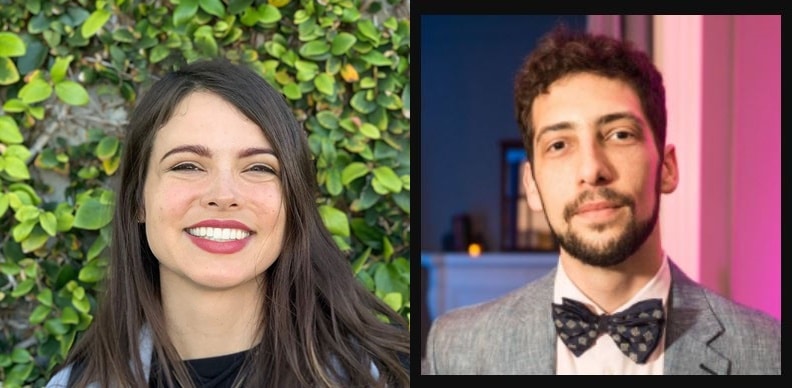
That May, Goldbard interviewed Cory Doctorow about encryption, accountability and the concentration of power in technology. Doctorow described a novel involving a stolen set of cryptographic keys. Goldbard recognized a professional interest in the premise. For a founder building financial software, a heist plot can double as a rather uncomfortable product meeting.
The interviews offer a way to understand his interests without assigning him a personality from a photograph. He returns to questions about who gets access, who sets the rules and what happens when technology fails the people using it. On LinkedIn, he describes enjoying hard problems and explaining difficult concepts simply. Hosting these conversations gives that self-description a public form.
The title on the mop cupboard
Goldbard has used “janitor” as a professional title. It is an amusing word to place beside a venture-funded company, and he has supplied a practical explanation: leadership involves cleaning up the things that break. The glamorous part of starting a business does not abolish the less glamorous work of keeping it functioning.
His other self-selected label, on Wellfound, is “Responsible Adult.” Read together, the two titles have the air of someone suspicious of an ornate business card. They also point to obligations. Somebody has to answer the questions, fix the problem and own the consequence. A joke can make the description lighter without making the responsibility disappear.
Another wallet, the same old question
MobileCoin announced its change of company name to Sentz in November 2023, with Sara Drakeley as CEO. The rebrand placed cross-border payments and an approachable customer experience at the center of its presentation. Goldbard’s place in that history is co-founder and former CEO. The company’s next chapter belongs to its current leadership and team.
His own work has continued. In a recent public update, Goldbard described developing Fire Wallet at Fire.co and distinguished it from the earlier Fire Digital business. Fire’s website presents a multi-chain wallet with payments by handle or QR code, bank connections and control over transaction information. As of October 2026, it advertises forthcoming iOS and Chrome versions.
The product is still presented as coming soon. That makes its promises an agenda for work, rather than evidence of a completed result. But the agenda is familiar. Fourteen years after asking why a phone could not replace a wallet, Goldbard is working on another answer.
There is something fitting about ending with a wallet rather than a valuation. A wallet is an intimate, useful object. It goes where its owner goes. Most of its job is to be available when needed, then disappear back into a pocket. Goldbard’s career keeps circling the effort required to give a digital version that same unremarkable usefulness. The phone has acquired plenty of powers. Moving money quietly remains a question worth asking.