The name on Jorge Plasencia’s advertising agency began at a bank. His father, Jorge R. Plasencia, worked at Republic National Bank in Miami, helping Cuban exiles establish businesses in a city they were still learning to call home. When the younger Plasencia and his business partner, Luis Casamayor, needed a name for their own venture, they chose República. An advertising firm inherited a banker’s name, and with it a question that runs through the son’s career: who gets a chance?
There was another inheritance. After his father’s death in 2004, his mother discovered a rejection letter from Young & Rubicam. The elder Plasencia had applied to become a bilingual copywriter. His son had never known. The banker was also a writer and an aspiring advertising professional, a creative life tucked inside a financial one. Years later, Plasencia shared the discovery publicly, describing a father whose loans depended on character and reputation. The family tribute makes the agency’s name unusually specific. Most businesses would settle for a memorable word. This one carried unfinished business.
A teenager asks for a job
Before the agency, before the corporate titles, there was a visit to Radio Mambí. At 14, Plasencia accompanied his father to a radio marathon. He liked the energy so much that he went home talking about it. His brother suggested asking for an internship. Plasencia returned to the station and asked to see Armando Pérez Roura. The broadcaster knew his father, but the teenager did not invoke the family connection. He wanted to make the approach himself.
He started without pay. By his senior year of high school, he was the Spanish-language station’s promotions director. It is a useful beginning for someone who would spend his working life explaining audiences to businesses. Radio makes the relationship immediate: somebody must decide to listen, to turn up, to care. A promotion has to move beyond the desk on which it was conceived. The young employee was learning communications through its practical demands, well before it became the subject of boardroom presentations.
Miami was both his birthplace and the setting for those early lessons. His parents had arrived from Cuba; he grew up American and Cuban in daily life. He later described himself as a “200 percenter,” fully living both cultures. The arithmetic is cheerfully unsuitable for a balance sheet. It also supplies a compact explanation of the business he eventually built. Identity, in his account, allows for addition.
A ring, a record, a radio network
His next classrooms had considerably larger audiences. In 1996, Plasencia joined the Florida Marlins as their first director of Hispanic marketing. The club won the World Series in 1997, and he received the Greater Miami Chamber of Commerce’s Hispanic Marketer of the Year award that year. His responsibilities concerned sales and marketing programs for Hispanic fans. Baseball’s familiar rituals had to become invitations that made sense to the people receiving them.
One souvenir survives the job description. Plasencia owns an official 1997 World Series championship ring, which he counts among his treasured keepsakes. Advertising awards are plentiful in his later biography, but this one belongs to a different trophy cabinet. It is a reminder that a career can leave behind objects more evocative than a résumé. A championship ring needs very little explanatory copy.
At Estefan Enterprises, he moved into music, overseeing marketing, publicity and corporate strategy and working on the management team of artists including Gloria Estefan and Shakira. His work included helping Shakira’s crossover career reach the United States, Europe and Asia. Sport and music ask different things of a marketer, but both make culture visible: the audience has loyalties, memories and expectations long before a business starts speaking.
Univision followed. He held senior positions in marketing, corporate communications and public affairs, and became vice president and operating manager at Univision Radio. The work involved linking television, audio and digital properties. By the time he considered starting an agency, he had experienced communications from several sides: a local station, a baseball club, an entertainment company and a national media business. His future clients would be buying that accumulated experience as well as advertising.
The birthday-party introduction
Plasencia and Casamayor met at Plasencia’s birthday party in 1999. Casamayor ran Cosmyk, a graphic design business; Plasencia was working at Estefan Enterprises. Each had a career already under way. Their eventual partnership brought together different kinds of experience, with Casamayor contributing design and art direction and Plasencia bringing marketing and media. A birthday party proved to be a respectable place to conduct long-term business development, although nobody needs to put that on the invitation.
They founded República on November 13, 2006. Plasencia was leaving an executive role at Univision for the uncertainties of a new firm. The agency was built to help brands communicate across cultures, languages and traditions. It began as social platforms were changing how people encountered companies, giving the founders both a cultural argument and a technological opening.
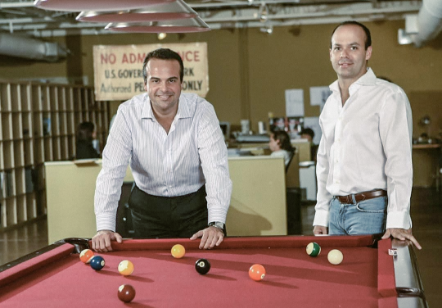
Their early operating principles included authenticity, protecting the firm’s reputation and being selective about clients. The agency’s published founding principles also placed family at the center of the business. Those commitments may sound easy on a wall; the practical test is whether they influence the work somebody accepts, the colleague somebody hires and the decision somebody makes when a project becomes difficult.
Plasencia has described his own role in concrete terms: close involvement in client relationships, strategy and acquiring business, accompanied by careful attention to spending. The banker’s son remained alert to costs. Creative ambitions still had to meet a payroll. There is something reassuringly unromantic about that combination. An advertising agency needs ideas, but somebody also has to remember what they cost.
“I’m also very conscious of spending and costs.”Jorge Plasencia
Culture comes with particulars
Plasencia’s cross-cultural argument starts with the differences within an audience. Hispanic Americans have varied national backgrounds, races, language preferences, generations and beliefs. In interviews, he has urged brands to recognize those distinctions while understanding the traditions people share. He enjoys the educational part of his job: presenting research and insight until a client sees the reason to invest in a more considered approach.
The work extends into who gets hired and who gets a contract. He has called for greater Latino representation on corporate boards and increased spending with Latino-owned suppliers. Republica’s minority-business certification forms part of that history. In 2015, Google nominated the agency for Corporate Plus status, a step Plasencia credited with helping other corporations recognize the firm. A large client’s endorsement can open a door that an excellent pitch has been knocking on for years.
In September 2018, Havas took an investment stake in the company, which became Republica Havas. The founders remained in charge. Plasencia described the attraction as a partnership that would preserve the agency’s culture and people while providing room to grow. The business that began with a family reference now had access to an international network. Its name expanded without losing the word that had made it personal.
In May 2024, Havas appointed him global chief client officer of its Creative Network. He retained his chairman and CEO responsibilities at Republica Havas. The additional role concerned client engagement, integrating capabilities and identifying partnerships and growth opportunities. The scale changed; the emphasis on relationships was familiar. Someone who had learned to promote a Miami radio station was now asked to help an international creative network work with its clients.
The organization that came first
Plasencia had co-founded another organization long before República. In 1991, at 17, he helped establish Amigos For Kids. Its work supports children and families in Miami. He became its chairman emeritus, maintaining a connection that reaches back to his teenage years. The nonprofit and the agency have very different purposes, but both are institutions he helped start and stayed involved with over decades.
In a 2025 interview, he recalled an operation that initially had neither office nor employees. Volunteers worked from the trunks of their cars. That detail places the early work at a human scale: people bringing what they could, moving supplies, making an organization function before it possessed much organizational furniture. He traced his wish to serve others to his parents and described wanting to leave the world a little better than he found it.
His civic work has also included chairing UnidosUS and serving on the advisory board for the Office of Cuba Broadcasting after nomination by President George W. Bush and Senate confirmation. He now chairs the Miami Dade College Foundation and serves on the board of the Adrienne Arsht Center. Education, cultural representation and the city’s institutions recur across those commitments. The calendar is varied, but the geography and concerns are recognizable.
A diploma with several authors
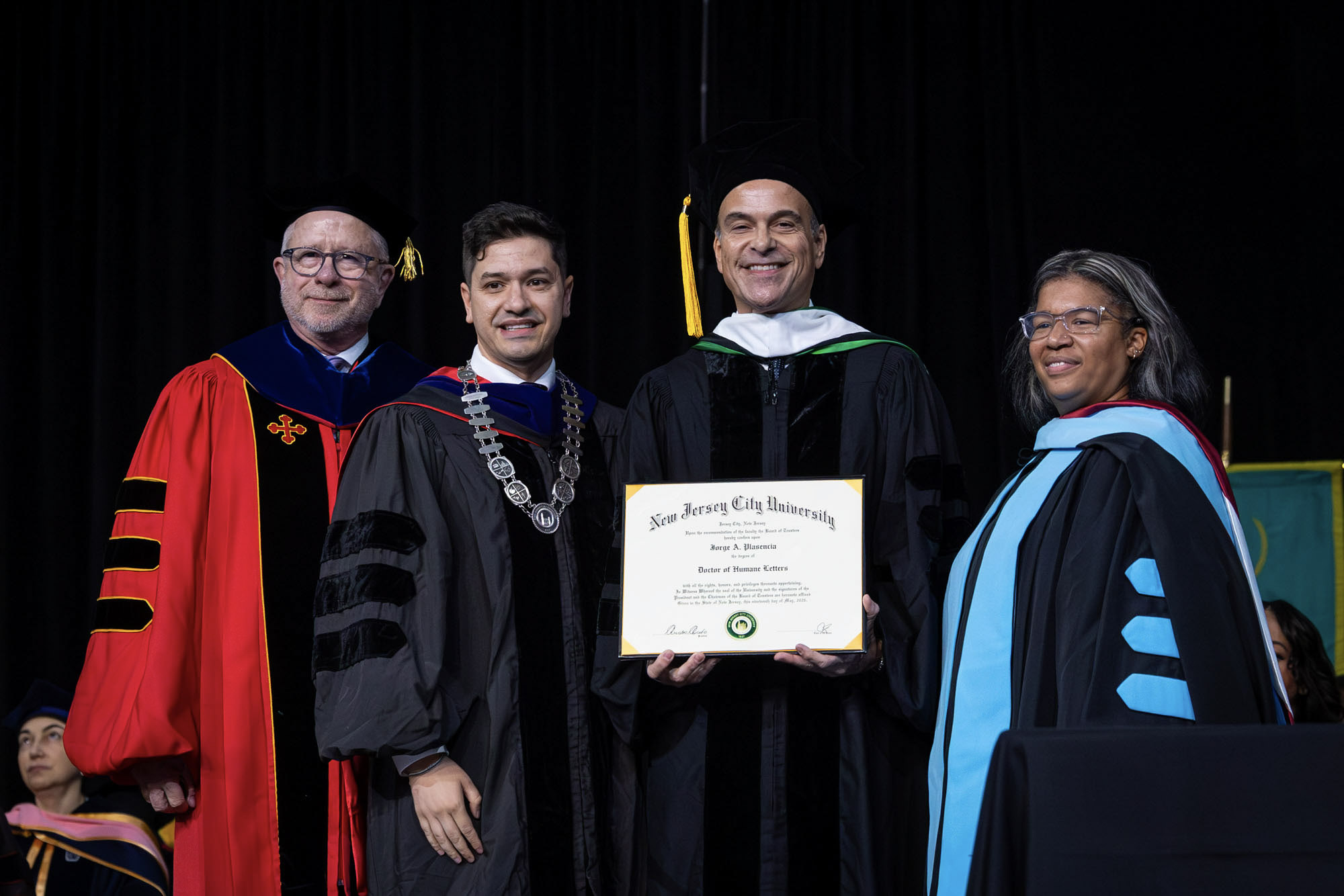
On May 19, 2026, Plasencia received an honorary Doctor of Humane Letters degree from New Jersey City University and addressed its graduating class at the Prudential Center in Newark. More than 1,500 graduates attended the university’s final standalone commencement before its merger with Kean University. For Plasencia, the occasion arrived in the year of Republica’s twentieth anniversary and Amigos For Kids’ thirty-fifth.
His address returned to his parents, his culture and the people who had helped shape his life. The agency leader was speaking about an achievement whose certificate carried one name, while its making involved many people. That observation fits a career populated by a brother’s suggestion, a radio executive’s opportunity, a design partner, artists, colleagues, clients and volunteers.
“Your diploma may carry your name, but your story has many authors.”Jorge Plasencia, NJCU commencement, 2026
The same thought brings the agency’s name back into view. República remembers a father who helped other people begin, and whose own application to an advertising firm ended in a rejection letter. His son built an agency, kept the banker’s name and spent decades working with organizations that offer others a start. The ring, the honorary degree and the executive appointments mark different stages. The name above the office door remembers where the story began.