Jorey Ramer liked being a renter. This is an awkward preference for someone who would go on to build a company around homeownership, but it explains quite a lot. Renting had a dependable rhythm: pay the bill, call someone when something went wrong, carry on with your life. Buying a house supplied equity and a rather less welcome acquisition: responsibility for everything inside it.
He and his wife had moved from Boston to the Bay Area after the acquisition of Jumptap, the mobile business he had founded. They bought their first home. Ramer liked the house. He objected to the job that arrived with it. A home had become an asset he enjoyed and an operation he was expected to run. The kitchen did not come with an operations department.
That distinction became Super. The company’s co-founder and CEO wanted the convenience he remembered from renting to follow him into ownership. His proposed arrangement was straightforward enough to understand over a garden fence: a subscription that helped cover breakdowns and organized the work of looking after the home. Making it function would occupy considerably more than a conversation.
The engineer meets the house
Ramer graduated from MIT with a computer science and engineering degree in 1995. He began his career at Trilogy in Austin, where he helped start business units. His path also included TIBCO. These were years spent around software, commercial decisions, and the work of turning technical possibilities into businesses. A house offered a different sort of system, with rather more plumbing.
In 2005 he founded Jumptap. Its original business was mobile search, built for a period when wireless operators exercised considerable control over what customers could access on their phones. The company later moved into mobile advertising. A change that occupies a line in a biography required years of work inside the business. Millennial Media acquired Jumptap in 2013.
Ramer’s engineering background also produced a long trail of intellectual property. His public accounts describe him as the first named inventor on more than 100 issued patents. The subjects include mobile search and advertising. On paper, that history looks a long way from arranging appliance repairs. Both businesses, however, required him to think about how information and networks could make a service work.
- 1995MIT to Trilogy
- 2005Jumptap begins
- 2015Super launches publicly
- 2026Super’s first U.S. patent announced
Before the patents, volunteers
His first venture had begun much earlier, with a friend in high school. It was a nonprofit intended to encourage volunteering. While still in college, he raised seed money from the then-CEO of Merrill Lynch. He later described the organization’s events as involving more than 150,000 volunteers nationwide. Eventually, after roughly a decade, a funding shortfall caught up with it.
The experience gave him something to carry into later ventures. So did an early encounter with Curt Carlson, founder of Carlson Companies, who declined his request for support while encouraging his entrepreneurial ambitions. Ramer has described a career spent starting businesses, or new units within businesses. The first organization had already taught him that useful work and a durable financial arrangement were separate requirements.
He has a less solemn souvenir of the Jumptap years, too. In a personal essay, he included a photograph of its logo recreated in waffles. It is a pleasing interruption in a career full of commercial negotiations and patent filings. Even a mobile advertising business can occasionally be represented by something you might reasonably put syrup on.
A directory could find a plumber. Then what?
When Ramer began examining home services, he found plenty of ways to locate help. Directories had become rating sites; rating sites had acquired prices and booking functions. Yet choosing someone still left the owner making judgments about cost, quality, timing, and the next problem. A list of available people could be useful without taking the management burden away.
His complaint concerned the financial arrangement as well. Finding someone to repair an appliance did little to make the eventual bill predictable. In his launch writing, he argued for a service whose incentives would favor preventing trouble and controlling the cost of covered work. He wanted a continuing relationship with the home, extending beyond the moment a contractor was introduced.
Super publicly launched in November 2015 in the Maryland and Washington area after raising $3.6 million in seed funding. Its proposition joined repair coverage to service coordination. The name nodded to the superintendent familiar to apartment residents. Ramer was borrowing a convenience he knew from renting and trying to make it available to people with a mortgage and a maintenance list.
A model combining coverage and coordination. Services and coverage depend on the plan.
The people doing the fixing
The work quickly becomes physical. An appointment has to happen. A technician has to identify the fault. Software may organize the encounter, but the customer still needs a functioning appliance at the end of it. Super’s early service features included scheduling, tracking, digital work records, and cashless payments. Each addressed a small piece of the administration Ramer had wanted to surrender.
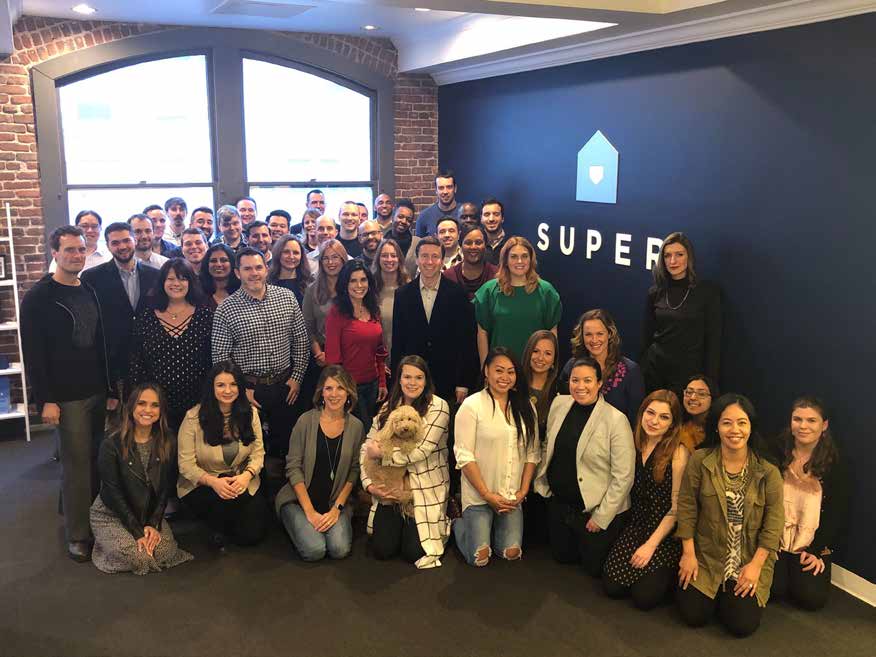
By 2019, the company’s team numbered more than 50 across engineering, sales, marketing, and operations. Ramer described a preference for resolving ambiguity in the customer’s favor. There is an operational demand inside that sentiment: somebody needs both the information and the authority to decide what happens next. The service depends on the choices people make after a request enters the system.

Permission to notice what is broken
Ramer’s thinking about teams had been shaped at Jumptap. He credited CEO George Bell with encouraging an ownership culture through greater transparency. Employees could understand the business, question a decision, and identify something that needed attention. He wanted people to take responsibility beyond the narrow borders of an assigned task. That requires a workplace where speaking up feels useful.
“You can’t build an ownership culture without transparency.”
Jorey Ramer, 2016
He had encountered a different kind of attraction at Trilogy. Before interviewing, he told his parents he was uninterested in the job. Meeting the people changed his mind. Their excitement made him want to join even before he fully understood the business. Years later, he hoped Super would be judged partly by what its alumni went on to accomplish.
He has also worked on his own management habits with CEO coach Dane Holewinski. In a public testimonial, Ramer described looking carefully before choosing a coach and valuing a repeatable process for changing behavior. He credited the work with improving collaboration and helping him build his team. The person asking an organization to adapt was prepared to examine his own methods.
More capital, more moving parts
In April 2019, Super announced a $20 million Series B led by Aquiline Technology Growth. The company said its total funding had reached $30 million. Its stated uses for the money included hiring, technology development, and expansion into additional markets. The ambition required both a service network and the systems to coordinate it as more households joined.
Two years later came a $50 million Series C led by Wells Fargo Strategic Capital, taking disclosed total funding to $80 million. Investors included businesses connected to insurance, housing, and consumer services. The company described technology work spanning pricing, fraud prevention, scheduling, and claims. Ramer’s original wish for convenience now sat above a substantial collection of operational decisions.
Acquisitions added another route to growth. Super announced its purchase of Platinum Home Warranty in 2022. In October 2024, it acquired Puls, a nationwide provider of on-demand home services. Puls was its fifth acquired brand, following Platinum, Nations Home Warranty, American Home Guardian, and TotalHome Warranty. Each transaction added the practical work of bringing another operation into the company.
Ramer highlighted Puls’s technology and the opportunity to expand Super’s service network, distribution, and range of work. A 2025 partnership with HŌM took the offering into a platform connecting real estate agents with clients. His business increasingly reached people through other relationships around their homes. The original problem remained recognizable, even as the routes to the customer multiplied.
A familiar name on a different patent
In April 2026, U.S. patent 12,608,750 was granted to Super Home Inc., naming Jorey E. Ramer as inventor. Super announced the milestone in May. The patent concerns systems for delivering repair and maintenance services to subscribers, including pricing to risk. The subject brought the engineer’s longstanding interest in information systems into the business inspired by his own house.
The company connected the announcement to its investment in automation and proprietary technology. Ramer described plans to keep building its intellectual property portfolio. His larger ambition also reaches toward closer connections between home insurance and home warranty. He has publicly argued that the categories will converge. It remains a prediction about where the industry could go.
For the homeowner, the test is more immediate. Something needs attention; someone must know what to do. Ramer’s career has carried him through software businesses, a mobile-market pivot, and the patient assembly of a home-care company. The wish behind Super is still wonderfully domestic: enjoy the place you bought, without having to become the superintendent yourself.
Keep the conversation going
Essays, conversations, and places to follow Ramer’s work.