A career of connecting the dots, ending at your front door
Ask most homeowners what frustrates them, and they rarely start with the leaky faucet or the sticking door. They start with the phone calls. The voicemail that goes unreturned. The contractor who gives an estimate and then disappears. The three-week wait for something that takes twenty minutes to fix. Vishwas Prabhakara heard that complaint enough times to build a company around it.
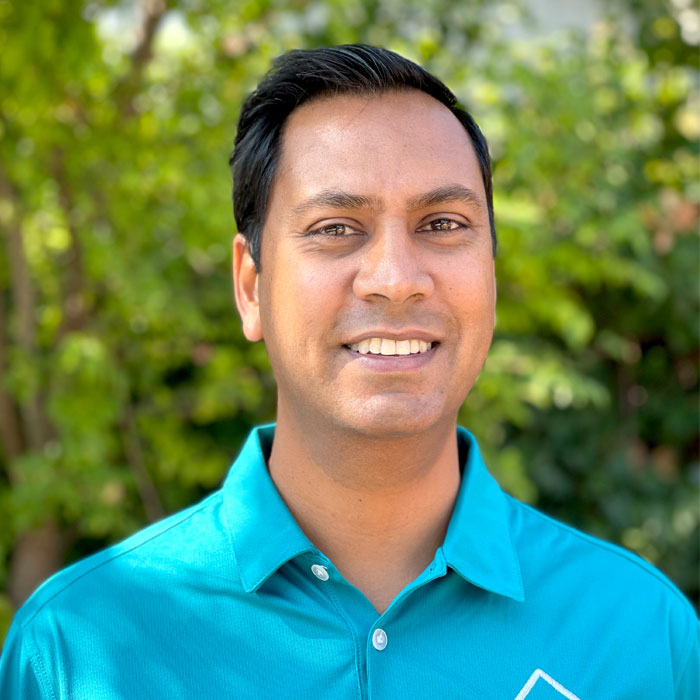
Prabhakara is the co-founder and chief executive of Honey Homes, a membership service that gives a homeowner one dedicated, salaried handyperson who visits regularly to take care of the endless list of small repairs and maintenance tasks that pile up in any house. The pitch is deceptively simple. Instead of hunting for a different contractor every time something breaks, members get a familiar face who already knows their home. "That whole marketplace is pretty broken," Prabhakara has said. "People want to be comfortable in their homes, but it's hard to get everything done."
The idea did not arrive at the start of his career. It arrived after a long, winding route through media, sports and finance that, in hindsight, reads like preparation for exactly this. Prabhakara grew up in upstate New York and studied at Carnegie Mellon University, graduating in 2002 with a double major in information systems and economics and a minor in Spanish. He describes the value of that education less in terms of any single skill than in the habit of mind it created. "You learn how to connect ideas across disciplines," he said. "That's a big part of entrepreneurship."
From investment banking to the honey-do list
His first job out of school was in investment banking, a two-year stint that he treated as a foundation rather than a destination. He moved to ESPN, working on early mobile and broadband projects at a moment when both were still novelties. That was enough to pull him toward Silicon Valley and the product-building world. He earned an MBA from Harvard Business School, then threw himself into startups: Digg, the social news aggregator that was to its era what Reddit is today; Fanvibe, a sports check-in app; and beRecruited, a college athletics recruiting platform where he served as CEO.
The role that sharpened him most was at Yelp, where he became vice president and general manager of Yelp Reservations and Nowait, running the restaurant reservation and waitlist business. It was his first deep exposure to the messy intersection of software and physical, real-world service, coordinating what happens when a diner walks through an actual door. He followed that with a stretch as chief operating officer of Digit, the fintech that made saving money automatic. There he helped scale the business toward the $200 million-plus acquisition by Oportun in 2021, learning the mechanics of recurring revenue and subscriptions that he would soon apply somewhere unexpected.
Ten beta customers and a kitchen-table startup
Honey Homes began in 2021, and it began close to home in every sense. Prabhakara co-founded it with his wife, Avantika Prabhakara, a former marketing lead at Opendoor and Zillow, along with co-founders Katie Pham and Rory O'Connell. The company launched that August with just ten beta customers. The bet underneath it was contrarian for the moment. While much of the on-demand economy was built on gig workers summoned by an app, Honey Homes went the other direction, hiring its handypeople as full-time, salaried employees with benefits like paid time off and parental leave.
That choice was not sentimental. Prabhakara's argument is that a recurring relationship, not a one-off transaction, is what makes home care actually work. A handyperson who returns month after month learns the quirks of a house and builds trust with the family living in it. Employees who are paid well and treated well stay, and continuity is the product. Members pay a monthly subscription, roughly in the $250 to $395 range depending on location, and the company earns additional revenue from parts and larger jobs.
The hard market that became the crown jewel
Growth followed. In 2023, Honey Homes raised a $9 million Series A co-led by Khosla Ventures and Pear VC, and grew its annual recurring revenue 3.6 times. In May 2024, it added a $9.25 million Series A-1 led by Era Ventures, with its earlier backers participating again, bringing total funding past $21 million. By then the company was visiting more than 150 homes a day and covering roughly five times as many homes in its service area as it had a year earlier, across the San Francisco Bay Area, Los Angeles, Dallas-Fort Worth and additional markets.
One surprise along the way was San Francisco itself. Prabhakara had expected the dense, older housing stock of the city to be a difficult place to operate compared with the suburbs. Instead it flipped. "The city is a different beast," he said, "and now it is actually like our crown jewel, our best-growing market." It was a reminder of his own advice about not waiting for perfect conditions before moving.
That advice runs through everything he tells younger founders. Be assertive rather than perfect. "Start doing and learn as you go." When you need feedback, "ask, ask again and follow up." It is the philosophy of someone who has changed industries repeatedly and learned that competence and trust are built by doing the work in front of you, not by waiting until you feel ready. For Prabhakara, the work in front of him now is the least glamorous and most universal problem there is: keeping a home in one piece, one visit at a time.
Quotes
“You learn how to connect ideas across disciplines. That's a big part of entrepreneurship.”
“Our team has been visiting over 150 homes a day.”
“Ask, ask again and follow up.”
“The city is a different beast, and now it is actually like our crown jewel.”
Things you might not know
He grew up in upstate New York and minored in Spanish at Carnegie Mellon.
Before home services he worked in sports and media, at ESPN and later founding Fanvibe and beRecruited.
Honey Homes handypeople are salaried full-time employees with benefits, not gig contractors.
The company launched with just 10 beta customers in August 2021.