An unfinished project can be an awkward thing to inherit. Someone has already devoted time, money, and professional hope to it. Someone else has decided to stop. Jonathan Talbot built Mosanna Therapeutics around a program originally developed by Sanofi, giving work that had been set aside a company of its own. On September 15, 2026, that decision helped bring him to a stage in Munich as the winner of the Strüngmann Award.
The award carries €100,000. It also supplies a convenient photograph: Talbot stands between fellow finalists and the two brothers whose name it bears. The picture records a public arrival. His career is more interesting when followed backwards, through a founding team, a finance degree, and years spent inside a large organization before attempting a smaller one.
A second look sounds inexpensive. Company formation gives it a price. To reconsider a project seriously, a founder needs people willing to work on it and investors willing to support the work. Curiosity gets a hearing; organization keeps the meeting going. Talbot’s story turns on that passage from an interesting possibility to a business with responsibilities.
A second look, with money attached
The temptation is to tell this as a simple contest between a perceptive founder and a corporation that missed something obvious. Talbot’s own account is more measured. A large company evaluates an individual project within a wider portfolio. Strategy and scientific potential can point in different directions. A decision to stop may reflect where a company intends to spend its resources.
That distinction gives the Mosanna origin its business interest. A project can leave one organization’s priorities and enter another’s. A smaller company can be formed around a narrower commitment. None of that makes the work easy, or removes the need for evidence. It changes the setting in which decisions about the work are made.
For Talbot, reconsideration required a company. Mosanna was founded in 2022, with Forty51 Ventures as a co-founder and the lead seed investor. Its July announcement confirmed him as CEO and named Ben Machielse chairman. The public record begins with those practical arrangements: leadership, governance, and money. Even a company built around a fresh possibility needs the ordinary machinery of a business.
The spreadsheet beside the science
Talbot’s education helps explain why the business side occupies such a visible place in his career. He completed his doctorate at King’s College London in 2007 and holds a PhD in Pharmacy. He then studied finance at ESCP Business School. The pairing gave him formal training in both the work a company might pursue and the calculations used to decide whether to back it.
His master’s thesis compared ways of valuing early-stage biotechnology, including discounted cash flows, decision trees, multiple scenarios, and real options. Deinove was the case. Each method offers a way of thinking about an uncertain future. Choosing among them is already a question about judgment: which assumptions should count, and how much weight should they carry?
The title of a thesis rarely gets a starring role in a founder’s biography. Here it earns one. Talbot was studying a problem he would later encounter as an executive: putting a value on work whose outcome is still unsettled. A spreadsheet can be remarkably tidy about an untidy future. The useful part is learning exactly where the tidiness ends.
King’s College London+FINANCE
ESCP Business School→COMPANY BUILDING
Mosanna / Melodia
His next substantial chapter was Roche, where he spent nearly a decade. His roles included Global Scientific Director and work in Pharma Partnering. The latter involved valuation, licensing, and acquisition deals. Corporate experience therefore brought the two strands of his education into the same workplace. He encountered the decisions through which organizations commit resources, acquire rights, and choose what to pursue.
That background matters when reading the later founder chapter. Talbot arrived with experience of a large company’s workings, rather than simply an objection to its size. His route suggests continuity between employment and entrepreneurship. Years inside an organization can supply relationships and commercial experience that become useful when there is no established organization behind you.
Five people, and the people they knew
By June 2023, Mosanna’s Venturelab profile recorded five employees and 6 million raised. The small headcount gives the early story a useful scale. A company’s capacity is partly the people on its payroll, and partly the people it can persuade to work alongside them. Talbot described drawing on his own professional network and those of his co-founders and investors to find contractors and build the team.
The approach was practical: recommendations helped him select outside organizations, while a headhunter could help with particular senior appointments. This is the less photogenic side of founding. Finding a specialist, assessing a recommendation, and deciding when to make a hire have little of the theatre of an announcement. They are also decisions on which the next announcement may depend.
In April 2023, Supermoon Capital and High-Tech Gründerfonds joined Forty51 Ventures to complete Mosanna’s seed syndicate. Those names mark the extension of an early commitment. The business was acquiring support beyond its founding investor. Alongside the small team sat a growing set of institutions with money, experience, and a reason to pay attention.
Team building also presents a familiar difficulty: investors want capable people in place, and capable people need a credible proposition before joining. Talbot has described his role as bringing people together around a common direction. It is a modest phrase for a demanding task. A founder has to make the opportunity legible to people whose expertise, expectations, and reasons for joining differ.
“Giving them a shared vision”
Jonathan Talbot, on bringing a team together
Three minutes on Boston Bay
In June 2023, Talbot travelled to Boston with Venture Leaders Biotech. His account of Tuesday, June 13, offers a glimpse of a CEO still learning how to explain his company. There was a session at Swissnex Boston, followed by presentations and feedback at investment bank Locus Walk. Later came a pitch event aboard a boat.
Each presentation lasted three minutes. The audience voted through simulated investments, and Swiss founders pitched alongside American startups. Talbot described meeting people while travelling around Boston Bay. For once, the phrase “taking a company somewhere” had a wonderfully literal setting.
The scene makes a useful companion to the financing announcements. A three-minute pitch imposes its own discipline. Details have to be chosen. The reason the company exists has to be understandable. An audience can ask for more information later; first it needs a reason to ask. A founder with substantial experience can still benefit from practicing that explanation in front of strangers.
It also gives the story a human scale. Before the later award photograph and the larger financing round, there was a roadshow, feedback, and a short presentation on moving water. Company building contains plenty of moments in which a senior title offers no exemption from doing the exercise again.
The founder who welcomed the handover
On June 9, 2025, Mosanna announced an $80 million Series A. Pivotal bioVenture Partners and EQT Life Sciences led the financing, with Forbion, Broadview Ventures, and Norwest as co-lead investors. Forty51 Ventures, Supermoon Capital, and HTGF returned. The announcement also introduced David Weber as President and CEO, and as a member of the board.
Series A announced alongside the appointment of David Weber as President and CEO.
The number and the appointment belong together. One describes resources for the company’s next stage. The other identifies the executive who would lead it. For a founder profile, that combination deserves attention: success can include reaching a point where another person takes the principal operating role.
Talbot publicly welcomed Weber and wished the team continued success. His choice of metaphor was a baton being passed. It is a useful image because the company remains in motion. A handover does not erase the founding work, and the founding work does not require the same person to occupy the chair indefinitely.
His current official biography credits his Mosanna tenure with financing rounds exceeding $85 million in total. That cumulative figure includes more than the later Series A. Read together, the two numbers describe a company moving from early backing to a substantially larger financing. They are measures of capital secured for the business, with all the responsibilities that brings.
The next company, the same question
On September 2, 2025, Melodia Therapeutics announced Talbot as CEO and Sven Zimmermann as chairman. Melodia is another Forty51 Ventures company, giving the move a continuing institutional connection. The announcement placed his appointment within the company’s operational expansion. He was returning to the work of organizing an early business, with a founding CEO chapter already behind him.
His professional life also extends to Heparin Therapeutics, where he is listed as a non-executive director. These roles show an executive working across company leadership and governance. The practical questions recur: who should be involved, which work deserves support, and how should a company prepare for what comes next?
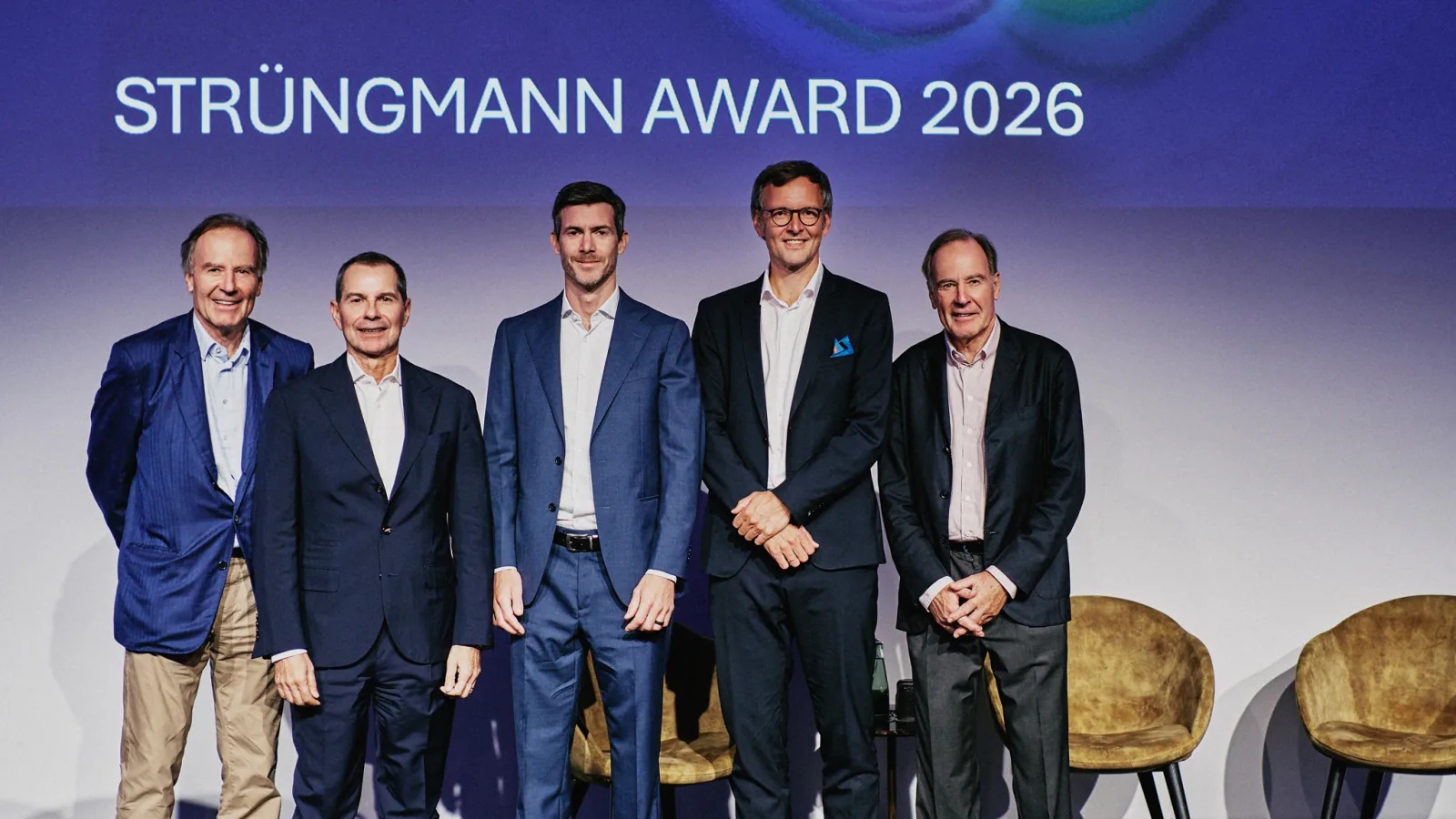
The September 2026 award recognized Talbot’s ability to identify potential and build companies around it. Fellow finalists were Stefano Portolano of Azafaros and Wieland Sommer of Jacobian. The prize places his name in a specific entrepreneurial company; the earlier details explain how he came to be there.
There is a coherent career in those details. A scientist studies finance. An employee learns partnering. A founder recruits through relationships, practices his pitch, raises capital, and welcomes a successor. Another company follows. The value of the second look lies in what happens after looking: a decision, a team, and the patient business of making the next step possible.
Follow the next chapter
Explore Talbot’s professional profile, companies, interviews and award coverage.