The ice was in a shopping mall. For Jonathan Sudharta and the Batavia Demons, that was a perfectly serviceable beginning. In 2016, the club’s training options included Mal Taman Anggrek in Jakarta and Bintaro Jaya Xchange in nearby Tangerang. An international ambition had to fit around the practical matter of finding somewhere to skate. Before a team could go abroad, it had to get onto the ice at home.
Sudharta is better known as the co-founder and CEO of Halodoc, the company he helped establish in 2016. His other public role introduces a useful complication to the executive biography. He has worn a national captain’s jersey, carried Indonesia’s flag, and helped build a club in a country where a rink requires considerably more planning than a football pitch. The business card leaves quite a lot out.
A rink between the shops
A shopping centre is an unusual place to begin imagining an international sporting career. It is also a reminder that people build with what is available. Sudharta’s hockey life ran through a small community of players, limited facilities, and the slow business of making a hobby competitive. By 2016, he was ready to introduce that community to a wider public.
He explained then that the players had initially been shy about promoting the sport before they had results to show. Their victories changed that calculation. There is something endearing about the hesitation: an ice-hockey club in tropical Indonesia waiting until it could offer evidence before asking for attention. The setting supplied enough novelty. The players wanted their work to count, too.
The novelty can distract from the arrangements underneath. Ice time needs booking. A club needs people who will turn up together. A tournament needs a roster, equipment, travel, and somebody attending to the details. These are ordinary demands, but they become more visible when the sport cannot simply occupy the nearest patch of open ground. The photograph of a trophy arrives rather late in the process.
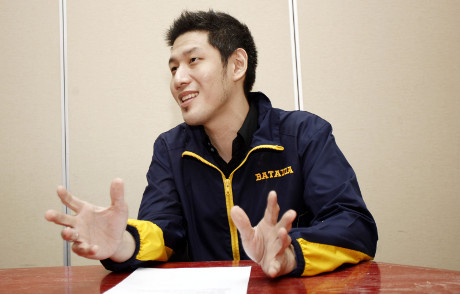
The surname he put away
There was another education taking place away from the rink. Born in Jakarta in 1981, Sudharta grew up in the family behind Mensa Group. He studied marketing and e-commerce at Curtin University in Australia, then returned to Indonesia in 2003. A place in the family business was available. The way he entered it is the detail that makes this chapter interesting.
He says he used a different identity at work so colleagues would not recognize him as the owner’s son. Beginning in sales, he wanted to learn alongside other salespeople. He later moved through supervisory and management responsibilities. The progression matters, but so does the attempt to make room for an ordinary working relationship before the family connection became the first thing anyone saw.
A different name cannot erase a family business or its advantages. It can change the conversation across a desk. In Sudharta’s telling, that was the purpose: more freedom to learn, greater closeness to colleagues. The anecdote gives his career an early question that remains useful later. How do you discover what a job requires when people may already have decided who you are?
The overseas studies and the sales job belong together. One offered a formal grounding in business. The other put him beside people doing it each day. His eventual title is easy to place at the top of a page. Those earlier conditions explain why the route to it deserves more space than a single line.
Five trophies, one unanswered question
The Batavia Demons began as an inline-hockey team in 1992 and became an ice-hockey squad in 2013. By April 2016, the club could point to five regional trophies, including competitions in Singapore, Malaysia, and Indonesia. A group that had once played on wheels was assembling a record on ice. It was a change of surface with consequences.
Sudharta wanted a larger stage. The club’s players hoped to represent Indonesia at the following year’s SEA Games, where ice hockey would appear for the first time. Their sporting credentials did not automatically answer the question of how to get there.
“We really want to play for Indonesia at the upcoming SEA Games. But we do not know how to get there.”
Jonathan Sudharta, April 2016
The sentence has the virtue of being specific. Here was a captain with successful teammates and an ambition that still required a route. Club competition and national representation are different arrangements. Winning within one does not construct the other. The gap between them is where much of the work of developing a sport happens.
His account of the club’s preparations was equally concrete. The players trained on Saturdays and Mondays, alternating between the available rinks. For international tournaments, an American coach, Jayson Blatt, helped prepare them. Sudharta credited the potential and ambition of his teammates when discussing their wins. The story distributes responsibility across a group rather more convincingly than a photograph of the captain alone could.
The flag, then the score
In February 2017, Indonesia made its first appearance at the Asian Winter Games in Japan. Sudharta captained the ice-hockey team and served as the country’s flag bearer. An ambition voiced the previous spring had acquired a national jersey. The official tournament records give him a position, forward, and a number, 13. It is a pleasantly economical biography.
A flag-bearing appearance can make an irresistible ending. The tournament, however, continued. On February 21, Indonesia lost 10-2 to Malaysia at Hoshioki Indoor Skating Rink in Sapporo. The result belongs beside the ceremony. A debut earns its place in history while also exposing the difference between reaching a competition and being ready to contend throughout it.
Indonesia’s team management pointed to Malaysia’s greater experience, strategy, and finishing. That assessment gives the defeat a practical meaning. The next task was identifiable. More preparation, more competition, and a more mature sporting structure would be needed. The players had crossed a threshold; the demands on the far side were now easier to see.
A first appearance carries pride. The scoreboard supplies homework.
By August, Sudharta was again captaining Indonesia, this time ahead of the SEA Games in Kuala Lumpur. He described months of work on technique and strategy, including practice games against expatriate teams. He also called Indonesia’s team a baby compared with more established opponents. The description was candid enough to leave space for ambition without requiring everyone to pretend the development work was finished.
Old friends, new teams
While that sporting chapter unfolded, Halodoc was taking shape. Sudharta co-founded the company in 2016 with Doddy Lukito. The timing makes it tempting to turn hockey into a neat explanation for everything that followed. Life rarely supplies such tidy diagrams. What the two careers do offer is a chance to see the same person working inside different kinds of team.
Some connections reach further back than the company. Aldi Haryopratomo says he and Sudharta have known each other since their teenage years at Pangudi Luhur. After years of informal advice, Haryopratomo formally joined Halodoc’s board of advisors in 2021. A school connection had grown into a working relationship, with a long stretch of conversation between the two.
Other encounters opened new possibilities. Nadiem Makarim, the Gojek co-founder, encouraged Sudharta to start his company. These relationships give the founding story faces beyond its central figure. A venture takes shape through encouragement, advice, and people deciding that another person’s idea is worth some of their time.
The public recognition came later. Sudharta appeared in Tatler’s Gen.T Leaders of Tomorrow selection in 2019 and Asia’s Most Influential list in 2021. His younger interests included bass guitar. That small detail is welcome company for the awards: the biography contains a person with other enthusiasms, rather than an executive assembled entirely out of milestones.
A founder who can revise the play
In a February 2025 conversation with Timothy Yap, Sudharta looked back at building Halodoc and acknowledged early product mistakes. He said he wished the company had measured how people moved through its app sooner: which buttons they used, where they stopped, and which steps caused them to leave. The regret concerned observation, something a team can improve through deliberate work.
“Don’t fall in love with the solution; fall in love with the right problem.”
Jonathan Sudharta, February 2025
His willingness to include his own mistakes makes the line more persuasive. An appealing idea still has to meet the experience of the people using it. A founder can explain the intention with great clarity while a user quietly abandons the second screen. Measuring that departure brings an inconvenient fact into the room. The inconvenience is useful.
There is a modest parallel with reviewing a match. Both require attention to what happened, especially when it differs from the plan. This is a way of reading his two careers, rather than a claim that one produced the other. The shared interest lies in the response to feedback: a result creates another decision.
The work after the debut
The hockey connection has continued beyond the captaincy. The Indonesian ice-hockey federation now lists Sudharta as director of the national team. Its published plans include youth participation, facilities, coaching, and international competition. Those aims put the future of the sport in organizational terms. Another generation needs opportunities to play, and the arrangements that make those opportunities real.
Halodoc, meanwhile, marked its tenth anniversary in 2026, with Sudharta sharing the celebration on LinkedIn. The two public roles sit comfortably beside each other: a business entering another decade and a sport still building its foundations. Neither stops requiring other people because its leader has already had a memorable debut.
That is the appeal of beginning his story at the mall rink. The setting restores scale to ambition. A national flag, a company anniversary, and an executive title are visible achievements. Getting people together, making time available, and revising the plan are how a career keeps moving between them. Somewhere behind the next occasion worth photographing, there is still a schedule to arrange.
Continue the conversation
Follow his work, watch an interview, or revisit the games.
- Halodoc · Company website ↗
- Jonathan Sudharta · LinkedIn ↗
- Watch · Marketeers TV’s Monolog interview ↗
- Listen · The Venture with Timothy Yap ↗
- Read · His 2017 hockey interview ↗
- Read · The Batavia Demons’ national-team ambition ↗
- Read · Indonesia’s Sapporo debut ↗
- Explore · Indonesian Ice Hockey Federation ↗