Jonathan Nelson began his working life close enough to the music that he sometimes had to move his bed out of its way. After graduating in 1989, he went to New York’s Knitting Factory, where friends were running a young music venue. He slept in a backstage room, cleared out when musicians needed it, painted walls, sanded floors and learned to run sound. A career could start with a microphone cable. A job description was apparently optional.
He had studied history and art history at Allegheny College. The eventual digital executive’s education therefore included both a liberal arts degree and the practical matter of making a show happen. His route into business followed the equipment, the performers and the work that needed doing. The backstage arrangement was temporary. The interest in how creative work reaches an audience would prove rather more durable.
Two card tables and a business to invent
In San Francisco in 1993, Nelson co-founded Organic with Matthew Nelson, Brian Behlendorf and Cliff Skolnick. Its early office was his apartment. Two card tables supplied the furniture. Building websites was the proposition, in a period when selling a website also meant explaining why anyone should want one. An independent record label was among the early clients. Music had supplied a bridge to an unfamiliar trade.
Nelson carried computer equipment to prospective customers on a luggage cart, including a 13-inch Mac monitor. The future of marketing arrived with its own baggage. He remembered the early office’s desks being assembled from doors and mail-order legs. These details give the origin story useful proportions: the eventual holding-company executive once had to transport the demonstration himself.
Club Med’s early site cost about $10,000; Volvo’s cost about $20,000. The sums sounded different to a small company paying for computers and rent. Each sale helped turn a technical possibility into a business that could keep accepting work. The challenge was persuading someone to pay for the next experiment.
Four co-founders.
Two card tables.
A medium still taking shape.
A small rectangle, a larger possibility
HotWired’s launch in October 1994 gave that experiment a more public stage. Organic worked on the early websites and banners surrounding it, including the AT&T banner associated with the launch. Nelson had also built Wired’s first subscriber database. The web offered him work on both sides of the screen: what people saw, and the information underneath.
Advertising gave websites a commercial purpose beyond simply being present. A brand could invite a person somewhere, and a publisher could sell the invitation. Organic sat between the advertiser, the publisher and the unfamiliar machinery. That position demanded creative work and technical work in the same conversation.
The launch also produced an awkward founder’s memory. After the prolonged effort to get the work ready, his tiny staff quit. Nelson later described the company’s entry into the trade with seven words: “So we fell into advertising backwards.” Success had generated demand before the business was ready to accommodate it. The next problem arrived almost as soon as the first one had been solved.
“So we fell into advertising backwards.”
Jonathan Nelson, recalling Organic’s beginnings
The click was only the beginning
By 1999, Organic had grown into a 350-person organization, with offices in San Francisco, New York, Chicago and Brazil. Its clients included Gateway, Sun Microsystems and Starbucks. That year, MIT Technology Review included Nelson among its young innovators. The recognition captured a business already moving beyond the novelty of putting a company on the web.
Clients wanted evidence of what their digital spending accomplished. Nelson was also co-founder and chairman of Accrue Software, a web measurement and analysis company founded in 1995. Building an attractive destination and understanding its effect had become connected problems. A website could be admired in a meeting. Its usefulness required another kind of examination.
That early interest in measurement makes the later career easier to follow. Nelson’s work repeatedly returns to the distance between a creative idea and a business result. Accrue belonged in that distance. The questions were practical: what happened after someone arrived, what could be learned, and what should the client do next? A new medium had created new reasons to count.
The market changed its mind
Organic went public in February 2000 under the ticker OGNC. Then the dot-com market unraveled. The company returned to private ownership in 2001 and became an Omnicom subsidiary in 2003. The short sequence of dates contains several very different experiences of running the same business. A public offering could open one chapter without settling the plot.
By April 2005, Organic was hiring again. It had more than 300 employees and needed over 40 additional people. Nelson had seen its headcount reach 1,200 at the peak. The recovery involved finding creative directors, production artists and business development staff: the ordinary work of rebuilding after an extraordinary reversal.
Survival gives his account of the early internet its weight. Organic had experienced the medium as a promising business, a stock-market enthusiasm and a company that still needed customers after the enthusiasm receded. Those are different tests. The business remained, carrying the name chosen before the boom and the experience acquired during its collapse.
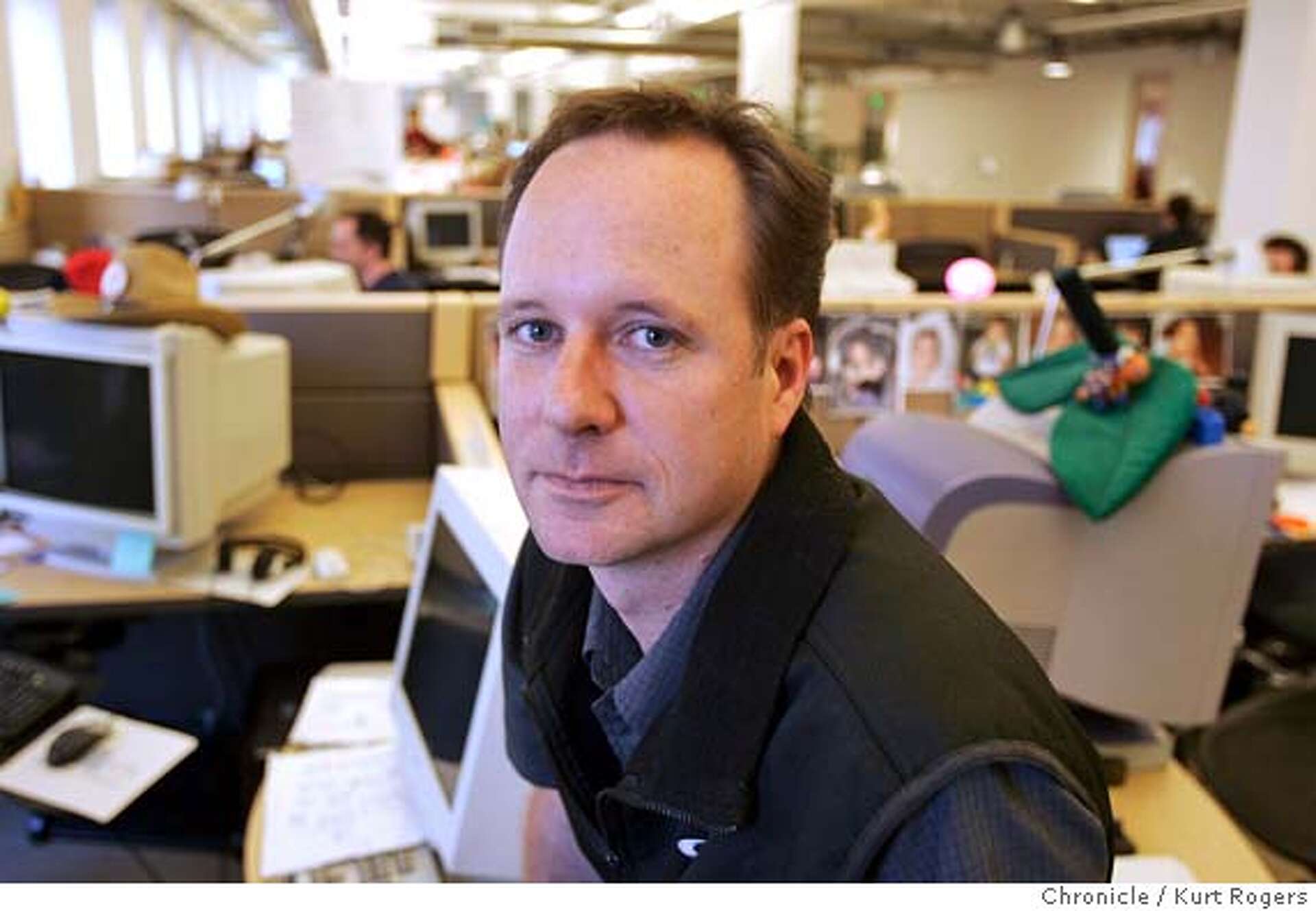
The same questions in a much larger room
In 2009, Nelson became CEO of Omnicom Digital. His responsibility expanded to digital strategy across a global advertising group. Organic’s founder now worked on how agencies could share intelligence, methods and technology. A problem once handled across a couple of tables had become a problem of coordination across companies.
His language for operating in that environment included agile marketing: adapting work as conditions change, improving it through successive attempts and accepting that a finished plan will meet a moving world. The usefulness of that approach is easy to see in his own chronology. The circumstances around the work kept changing, even when the commercial question remained familiar.
The management lesson had its own comic episode. Nelson once tried to maintain an equal footing with employees by sitting among them at an ordinary desk. They eventually wanted him in an office because his phone calls were distracting. Informality was a preference; helping other people concentrate was a responsibility. A door could be useful even to a founder suspicious of hierarchy.
- 1993Organic
begins - 1995Accrue
Software - 2000Organic
goes public - 2009Omnicom
Digital CEO - 2026Checking
AI’s work
A tool still needs someone to use it
Listen to Nelson discussing software in an earlier interview and the emphasis is practical. He favored open source, while recognizing that clients sometimes required a different platform. His compact explanation was that “software is just a tool.” A technical preference had to coexist with the work a customer needed completed.
The conversation ranged across hosting, search, Flash and the arrival of social media. MySpace and YouTube were changing the relationship between brands and audiences. The specific products date the discussion; the judgment behind it travels well. A company choosing technology still has to think about its audience, its purpose and its willingness to experiment.
That combination helps explain the continuity between the recording engineer and the digital executive. Equipment expands what a person can attempt. It also creates new decisions, new points of failure and new ways to confuse an impressive demonstration with a useful result. Nelson’s interviews keep returning to the person operating the machinery and the customer paying for the performance.
Before AI became the standing agenda item
In July 2017, Nelson was already discussing artificial intelligence as part of Omnicom’s working business. Its applications included media optimization, image recognition and data analysis. Annalect had built a chatbot through which planners could ask questions of consumer information. A conversational interface could help someone find an answer inside an otherwise forbidding volume of data.
The example matters because it puts a particular job beside a broad technological label. The planner needs information. The system helps retrieve it. The value depends on whether the answer improves the next decision. Alongside the opportunity, Nelson acknowledged questions about automation and privacy. Faster access to information came with responsibilities about how it was handled.
At Cannes in 2024, he again discussed AI in terms of employees’ capabilities and the connection between research, ideas and outcomes. He also emphasized the human beings at the center of marketing. Across these conversations, the ambition is recognizable: give creative and analytical people more useful ways to work, and keep asking what the work achieves.
What does the work accomplish?
Still learning to begin
The questions continued to grow with the organization. At Cannes in June 2025, Nelson discussed the then-proposed Omnicom-IPG combination as an opportunity for investment in technology and data. He also acknowledged expected redundancies. His comments placed the promise of better tools beside the organizational consequences of building a larger business. He was speaking before regulatory approval, with integration still ahead.
In July 2026, he was announced as a guest for a discussion of the original Nike.com project, alongside Steve Gehlen, who had managed it for Nike. Organic had built that first site, launched in June 1996. Thirty years later, the work had become history worth revisiting with the people who did it.
By October 2026, Nelson was explaining the next machinery: evaluator agents, human checkpoints and the need to inspect automated work. In describing adoption, he offered a modest unit of progress: “So companies change one person at a time.” Even an executive who had spent decades introducing technology admitted an attachment to familiar routines.
There is a pleasingly stubborn creative life alongside that corporate career. Nelson is a musician and has co-produced San Francisco’s Hardly Strictly Bluegrass festival. His work has kept a connection to performances made for an audience, beyond the meeting room and the screen.
The early story makes it tempting to stop at the card tables, the banners or the public offering. Nelson’s career keeps going past each apparent ending. The work becomes measurement, management, adaptation and another unfamiliar tool to understand. The soundcheck ends when the show begins. In this line of business, someone is always bringing in another microphone.
Keep listening. Keep reading.
Conversations across a career, from the early web to the next set of tools.
01 / PROFILE & WRITINGJonathan Nelson on LinkedIn ↗02 / WATCH · 2016The future of marketing, with LinkedIn ↗03 / WATCH · 2024At Cannes with IMPACT’s Neeta Nair ↗04 / LISTEN · ARCHIVETools, open source and the early social web ↗05 / READ · OCTOBER 2026AI adoption and checking the machine’s work ↗06 / READ · THE EARLY YEARSNelson remembers Organic’s first decade ↗07 / THE COMPANYOrganic’s website ↗