John Wise brought a boy with a borrowed brain to a financial technology gathering. At Communify’s Miami event in early 2026, he reached back to Joe 90, the British television series he had watched growing up. Its young hero could acquire an expert’s skills through a machine. For an audience considering financial AI, it was an economical introduction. Expertise was the prize. The machinery was how you got there.
The choice fits a career spent moving between the machinery of finance and the person trying to understand it. Wise co-founded InvestCloud, led it through a transaction valuing the business at $1 billion, and left in 2023. He is now chairman and CEO of Communify. Different company, familiar preoccupation: information becomes more valuable when somebody can actually use it.
That sounds obvious until you open a financial application and find yourself looking for an interpreter. A balance is a number. A portfolio is a collection of numbers. Understanding what either means for you takes rather more work. Wise has built businesses in that awkward space.
Before the garage acquired a valuation
His working life began well before the cloud became a business proposition. An early research role at International Computers Limited led into banking software. He later built Synergo Technology with his brother, followed by TCA Syntec and Netik. The names changed; moving financial information between systems remained a substantial part of the job.
At Netik, that work first involved financial messaging and integration. In 2002, the business refocused on data warehouses and portals used by banks. Wise and his business partner Colin Close sold Netik to the Bank of New York in 2005. Long before the current enthusiasm for AI, he was working on the problem that makes sophisticated applications possible: getting information into a form they can use.
His qualifications help explain that technical foundation. He holds a double honours degree in cybernetics and computer science and is a Chartered Engineer. Yet his public biography also describes him as a designer. Put those interests together and you have someone concerned with both the structure beneath a screen and the decisions the screen asks a human being to make.
Six people. Six months.
InvestCloud began in 2010. Wise’s account of its first product has the compact proportions of an experiment: six people, a garage and six months to design, build and ship PlayMyMillions. The garage eventually became part of a much larger corporate story. The team size remained an operating idea.
By 2017, Wise said the company still developed products in teams capped at six. Its Innovation Center would extend the approach to clients, allowing their people to work alongside InvestCloud’s. A customer could help shape a financial application rather than simply receive a finished specification from a distant software department.
Small teams were accompanied by a fairly sober management vocabulary. Asked about keeping up with growth, Wise emphasized “consistency, discipline and a systematic approach”. The garage story gets the attractive lighting. The discipline is what has to turn up again on Monday.
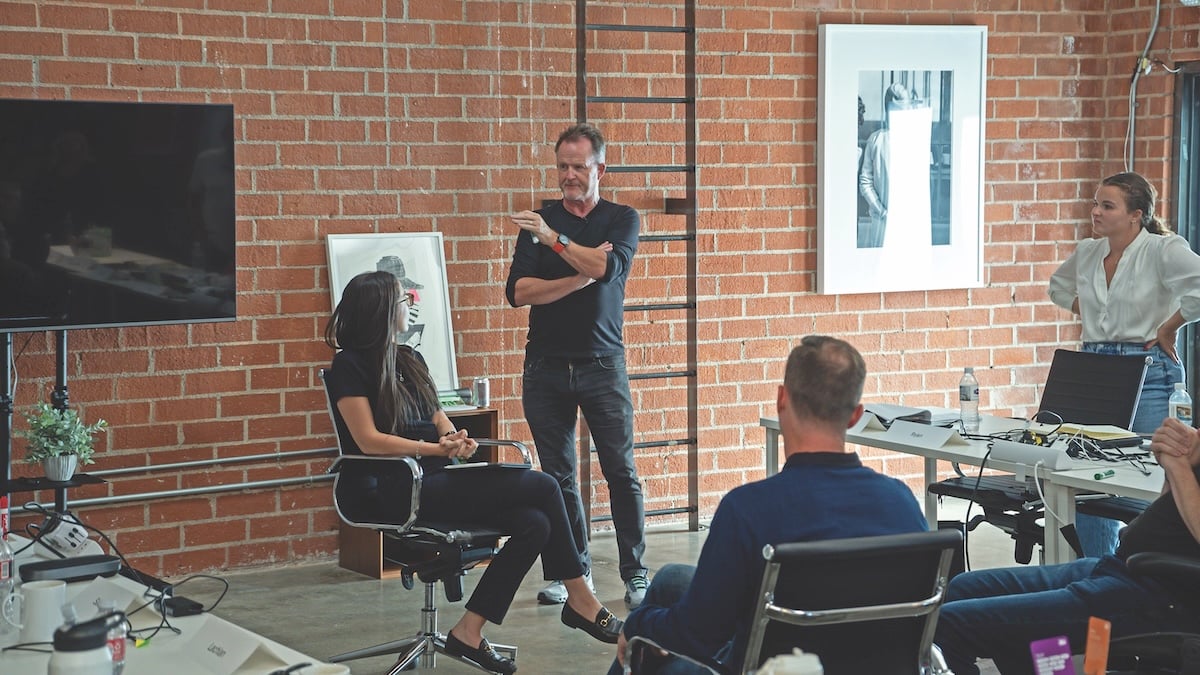
A designer in the machinery room
Wise’s argument for InvestCloud centered on making financial services easier to change and easier to use. Its modular applications could be assembled around a customer’s needs. Programs Writing Programs, or PWP, was intended to let designers and business analysts create applications without putting every adjustment through a conventional programming process.
There was a human argument underneath the architecture. Wise spoke about behavioral science, different investor personas and digital empathy. Those terms described a practical concern: an application designed around the institution’s internal organization may bear little resemblance to the way a customer thinks about money.
Consider the distance between a system that records a transaction and a screen that helps someone understand it. The first job requires precision. The second requires choices about language, attention and sequence. InvestCloud’s proposition joined those jobs, using reusable components to support different experiences without starting every build again.
Drawing, which Wise lists as his favorite pastime, is a pleasingly ordinary detail beside all that software terminology. It also makes the designer label easier to picture. A drawing selects what matters and leaves other things out. A useful interface has to make similar decisions, with less freedom to be charmingly inaccurate.
The number, then the change of name on the door
In February 2021, InvestCloud’s recapitalization put a number on its progress: $1 billion. The arrangement brought Motive Partners’ Tegra118 and Finantix businesses into the group, combining software capabilities across wealth management and private banking. Wise remained CEO of the expanded business.
For a founder, such a deal changes more than the size of the announcement. There are additional products, teams, investors and obligations to make the combination work. A modular product can be assembled from components; assembling an organization introduces people with existing ways of doing things.
Two years later came the break. In April 2023, InvestCloud announced that Wise had left and appointed board member Richard Lumb interim chief executive. The company began looking for a permanent successor.
Lumb subsequently described the different demands of starting a business and running a larger one. He also characterized Wise as deeply involved in decisions. That is a successor’s view of a leadership transition, rather than a complete account of why it happened. The documented outcome is straightforward: the business Wise helped create continued under different leadership.
The valuation belongs in his biography. So does the departure. Neither settles the question of what he would build next.
Old colleagues, another drawing board
By January 2024, Wise was introducing Just Build It, or JBI, as co-founder and managing partner. The venture described its work as designing, building and renovating companies. Its team included people who had worked together at InvestCloud, among them Close, Yaela Shamberg and Will Bailey.
There is something revealing about the word renovating. Startup stories tend to favor the empty site. A renovation begins with something already there: customers, technology, staff and accumulated decisions. It asks what can be improved without pretending that history can simply be cleared away.
In May, JBI Studios announced the acquisition of Cody AI and work on enterprise AI applications. Then, in August 2024, Communify and Stellex Capital Management acquired Fincentric from S&P Global. Wise became CEO of the combined Communify Fincentric business.
Fincentric had previously been known as Wall Street on Demand and Markit on Demand. Its business included market data and charting for brokerages serving investors who make their own decisions. Communify brought client-data capabilities. The combination proposed joining what was happening in the market with what a firm knew about its individual customers.
Illustration of the product idea, not a measurement of results.
The company reported thousands of data feeds and a large existing audience through Fincentric. The acquisition supplied distribution as well as technology. This time, the new venture was taking over machinery already operating at scale.
“I’ve always loved building things…”
JOHN WISE / MAY 2024
The AI still needs the pipes
Wise’s recent interviews return to trusted data, visualization and deterministic AI. The appeal of a deterministic process in finance is understandable: an institution needs to follow how a result was produced. Communify combines such structured approaches with generative tools, rather than treating every interaction as the same kind of problem.
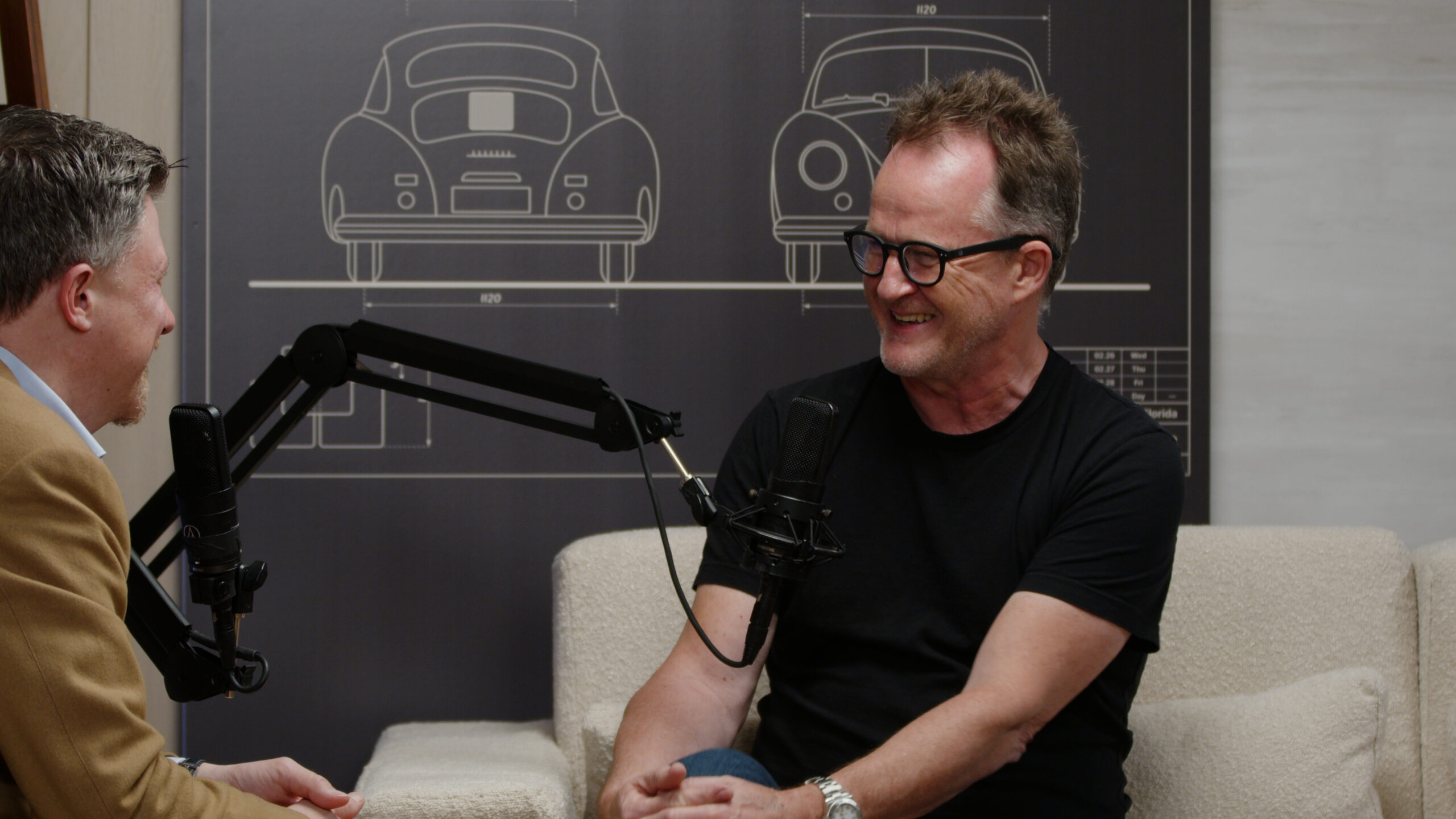
In his June 2025 conversation with Jason Pereira, Wise discussed the history behind the combination, the difficulty of managing large volumes of information and the use of AI to explain data. The discussion placed the newer technology in a longer sequence of aggregation and visualization work.
In October 2025, Communify acquired Empaxis Data Management. Its expertise included custody and accounting integrations, the connections needed to gather investment information from systems that do not conveniently organize themselves for the next application.
Stephen Van de Wetering, Empaxis’ founder, described unreliable and incomplete data as an obstacle to AI projects. His account of joining Communify put operations work beside the AI offering. The relationship is fairly unforgiving. A fluent explanation cannot rescue an account record that leaves out the relevant holdings.
That acquisition brings Wise’s current work close to his earlier career. Messaging, warehouses, portals and AI stories use different tools, but each depends on arranging information so it can travel reliably from one place to another. The interesting screen still needs an uninteresting connection to work.
A useful picture
The person outside those corporate announcements has a few pleasingly specific preferences. Wise’s 2026 LA500 profile names shining shoes as his first job and Geoffrey Moore’s Crossing the Chasm as his favorite book. Drawing remains his chosen hobby. These are small details, but they put a human scale around a career usually measured in companies and transactions.
At Miami, his reference to Joe 90 gave the current ambition a recognizable shape: give people access to knowledge they could not easily acquire on their own. It was an aspiration for the technology, expressed through something he remembered watching as a child.
The distance between that television premise and a working financial application is considerable. It contains data integrations, design decisions and the less cinematic business of running a company. Wise is working in that distance again. The drawing has changed. The person looking at it still needs to understand what it means.