The first conversation sells the investment. The second has to find something else to say. Li Shouguo, who uses the English name Bruce Li, has spent years working on that awkward interval. In his account of financial advice, a customer and adviser can speak frequently around a purchase, then lapse into silence. The adviser may want to get back in touch. A worthwhile reason to do so is harder to produce.
Li described this pattern in 2020, drawing on his earlier years at China Merchants Bank. He remembered a market in which a limited range of products sold readily, giving institutions little reason to worry about marketing or service after a purchase. As competition grew, knowing the customer became more consequential. BETA’s response was to use financial data and algorithms to help advisers understand people and identify occasions for contact.
It is an unusually domestic problem for a technology business: what do we talk about next? The software sits inside wealth management, but the difficulty would be familiar to anyone who has received an enthusiastic introduction followed by months of nothing. Li’s career offers a succession of attempts to give that second conversation some substance.
A banker’s notebook meets a product manager’s screen
Before founding BETA in 2012, Li worked as a wealth adviser at China Merchants Bank, then as a product manager and department manager at Wind Information. Those jobs placed him on two sides of the same desk: helping customers with their money, and developing the tools financial professionals use to do their work.
His early description of an adviser’s workload was specific. Hundreds of customers could mean multiple funds per person, bought at different times, with changing fund managers and dividend schedules. Keeping track in a notebook was a poor match for the task. The problem continued after the signature: portfolios moved, information changed, and clients still needed attention.
The company initially evaluated and screened fund portfolios for banks. It built a database of public funds and extended its coverage across other asset-management products. When consulting growth proved slow, it shifted in mid-2015 toward an app for advisers, combining financial-product lookup with portfolio diagnosis and follow-up tools.
That sequence matters. Li began with the information needed to assess an investment, then put it into the hands of the person explaining the investment. There is little glamour in a reliable lookup tool. There is considerable relief in finding the answer while the customer is still on the telephone.
The experiment that lasted two months
The route was not perfectly straight. During the crowded adviser-platform market of 2015 and 2016, BETA briefly tried a commission-led model in which advisers sold products outside their employing institutions. The experiment lasted two months. The team concluded that intense commission competition and the cost of ongoing service made the economics difficult to sustain.
Its existing tools had grown around public funds and securities-focused private funds, where subsequent monitoring mattered. Serving those investments required research and continuing attention. A business built around the transaction alone was an uncomfortable fit.
By late 2016, BETA was exploring deeper cooperation with small wealth-management firms and adviser studios. The division of labour was straightforward: the studio brought customer relationships; BETA supplied services behind the scenes. By the time of a 2018 interview, its adviser app had more than 300,000 registered users.
There is a useful piece of founder history here. Li’s company tested a tempting business model, then backed away after a short trial. The customer relationship remained central, but the work supporting it needed an economic home. A relationship can last years. A commission arrives rather more punctually.
A content factory, with a human at the counter
As BETA expanded its institutional work, Li began describing an entire customer journey. In a December 2021 presentation, he set out four stages: reaching people, encouraging interaction, converting interest into a transaction, and accompanying the customer afterwards. BETA supplied tools across those stages, with management systems and practical procedures underneath.
His content plans were equally concrete. Financial explanations could arrive as text, pictures, audio, short video or games. Human and machine production would help institutions respond to market events without starting every piece from scratch. The adviser still needed something relevant to send; the machinery made producing and organising it more manageable.
In February 2022, BETA announced a financing round of tens of millions of US dollars, led by SoftBank Ventures Asia with existing investors SIG and Lightspeed China participating. Li’s stated priorities included expanding the content operation, improving digital marketing tools and supporting customers throughout their journey. The financing was intended for product development and a wider service network.
These priorities gave the business a recognisable shape. Information had to become a useful explanation, reach the appropriate person, and support a continuing relationship. A factory can make the material. Someone still has to decide what belongs in the conversation.
Please spare the customer the lecture
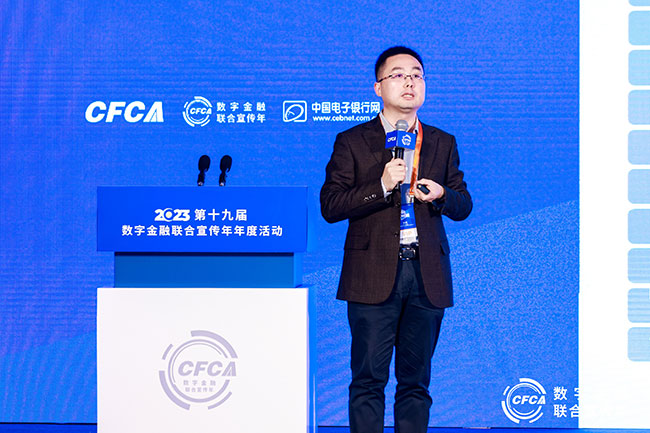
At a 2022 digital-finance conference in Zunyi, Li argued that younger customers wanted brands to meet them at eye level and invite interaction. Conventional promotional calls and push messages were losing their appeal. He pointed instead toward the ways people already discovered and discussed things on social and video platforms.
His advice for financial writing was almost an editor’s checklist: use diagrams, examples, stories and comparisons; explain ideas in everyday language; organise material as questions and answers; keep recommendations clear and usable. Professional knowledge had to survive the translation, while the prose became something a customer might voluntarily read.
BETA had established a financial short-video production operation and a games team. Li saw simulation and experience as useful ways to make financial ideas accessible. The decision gives his technology story an unexpected cast member: the game designer, employed in the vicinity of the fund database.
His wider service proposals that summer included extending attention beyond wealthy customers, grouping people by their needs, and continuing support through different stages of their experience. He also urged banks to put more emphasis on maintaining products and serving customer needs. For Li, the job of explanation continued well beyond a launch campaign.
The manager needs a better conversation, too
Li applied a similar argument inside the workplace. Speaking in 2022, he described BETA’s frontline employees as averaging 27 years old. Simply ordering them to circulate promotional material could leave much of it unshared. Managers grew frustrated; employees resisted. He favoured rankings, competitions and incentives as ways to make participation more appealing.
He coupled that approach with detailed visibility into the sales process. Managers should see where work became stuck, break tasks into daily actions and adjust their approach as evidence arrived. His description of a central production operation used the image of a kitchen supplying material to branches.
The anecdote is revealing without requiring a personality diagnosis. Li did not describe the trouble as a shortage of orders. He described the shortcomings of issuing them. A task can be perfectly clear and still fail to make anyone enthusiastic about doing it.
From the product shelf to the customer’s question
By 2023, Li was discussing how generative AI could change the interface itself. At a Beijing seminar co-organised by BETA and the Chinese Academy of Social Sciences’ Institute of Finance and Banking, he anticipated conversational services reducing the effort of navigating complicated menus. He also distinguished near-term gains in efficiency and personalisation from the more extensive changes he expected over time.
Later that year, his mobile-banking argument focused on serving existing customers as traffic growth weakened. Opening an app to check an account or read a notification could become an occasion for relevant service. The institution already had a relationship; the question was whether it used those encounters intelligently.
Li illustrated conversational advice with a customer asking what to do with spare money. A system could ask follow-up questions about the money’s time horizon and the person’s risk tolerance, gathering context before responding. The example returns to his earlier concern with knowing the customer. A longer product shelf does not, by itself, explain what someone needs.
In a December interview, he described a five-step operating method that moved from identifying a meaningful situation through triggers, strategy and content to conversion. The emphasis was on organising a response around the customer’s circumstances. BETA’s 2023 company milestones included an LLM-based assistant for relationship managers, alongside mobile-banking and continuing-service products.
LI’S FIVE-STEP CUSTOMER METHOD · 2023
- 01 Identify the moment
- 02 Define the trigger
- 03 Build the strategy
- 04 Deliver relevant content
- 05 Support conversion
A sequence for organising customer engagement, rather than a forecast of investment results.
The coach joins the conversation
In November 2025, Li took his argument to a training-products exhibition in Beijing. His presentation considered how AI could reshape the whole training process, from identifying needs and generating material to delivering learning and assessing results. He proposed broader roles for trainers in designing learning experiences and improving outcomes with data.
In March 2026, he discussed the economics of BETA’s AI coach. Falling token costs, he said, had made commercial deployment possible. His investor-education proposals combined simpler language with short videos, interactive assessments and simulated investment games. He wanted education to produce business value for institutions while giving customers a more enjoyable way to learn.
“Good investor education must be people-centred.”Bruce Li · translated from Chinese, March 2026
His ambitions also extended overseas: he envisaged Chinese intelligent investor-education services reaching other markets as technical capabilities and localisation improved. His public professional profile places him in Singapore. The setting has changed since the early bank-adviser tools, and the software can now conduct more of the exchange.
The recurring question remains modest enough to fit on an adviser’s notebook: what would make the next interaction useful? Li has approached it through databases, apps, content production, games and coaching. Each adds another way to prepare for the conversation. The customer still gets to decide whether to keep listening.
Continue the conversation
- BETA DATA · company website
- Bruce Li · LinkedIn
- 2016 · Adviser tools and Li’s early career
- 2018 · Adviser studios and the two-month experiment
- 2020 · Customer relationships after the sale
- 2021 · Li’s customer-journey presentation
- 2022 · SoftBank Ventures Asia-led financing
- 2022 · Making financial content readable
- 2022 · Customer service through the whole journey
- 2022 · Teams, incentives and process management
- 2023 · Investor education and generative AI in Beijing
- 2023 · Mobile-banking presentation in Beijing
- 2023 · Li’s five-step customer method
- 2025 · Training roles and AI
- 2026 · AI coaching and investor education
Interviews and event coverage are in Chinese. The brief quotation above is translated into English.