John Rose had an awkward profession to explain. In the Soviet Union, where a queue could form before its members knew what was being sold, advertising sounded like evidence against a product. If something needed persuading people to buy it, what on earth was wrong with it? An American arriving with an agency could expect to spend some time explaining the agency.
The question still has bite. Advertising usually begins with a shared assumption: somebody has a choice, and somebody else would like to influence it. Rose encountered people whose shopping lives had supplied a different set of assumptions. Before the clever line came the explanation of why a clever line might be needed.
He was already running a business in Boston. He would go on to work with international brands, write about cooking with vodka, help organise a festival of magic in Havana and advise businesses from Dubai. Those activities make an unruly introduction. They also make a more interesting one than a job title can manage.
A five-year-old agency goes east
Rose founded his agency in Boston in 1984. The Soviet opening followed in 1989, putting an American creative business into a marketplace that was learning unfamiliar commercial habits. The agency’s account of its beginnings includes a detail that sounds appropriately modest: a conversation on an aeroplane.
A partner had met representatives of Moskovskaya Pravda. They had permission to launch a magazine that could accept advertising and wanted help. Discussions led to a publishing venture called Moscow Business. Print, publishing and an unexpected introduction supplied the way in. A meeting about making a magazine became a much larger undertaking.
Looking back, Rose resisted giving his arrival a heroic historical script. “I grasped the inevitability of the market,” he recalled. That is a businessperson’s explanation, with the benefit of hindsight kept at arm’s length. People would have products to choose from. Businesses would need ways of reaching them.
“I grasped the inevitability of the market.”
John Rose, recalling the Soviet opening
The early work could be wonderfully literal. Putting a message on a wall involved practical arrangements for getting the wall painted. The story of advertising here includes engineering, permissions and production, alongside copy. There is a useful corrective in that picture for anyone who imagines creativity finishes when the presentation ends.
A publicist with limits to his powers
By 2015, Rose’s client history included Coca-Cola, Samsung, Sony and Volvo. He had spent enough time in Russia to have opinions about its business habits, including a fondly exasperated account of companies treating an executive’s name as a secret even when it appeared on their website.
His point was practical. Being open to customers matters; so do the people doing the work and the care with which they do it. Secrecy can be a very elaborate way of protecting something nobody was especially eager to steal.
He also described clients who wanted an accurate but unwelcome article stopped. Public relations could supply context, make an argument and help the next conversation. It could not simply erase inconvenient reporting. That boundary gives his professional position some texture. A publicist earns his fee in a world containing other people’s decisions.
His later appearances place that experience in a broader business setting. Harvard Alumni Entrepreneurs listed him as a speaker in its May 2023 programme about becoming a board advisor. The subject was a transition many founders consider: how running a company can become useful experience for advising another one.
Dinner, with a change of brief
Then there is the cookbook. Published by Kyle Cathie in 2005, The Vodka Cookbook brought together more than 100 recipes. Its premise moved an ingredient associated with a drink into the rest of the meal. Brunch, dinner and dessert all received attention. A bottle had acquired considerably more duties.
Rose had already conceived and edited the Marriott Hot Shoppes Cookbook. Food writing therefore belongs in the biography as a working practice, rather than a decorative hobby added to soften an executive profile. He has made books as well as campaigns, and a book has readers who expect rather more than a memorable opening line.
The recipe names disclose the copywriter’s pleasure in language. There is Disoriented Duck. There is Glazed & Confused Chicken. The table of contents offers a meal and occasionally behaves as though it would also like to host the entertainment.
recipes in The Vodka Cookbook, published in 2005
Also appearing: Glazed & Confused Chicken
It would be too tidy to make every dinner an advertising metaphor. Cooking has its own pleasures and its own exacting audience. Still, the book lets a reader see Rose working in a different register: playful, specific and willing to follow an idea well past the first joke.
That willingness matters to the shape of the life. A founder’s biography often acquires the efficiency of a company presentation. This one keeps wandering into kitchens. The detour is part of the subject, and the subject is better company for it.
Then came the magicians
Havana supplied another setting. Rose’s agency launched a public relations operation there in 2015. Reporting the following year described an operation with four consultants, entering a country where changing commercial relationships were drawing the attention of foreign businesses. Rose had again chosen a place where introductions required local understanding.
The more surprising development was MagiCuba. Rose created an international festival and conference of magic in Havana, working with mentalist Jon Stetson, Bill Herz of Magicorp and the Union of Writers and Artists of Cuba. The advertised 2018 programme brought the worlds of performance, travel and event production into the same undertaking.
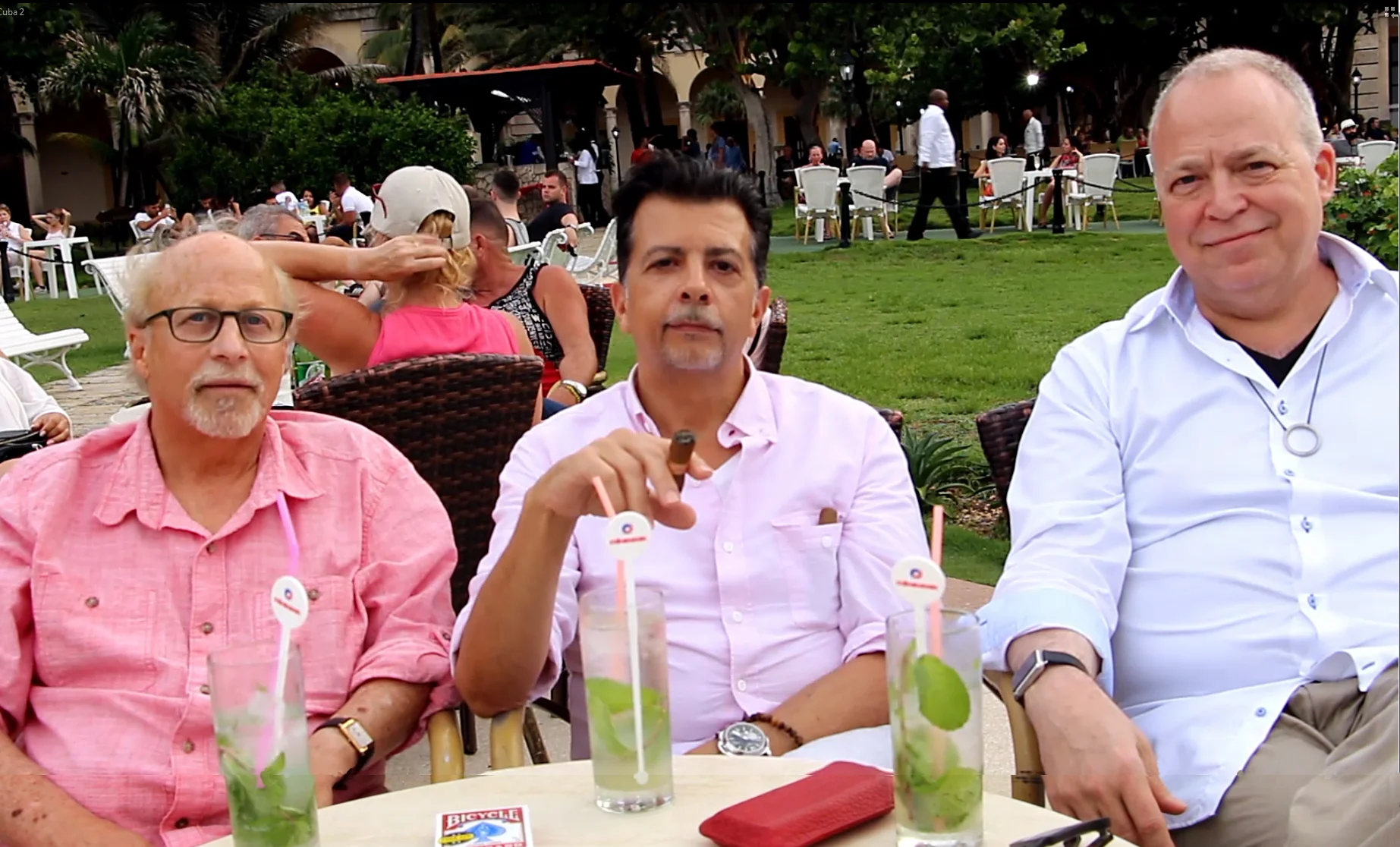
A festival makes an idea answerable to the calendar. Performers need venues. Visitors need a programme. An organiser has to bring enough separate decisions into agreement for an audience to experience an evening rather than the administration behind it. Whatever appears effortless onstage has usually required considerable effort elsewhere.
Rose described the purpose in terms of bringing magic to Cuba and drawing attention to Cuban magicians. Plans included street performances around Old Havana and a conference at the Hotel Nacional. There was room for professional discussion as well as public entertainment, with local performers central to the proposition.
That distinction keeps the project interesting. Cuba supplied more than a picturesque address for an imported show. The stated ambition included an exchange between performers and a public encounter with their work. The organiser’s task was to make those meetings happen.
Three words he would rather you left out
For a more direct view of Rose’s taste, consider his writing about taglines. He divides his feelings between affection for a phrase that captures a brand and irritation at phrases that merely congratulate it. His advice has the briskness of somebody who has sat through the meeting before.
Make the line credible. Give the customer a reason to like it. Find an original expression. Along the way, he proposes leaving out three particularly overworked words: “best”, “we” and “quality”. A surprisingly large portion of corporate prose would have to find another occupation.
The humour has a purpose. A boast that could belong to any competitor tells the customer little. A promise that cannot last creates another problem. His test asks the writer to make choices rather than decorate an assertion. You can hear the same impatience in his recent comments about polished briefs that still lack thinking.
Three tests from his essay on the small phrases brands ask to do a large job.
The next reader has no eyes
His current writing turns to an audience early agency life did not anticipate. Rose now examines how businesses appear in answers produced by AI systems. In his PR for Robots work with Samson Ogbu, he argues for joining publicity and search expertise around credible, clearly presented information.
In an August 2026 essay, he described the website as having two audiences: people who need to be persuaded and machines trying to assess information. This is Rose’s argument about a changing market. It is also a recognisable problem for a creative director: the same material may have to satisfy readers who want different things from it.
Another August article asked whether marketers could buy or manipulate their way into an AI recommendation. His answer favoured doing the underlying work: earning credible coverage, developing expertise and making the resulting evidence discoverable. The impatience with shortcuts sounds familiar after his earlier complaints about self-congratulatory taglines.
By October, he was writing about manufactured journalistic identities and the appearance of authority. Across these essays, trust is a recurring concern. He is interested in what makes information convincing, and what happens when the signals people rely on become easier to imitate.
Boston, Moscow, a cookbook, Havana, Dubai. The itinerary resists a neat professional category. Rose has kept finding work where an idea needs an audience and the audience needs a reason to care. Sometimes that requires a business strategy. Sometimes it requires a recipe. On a memorable occasion, it required booking the magicians.