John Martino II has a way of making retirement sound like an appointment he keeps rescheduling. An idea arrives. A company follows. Eventually, there may be a sale. Then another idea makes its case for the calendar. The founder and CEO of synseer describes moving in and out of retirement as he creates businesses and sells them. It is a career rhythm with a small administrative problem: the ending keeps turning into a beginning.
He calls synseer his seventh company. Three of his exits, he says, were to public firms. Those are the numbers that fit neatly into an introduction. His advice to other entrepreneurs is less tidy, and more revealing. It concerns the hours a deal can swallow, the decisions a team needs and the usefulness of listening to someone else when experience might tempt you to do all the talking.
Retirement, interrupted
Martino was running a construction company by 17. The detail places his first business responsibilities well before the technology ventures that would occupy his later career. Before there was a founder’s explanation of how to build a company, there was a company to run. Construction is a particularly literal introduction to the distance between an idea and something that has to stand up.
His subsequent work took him into technology. His company biography describes projects addressing complex technical and data problems for organizations including NASA, IBM and Fidelity. The range matters to the story: his career has involved applying technology to the requirements of other organizations, with their own systems and expectations. An elegant concept still needs somewhere useful to go.
His public professional history includes businesses called Complex Architectures, Luminescence Technologies and TechnoBabble Communications. The last name has a welcome flicker of humor for an industry that has never struggled to manufacture more vocabulary. TechnoBrillanti later appears in that history as another chief executive role. Different names, repeated responsibility: build an organization around a technical proposition.
There is a teaching chapter in his account, too. At LSI, Martino said he had lectured at Northeastern for 17 years. His public professional history also lists volunteer work with the Ten-Year Haiti Commission from 2010 to 2020. These activities give his career a wider frame than a sequence of chief executive titles. Teaching calls for explaining an idea to someone else. Volunteering places expertise inside another organization’s work. Both sit alongside the repeated creation of companies, adding other ways to spend the knowledge accumulated between one business and the next.
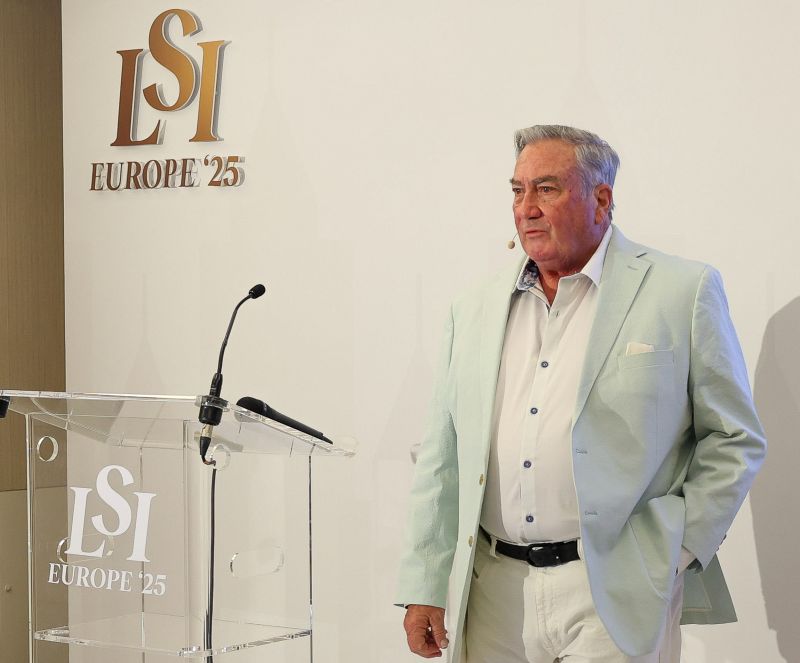
By the time he stood at LSI Europe in 2025, Martino could describe a career that included both creating businesses and leaving them. Yet he was there to present another one. The exit had not retired the activity. It had made space for another attempt.
The invoice that says zero
In June 2025, Martino published a short essay about the word “free.” He gave it an expansion of his own: Fundamental, Realistic, Equitable Exchange. The acronym turns a tempting offer into a negotiation. Something changes hands, even when no money does.
He asks entrepreneurs to consider the time, effort and resources an arrangement requires. A discounted service might demand substantial involvement. A partnership might consume expertise. The initial price can leave the larger obligation out of view. His closing question is compact enough to take into a meeting: “What is it really costing me?”
What is it really costing me?
John Martino II
That is a particularly useful question for a founder returning to the beginning. Experience may bring contacts and opportunities. It does not supply an unlimited working week. Each attractive invitation makes a claim on the same finite calendar. A deal can be perfectly respectable and still take time the company needs elsewhere.
There is a dry practicality to this version of entrepreneurship. The founder gets to have an ambition, then has to account for its appointments. The free offer becomes interesting only after someone asks what the business must give in return. Even a bargain should be able to survive a few questions.
The résumé meets the to-do list
Martino’s career has produced an introduction measured in ventures and exits. His public comments about execution bring the scale back down to the day. An idea needs priorities. A team needs decisions. Someone has to turn the proposition into tasks that people can complete.
He has returned to that argument in his posts, emphasizing the work of carrying an idea through to a functioning business. The emphasis gives a different texture to the repeat founder’s story. Previous experience travels into a new venture, but the work itself has to be done again. The next company cannot borrow a finished operating day from the last one.
A pitch can move from possibility to possibility without much friction. A working company has to decide what receives attention first. That makes execution an exercise in choosing, including the uncomfortable choice to postpone something appealing. In Martino’s account, keeping the team focused belongs alongside making the initial case for the business.
His LSI appearance put that operating agenda in front of an audience. He discussed funding for inventory, sales and marketing, research and development, operations and data science. Each item describes a different demand on the same organization. However persuasive the introduction, a company still needs the means to make, deliver and improve what it proposes.
A plan with room to move
Martino also writes about the need to adjust a company’s direction as circumstances change. He treats a clear mission and a flexible plan as compatible. Team members and investors need to understand the destination; the route can still require revision.
It is advice with an interesting consequence for a repeat founder. Experience can help someone recognize a familiar problem. It can also make a familiar answer feel unusually comfortable. Keeping a plan open to change requires asking whether the present situation actually resembles the earlier one closely enough.
The distinction matters in a career built around starting again. A new company arrives in a new set of circumstances, even when its founder has been through the process before. Customers have their own expectations. The people doing the work bring different strengths. A plan earns its place by helping this particular company move.
Martino’s argument leaves space for changing the method without treating every adjustment as a loss of purpose. A founder can remain attached to the problem while becoming less attached to the first solution. The business gets a chance to learn before the plan hardens into ceremony.
The relationship behind the unit price
His writing about contract manufacturing brings the same attention to what sits beyond the headline number. A low unit price is only part of a business relationship. Martino asks leaders to examine pricing transparency, consistent processes, protection of intellectual property, alternative production options and compatible incentives.
These concerns turn the manufacturer into part of the company’s practical architecture. A partner’s priorities affect the product. Its willingness to communicate affects decisions. Its ability to support changes affects what the business can attempt next. The supplier relationship reaches well beyond the moment an order is placed.
Read alongside his essay about free offers, the argument has a recognizable shape. Look at the whole arrangement. Consider what it asks from both parties. Ask whether the incentives will still make sense after the pleasant conversation that began it. The small print has a way of becoming the working day.
Leave a chair for the mentor
For all his emphasis on experience, Martino recommends finding a mentor even after several ventures. He has repeated that advice publicly, asking founders to seek someone whose judgment they trust and whose background they can draw on. The recommendation makes room for another person inside an occupation often described through individual conviction.
A repeat founder has a substantial store of previous decisions. A mentor can bring a different store. The value lies partly in the questions that arrive from outside the founder’s own account of what is happening. Someone who has built before can still benefit from having an assumption interrupted.
Martino’s longer entrepreneurship essay also gives learning and building value a place in the reason for doing the work. Wealth alone is an insufficient explanation in his account. The enterprise has to offer something useful, and its founder has to remain willing to learn while making it.
That brings the story back to his peculiar arrangement with retirement. He has an account of what he has already built and sold. He also has a company requiring present-tense decisions. The next opportunity has to be weighed, the next priority chosen, the next question heard. Another idea may have brought him back. The calendar is where he has to make room for it.
Continue the conversation
More from Martino, in his own words.