Sales and marketing can work for the same company and still require a formal introduction. John Gravely saw a business in that awkward arrangement. A customer showed interest; one team knew; another team needed to act. Between the two lay enough lost context to keep a software founder occupied for years.
He co-founded ClickDimensions in 2010 around that problem. The premise was practical: put marketing tools inside Microsoft Dynamics CRM, where customer relationships were already being recorded. Email, website activity and the next sales conversation could belong to the same working picture. The customer would be spared the administrative distinction between being marketed to and being sold to.
Gravely had already built and sold c360 Solutions, another business serving Microsoft's CRM users. Later came SalesSpark, again in the same ecosystem. His career makes an interesting case for staying close to a problem long enough to notice its adjoining rooms. The names changed. The interest in what happened between a business and its customers endured.
A useful addition to somebody else's platform
Before ClickDimensions, Gravely worked on the less theatrical side of enterprise software: helping organizations put customer relationship systems to use. At Onyx Software, he served as a regional consulting director. His early professional biography described experience overseeing dozens of CRM implementations across different industries, alongside hands-on consulting work.
That is a useful education in the distance between buying software and getting a day's work done. An implementation has to accommodate the business that actually exists, complete with its particular routines. A missing search function or an awkward email task may look small in a presentation and become enormous by Thursday afternoon.
At c360, he helped build additions to Microsoft's CRM platform. The company's products included SearchPac, Forecast Manager, Activity Summary and Email Link. Even the names have the plainness of tools kept within reach. They tell you what they intend to fix before requiring you to admire the branding.
CDC acquired c360 in April 2006. Its corporate filing described a business selling through an online store and more than 450 authorized reseller partners worldwide, without a direct sales force. Distribution through partners was already part of Gravely's working world. A specialist software business could travel internationally through people who already understood their customers.
The customer record becomes the meeting place
By September 2010, Gravely was introducing ClickDimensions, an Azure-based marketing automation offering for Dynamics CRM. He had also worked as marketing chief at Scribe Software. His experience now extended across implementation, product businesses and the work of finding customers for software itself.
The launch offering covered web tracking, lead scoring, social discovery, form capture and email marketing. These functions answered related questions: who had visited, what interested them, what information they volunteered and whether their actions suggested a conversation was worth pursuing. Giving those signals a place in CRM made them available beside the relationship record.
There is a modest elegance to that design decision. Software often asks people to visit another screen before it will help them. ClickDimensions started with the screen its intended users already inhabited. Gravely's stated inspiration was the disconnect he had seen between sales and marketing departments. The product addressed that separation in the structure of the work.
Notice interestVisits · forms · email↓02
Keep the contextThe Dynamics CRM record↓03
Choose a follow-upMarketing and sales can act
The founding product idea, simplified.
Three people, then forty-eight
In June 2013, as ClickDimensions turned three, Gravely gave customers and partners a fairly concrete account of the company. It had 48 team members, including six long-term contractors. Two and a half years earlier, there had been three people. Twenty-six of the current team worked in the Tel Aviv development center.
Both the Atlanta and Tel Aviv teams were preparing to move into larger offices. That detail gives the growth a physical scale: more people, more space and more product work to coordinate across locations. The company also counted more than 422 channel partners and 91 certified professionals.
Gravely reported 248 percent revenue growth for 2012. Through May 2013, revenue had already exceeded three quarters of the previous year's total. He also said cash in the bank was more than four times the funding received at the end of 2011. Growth was accompanied by an insistence that the business had money to keep working.
June 2013
June 2013
June 2013
In 2015, ClickDimensions placed No. 227 on the Inc. 5000 and No. 25 in its software category. The business had added support and services resources in Greenville, South Carolina, alongside offices in Atlanta, Tel Aviv and Fargo. The specialist product had acquired a rather extensive address book.
The people behind the percentages
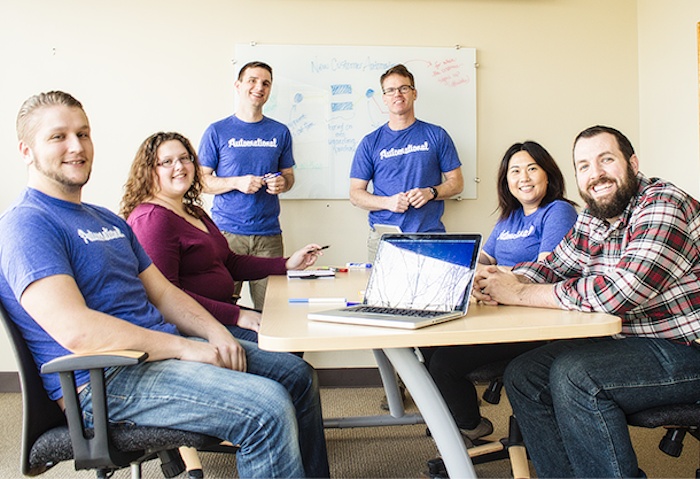
Asked how he managed ClickDimensions and its small-business offering, Automational, Gravely answered with a short sentence: “We hire the best people.” The rest of his answer returned credit to the employees doing the work. It was an unadorned explanation for a job that might otherwise invite a lecture on the founder's remarkable diary management.
“We hire the best people.”
John Gravely, on managing ClickDimensions and Automational, 2016
People also appear in the less photogenic operating details. In February 2016, Adam Jones became chief operating officer while continuing his finance responsibilities. Kim McEwen, who had combined operations with building account management, would concentrate on that team. Gravely credited her work with helping produce a net retention rate above 96 percent.
Those decisions reveal the work beneath a growth announcement. Renewals need attention. Finance needs capacity. Responsibilities that once fitted around one person's desk eventually need their own desks. Gravely described the appointment as a way to support growing revenue and operational demands while preserving the experience of customers, partners and employees.
The company also brought experienced software operators closer. Jim Armstrong and Wain Kellum joined its board in March 2015 and increased their existing equity positions. Armstrong's Canal Partners had invested in late 2011. Gravely was building with people who had already dealt with the complications of making software companies larger.
A second product for the customers outside the door
ClickDimensions' focus also exposed a boundary. Small businesses wanted sales and marketing tools, but many were outside the Microsoft CRM customer base the original product served. Gravely and fellow founder Koren Tako identified an opening for something designed around those businesses' needs.
Automational, launched in 2015, combined CRM with marketing automation in an all-in-one product. It extended the team's technology into a different buying situation. A small-business owner needed a manageable way to organize contacts and follow up with leads, without assembling the arrangement expected of a larger organization.
Meanwhile, the original product kept developing. A December 2015 release introduced a drag-and-drop campaign automation builder with triggers, timers and actions. A participant's interactions could determine the path through a campaign. A Power BI content pack brought another way to examine marketing results. The ambition remained tied to a customer's next useful action.
The investment, and another beginning
Accel-KKR's growth equity investment arrived in May 2016. ClickDimensions then reported more than 2,400 customers and nearly 1,000 reseller partners. The announced purpose was further investment in products and innovation. Financial terms were undisclosed, so the meaningful public measures were the customer base, distribution network and operating business.
Gravely discussed building out features for enterprise customers and investing from a profitable position. By then the company had a reported $10.8 million in 2014 revenue behind it. The original idea had become a business with the resources, and the expectations, to serve a wider range of needs.
By late 2019, he was discussing SalesSpark, a sales engagement application built on Microsoft's Power Platform. His responsibilities included sales, marketing and product management. In January 2020, he spoke with CRM Rocks host Markus Erlandsson about building an independent software business, attracting talent, support and the Microsoft partner network.
The subjects were familiar. A new company had brought him back to the practical questions of building a team and helping salespeople follow through. In April 2021, after his death, TekStack acquired SalesSpark's product, brand and other assets, with plans to incorporate the application into its own offering.
There was a world beyond the customer record
John Stuart Gravely was born in Charleston, West Virginia, on February 1, 1967. He attended Woodberry Forest School, earned an engineering bachelor's degree at Clemson and completed a master's in international business at the University of South Carolina. His education brought technical study and international commerce into the same life.
He was also an Eagle Scout who enjoyed hiking, biking, spearfishing, guitar and travel. He lived in Dunwoody, Georgia, and was married to Kimberly, with two children, Ethan and Taylor. Family remembered his adventurous spirit and sense of humor. Those details give a fuller picture than a list of software exits can manage.
Gravely died on August 4, 2020, aged 53. The work he left offers a practical way to remember him: a search made easier, a customer response kept in view, a team given enough room to grow. He spent years attending to the unglamorous intervals in business, where a little more context could help somebody do their job.