John Cohlan did not want to move to Palm Beach. He was working in corporate finance, his employer wanted its office in Florida, and he would have preferred New York. It is a pleasing inconvenience in the story of a business devoted to getting away: one of its founders had to be persuaded to go.
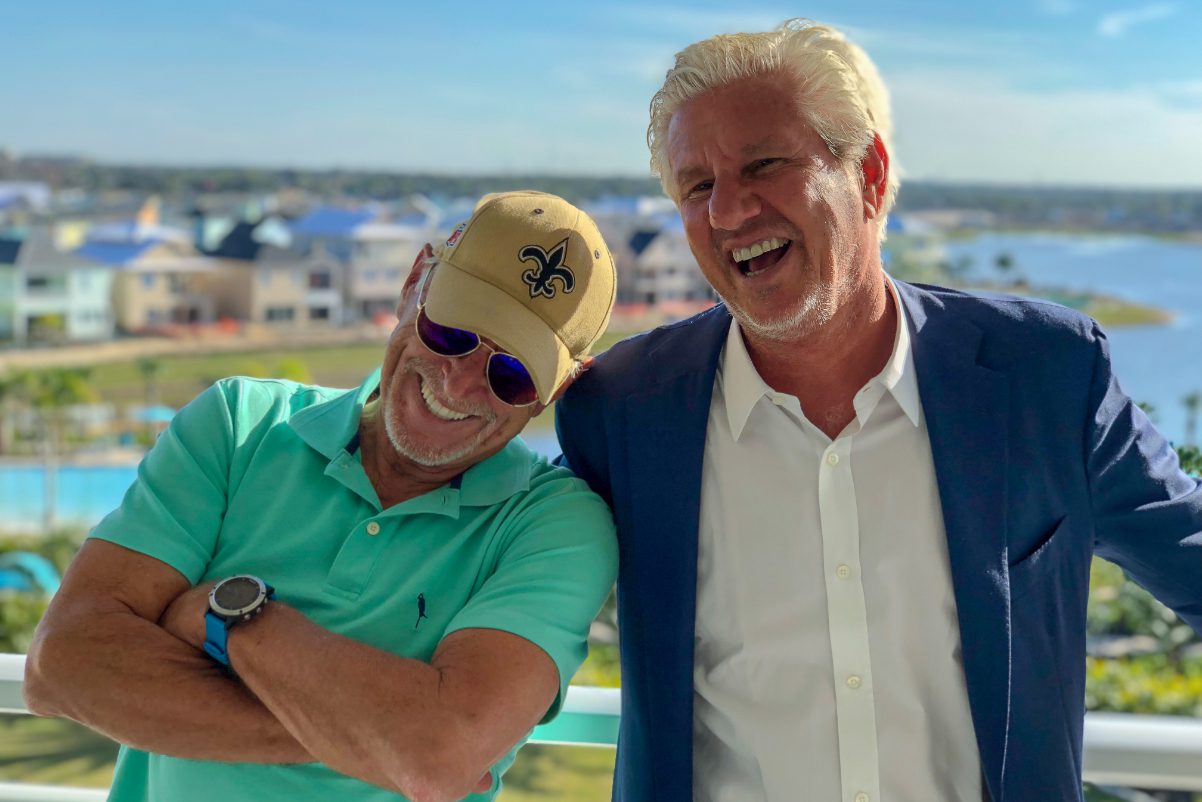
The move brought him into the orbit of Jimmy Buffett and his wife, Jane. A friendship followed. Then came the possibility of working together. Cohlan, who had spent time around brands such as Arby’s, Snapple and RC Cola, began to see something commercially interesting in the people gathering around a singer.
He would help give their shared daydream restaurants, hotel rooms and, eventually, departure ports. But the starting point was social. Before the contracts and the resort openings, there was the ordinary good fortune of meeting someone whose company you enjoyed.
A useful detour through Florida
Cohlan’s preparation for hospitality took a winding route. He graduated from Princeton in 1979, attended the London School of Economics and graduated from Georgetown Law Center in 1984. He studied American history, then law, and went into business without practicing as a lawyer.
At Triarc, he became senior vice president of corporate finance. The holding company’s consumer businesses gave him a close view of how names acquire meaning for customers. A brand could connect otherwise separate transactions: one meal, one drink, one purchase at a time.
Buffett’s following offered a particularly vivid version of that connection. Watching a performance at the New Orleans Jazz & Heritage Festival from the side of the stage, Cohlan looked out at a crowd whose enthusiasm suggested something beyond a successful evening’s entertainment.
The customers had assembled themselves. They shared a taste for the world Buffett described and the pleasure of participating in it together. For someone accustomed to thinking about consumer businesses, the sight was an invitation to think about what else those people might enjoy.
The customer came before the hotel
Buffett already had a merchandise and restaurant business. Its early retail story, as Cohlan tells it, included irritation at people selling T-shirts with Buffett’s name misspelled. There are two Ts in Buffett. An unauthorized shirt could apparently be disappointing in several ways at once.
Universal’s interest created a different opening. It wanted a Margaritaville restaurant at its Orlando entertainment development. Buffett and Cohlan formed their business in 1997; the restaurant opened in 1999. Cohlan moved from evaluating consumer brands to helping build one with a musician.
There was a real choice in the arrangement. Buffett could lend a name to somebody else’s restaurant. Working with Cohlan allowed them to develop a business around what that name meant. That involved thinking beyond the popularity of any individual recording.
In Cohlan’s account of their early research, people associated Margaritaville with a song, Buffett and the place they wanted to be. The association was broad enough to be useful. A restaurant could offer a few hours inside that place. A hotel might offer several days.
“An emotion can travel to many more places than a product.”
John Cohlan, November 2024
That observation helps explain the variety that followed. Consumer products and a radio station could accompany someone at home. Hospitality could provide the setting for a weekend away. Each format asked for a different kind of work, while drawing on a feeling customers already recognized.
A room for the daydream
Lodging arrived gradually. The first Margaritaville hotel opened in Pensacola Beach in 2010. The Hollywood Beach resort followed in 2015, a ground-up project that gave the company a substantial beachfront expression of its ideas.
A restaurant visit has an ending built into it. A resort lets the mood continue through breakfast, an afternoon by the water and the evening’s choice of somewhere to eat. There is also more time for a guest to discover whether the experience matches the expectation.
Cohlan’s description of the desired luxury is revealingly domestic. He talks about comfort, pillows, sheets and the bed. His phrase is “casual luxe.” You can want a comfortable room without wanting the ceremony that sometimes seems to come with one.
Asked about favorite occasions at the properties, he points to weddings and reunions. His answer turns toward friendships renewed and new ones made. The appeal of a gathering is partly the setting, partly the people you can persuade to gather there.
His resort vocabulary has room for both. Food and drink give people a reason to sit together. A comfortable room makes it easier to stay. The broader commercial idea rests on fairly familiar human appetites, which may be why it can accommodate so many different kinds of holiday.
- 1997Cohlan and Buffett form the business
- 1999Universal CityWalk restaurant opens
- 2010First hotel, Pensacola Beach
- 2015Hollywood Beach resort opens
- 2022Margaritaville at Sea launches
Permission to be a little ridiculous
Consider the oversized flip-flop in the Hollywood Beach lobby. Cohlan has recalled seeing Jeff Koons’s Popeye at the Wynn in Las Vegas while working with designer Pat McBride. The thought of a large sculptural presence found its own, distinctly Margaritaville footwear.
The sandal was intended for a corner. During installation, it moved into the middle of the lobby. The result gives an arriving guest an unusually concise introduction to the place. A serious amount of planning has produced a very unserious shoe.
Cohlan enjoys the design work. He has also put a less photogenic activity at the center of the business: training. However recognizable the surroundings become, guests still spend their holiday dealing with people. Somebody has to make the welcome feel like a welcome.
Expansion changes the difficulty of that task. A name can appear in many places faster than a consistent culture can take root in them. Cohlan has spoken about the fragility of brands as they grow. More locations create more opportunities for an experience to fall short.
That concern gives the cheerful objects some necessary weight. The flip-flop can announce what a guest should expect. The employees have to carry the announcement through dinner, checkout and the small requests that occupy the space between them.
Escape, with a Manhattan address
Then there is Times Square. Margaritaville Resort Times Square opened in 2021, putting a resort proposition into a place where the surrounding entertainment district supplies rather more traffic than sea breeze. Cohlan had wanted a New York presence for decades, initially imagining a restaurant.
The eventual opportunity went upward. The company created a vertical version of its resort experience. The location made a useful point about Cohlan’s idea: the invitation to take a break could survive a change in scenery, provided the place gave guests something enjoyable to do.
Other formats tested the same proposition in different circumstances. Camp Margaritaville brought it to RV travelers. Compass offered a smaller lodging format. These were practical adjustments to where people travel and how much property a particular market can support.
None of those settings is interchangeable for a guest. Someone arriving with an RV needs a different welcome from someone stepping out into Manhattan. The common name brings the expectation; the format determines how the host has to satisfy it.
The invitation goes to sea
Cruising supplied another setting, and another set of partners. Margaritaville already had experience aboard Norwegian’s ships before Margaritaville at Sea launched in 2022. The latter put the brand on a cruise line, beginning with short trips from the Palm Beach area to the Bahamas.
Cohlan’s role needs a precise title here. He leads Margaritaville, the brand licensing partner. Christopher Ivy leads Margaritaville at Sea. The distinction matters because a recognizable name and the operation that delivers a voyage have different responsibilities, even when passengers experience them together.
The Islander expanded the offering in 2024 with longer trips from Tampa. Savannah Buffett became its godmother. For Cohlan, who had worked with her father for nearly three decades, that appointment carried a personal connection into a public ceremony.
In May 2025, the cruise company announced the acquisition of Costa Fortuna as its third vessel. Later plans identified the ship as Beachcomber, with a January 2027 debut. The plans also included Same Boat, a music venue developed with Zac Brown.
Brown’s longstanding connection with Buffett supplied another familiar thread. A business that began around a musical audience was making room for live music on a ship. The geography had expanded considerably; the reasons for bringing people together remained easy to recognize.
Approximate annual branded system-wide sales, November 2024.
Keeping the feeling in working order
Cohlan was still explaining the business in June 2026, joining Katie Cline’s Suite Success podcast to discuss its origins, culture and growth. Nearly thirty years after founding the company, the questions included how to maintain the connection as the formats multiply.
His public account of the partnership keeps returning to the pleasure of Buffett’s company. The business grew out of a friendship, and Cohlan describes the laughter as readily as the opportunities. It is a useful detail to retain amid the sales figures and the vessel announcements.
He also connects Buffett’s philosophy of time off to respect for work. Escaping from a job presupposes having one. The vacation gains some of its meaning from the effort that comes before it, which gives the entire enterprise a firmer footing than permanent idleness.
Cohlan’s own detour fits that thought. He went to Florida for work and found a different working life there. Decades later, other people can book a room or a passage into the world he and his friend helped build. Somewhere among the contracts, the training and the improbable footwear, he found good company.
Continue the conversation
- Margaritaville · official website
- Margaritaville · company LinkedIn
- Watch · Cohlan at the Economic Club of Florida
- Watch · Cohlan and Tamara Baldanza-Dekker on Compass
- Read · the design interview
- Listen · Suite Success interviews
- News · the third ship announcement
- Read · Margaritaville’s Roatan announcement