Three months in Hawaii is a persuasive job advertisement. Erastus Radjimin took the offer: a hotel internship, a chance to spend time on the islands, a temporary arrangement with rather good scenery. The career consequences were less temporary. He found himself interested in the business of looking after strangers, then stayed in hospitality long enough to start asking what else a hotel might do.
That question would eventually lead him back to Indonesia, to his sister Christine, and to contemporary artists whose work deserved a wider audience. Together, the siblings developed ARTOTEL. The name was admirably economical: put art and hotel together, then work out how to make the combination earn its keep. The first property opened in Surabaya in 2012. Its proposition was that an artist could help determine the character of a stay.
The useful accident
Radjimin, often called Eri, had grown up near the business. His father, R. J. Radjimin, owned the JW Marriott Surabaya. As a boy, Eri accompanied him to construction sites and meetings. Hotels were part of the family landscape before they were a career choice. Yet he has described arriving at the industry indirectly, through that Hawaii internship, rather than through a settled ambition to follow his father. Familiarity can make an occupation seem ordinary; doing the work can make it interesting again.
He graduated from Boston University in 2007 and took sales roles with Marriott International in London and Singapore. He then worked at Vaya Tour in Jakarta and Para Group Indonesia. This was an education in several adjacent businesses: selling rooms, moving travelers and working inside larger organizations. The future founder had spent time on the side of hospitality where a concept has to become an actual booking. A hotel may invite daydreams. Its sales team still needs a customer.
Growing up→Boston
University→London + Singapore
Marriott sales→Jakarta
Building ARTOTEL
An audience, already checked in
Art supplied the other half of the idea. The siblings came from an art-collecting family, and Christine’s connections introduced Eri to Indonesian artists. The opportunity he saw concerned access. A country could have accomplished contemporary artists while many potential admirers remained unfamiliar with their work. A hotel offered a different route to an audience: people arrived for a room, a meeting or a meal, and encountered art along the way. No special trip to a gallery was required.
At the beginning, the business funded and owned its properties. Later it moved toward managing hotels for other owners, bringing its brand, operating expertise and artist network to their buildings. By 2016, Radjimin was explaining the sequence in practical terms: demonstrate that you can run your own hotel before asking someone else for a management contract. The first properties therefore performed two jobs. They accommodated guests and gave prospective partners something they could walk through, inspect and judge.
There is a particular advantage to that kind of demonstration. A pitch can promise atmosphere indefinitely. A working hotel has to provide it at breakfast, at check-in and on an otherwise unremarkable Tuesday. For ARTOTEL, the artistic concept had to coexist with the obligations of hospitality. The canvas came with plumbing, housekeeping and payroll. That combination gave the idea its commercial test, and gave its founders a reason to think beyond the opening-night photograph.
Permission to paint
The early experiment carried a nervous question: would guests welcome all this art? Radjimin has recalled moderating the first Surabaya concept because he worried about putting off older visitors. Encouraging reactions gave the siblings more confidence for later properties. At ARTOTEL Thamrin in Jakarta, artists including Darbotz, Eddie Hara and Oky Rey Montha helped establish the building’s visual personality. The work spread across surfaces and spaces that guests used, rather than waiting politely in a frame.
That willingness to let artists affect the building is the interesting part. Hotels depend on repetition: a reliable room, a recognizable booking process, familiar service. An artist introduces a particular viewpoint. Put the two together and a business has to decide what can vary and what must remain dependable. ARTOTEL’s proposition gave variation a visible job. A guest could recognize the hospitality brand while encountering work that belonged to a specific artist and place.
The room is ready. Or is it?
Radjimin’s operating concerns are considerably less photogenic than a mural. He has explained communication through a familiar hotel difficulty: a receptionist is checking in a guest while a housekeeper is still cleaning the room. Someone must close that gap before the guest is left waiting uncomfortably. In 2015, he described twice-daily departmental briefings and regular coaching. His point was concrete. Service depends on people knowing what is happening beyond their immediate task.
He also argued that a leader must develop the next generation of leaders. A hotel’s promise passes through many hands, so authority has to be accompanied by training and feedback. His concern about employees hesitating to speak openly to senior people makes the issue more specific than a cheerful instruction to communicate. The information that matters may be sitting with the person least inclined to interrupt a manager. Making room for that person is part of running the place.
“I want to be the dumbest leader in my office.”
Erastus Radjimin, 2020
The line is deliberately provocative. His explanation was that he wanted experienced professionals around him, people who understood their work and brought judgment to it. A chief executive cannot personally become every department’s expert. Radjimin has also used the image of a train’s leading carriage to describe his responsibility: if it stops, the others stop too. The two ideas sit together neatly. Recruit people who can do the work, and keep the organization moving.
Basketball offers a less formal view of the same preference. He has spoken about playing with friends, with his son and sometimes with his office team. Teamwork is an explicit part of what he takes from the game into business. It is a pleasingly practical founder’s hobby: a court offers immediate feedback on whether everyone is pursuing the same objective. A title on a business card does very little to improve a misplaced pass.
When the canvas gets bigger
Growth eventually required a broader vocabulary than the original art hotel. In October 2021, ARTOTEL announced Series B funding led by Indies Capital Partners, with participation from Benson Capital. Radjimin pointed to opportunities in developing Indonesian cities including Sentul, Malang, Cepu and Banyuwangi. His explanation acknowledged the limits of a single brand: different markets needed different options. The funding was intended for acquisitions as well as stronger business infrastructure, digital operations and sustainability.
The deals altered the scale of his job. In December 2021, the group announced its majority acquisition of Dafam Hotel Management, following its takeover of the Indonesian Kyriad franchise. At that point, its portfolio reached 50 hotels and about 5,000 rooms across 24 cities. For the founder, expansion now meant coordinating a wider range of brands and properties. Distinction at the level of an individual building had become one concern inside a much larger management business.
Surabaya
December 2021 deal
the group, September 2026
Recognition followed: Radjimin was an EY Entrepreneur Of The Year Indonesia finalist in 2023. His ambition included strengthening the business at home and expanding its offerings into Southeast Asia. The group’s four business pillars describe how broadly he had come to view hospitality: Stay, Dine, Play and Shop. A room provides the overnight transaction; restaurants, events and merchandise give a visitor other ways to spend time with the business and the creative work around it.
In April 2024, he signed the agreement marking ARTOTEL’s operation of the former Century Park hotel as ARTOTEL Gelora Senayan. The appointment followed an open tender process begun in December 2023. The setting at Gelora Bung Karno brought sport into the company’s mix of art and entertainment. It also placed the group inside an established Jakarta destination, taking responsibility for a property with a history and expectations already attached to it.
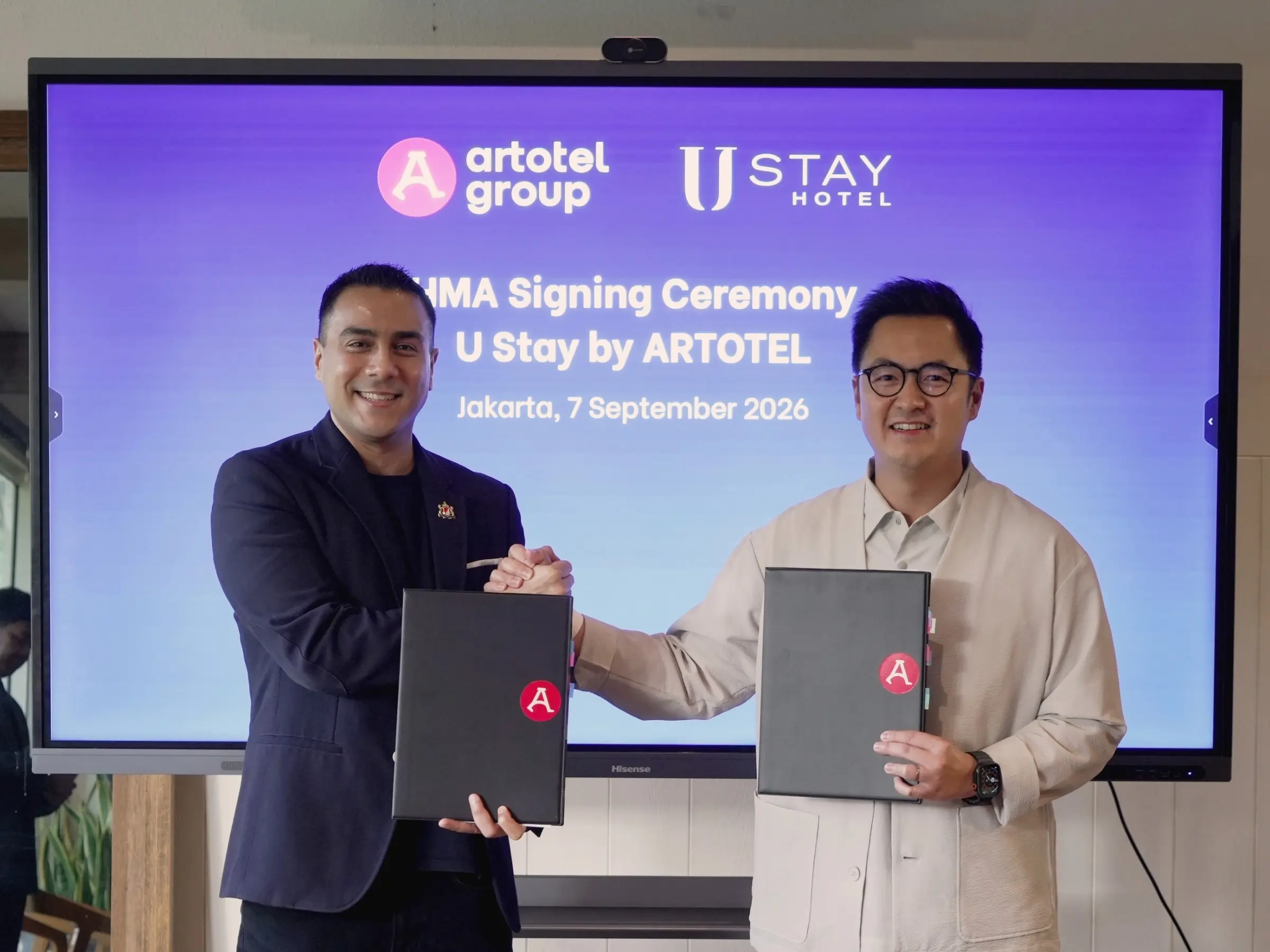
By September 2026, the group reported more than 100 hotels and 10,000 rooms across Indonesia. That month, Radjimin signed a management agreement with U Stay Group covering four properties in Jakarta and Bali, adding 250 rooms under the “by ARTOTEL” collection. The announcement emphasized the economy segment. U Stay’s separate ambition to reach 50 hotels within three years remained a target, a distinction that matters whenever hotel expansion starts producing attractive numbers.
What the hotel depends on
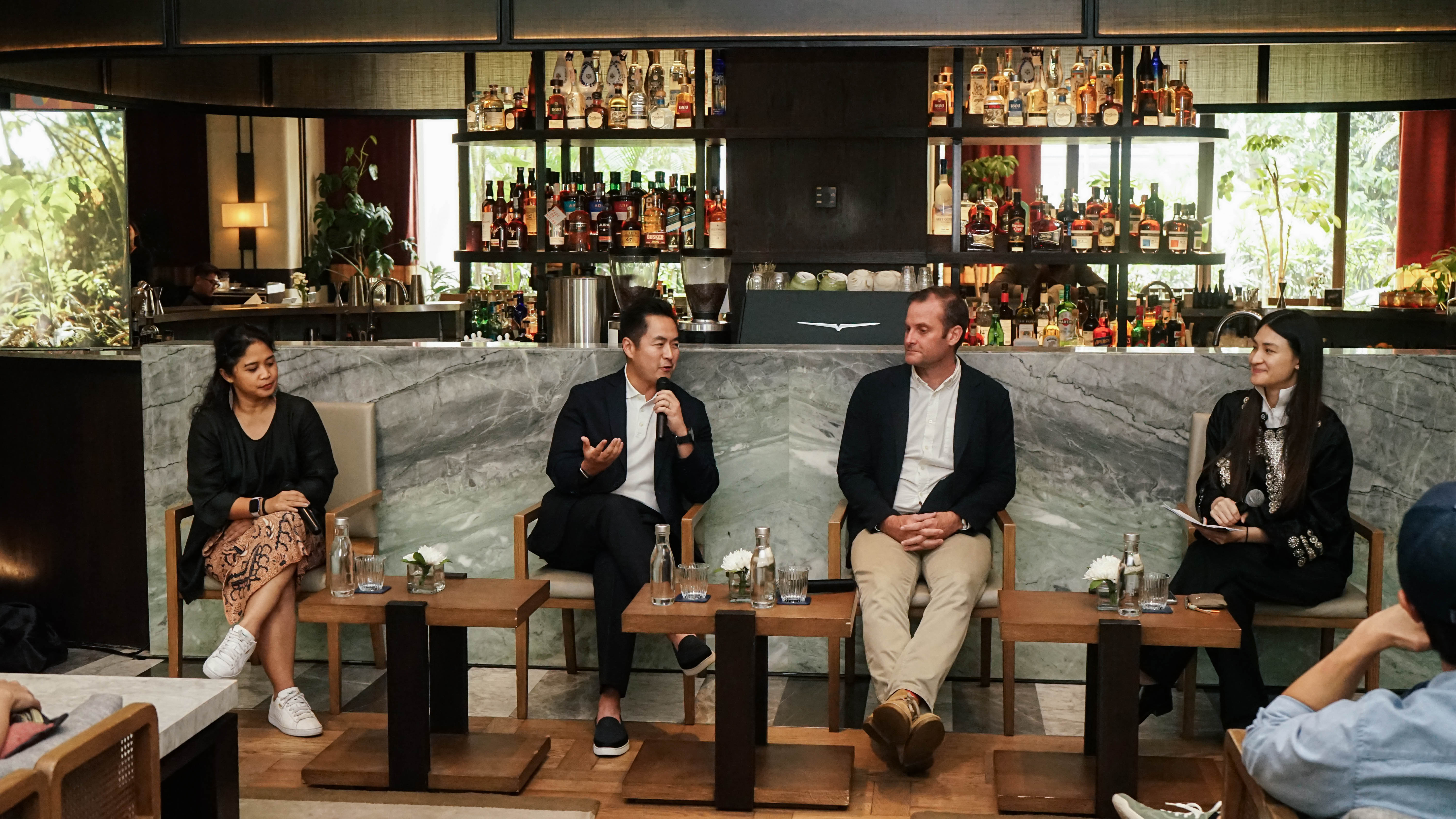
Another September conversation concerned what a hospitality business needs beyond its own buildings. On September 23, 2026, Radjimin joined a discussion at The Rooang at Bimasena in Jakarta about investment in nature and business resilience. Fellow participants included Adisti Ikayanti of MAKA Group and Matt Leggett of Terratai, with Bumiterra co-founder Tara Susanto-Joseph moderating. The subject extended the hotelier’s field of view to the destinations and environments on which travel businesses depend.
There is a connection to the original art hotel idea here. A hotel participates in a place. It introduces visitors to some version of that place, employs people there and depends on reasons for travelers to return. Radjimin’s career has gradually enlarged the set of relationships involved: artists, staff, hotel owners, investors and, increasingly, the surroundings that make a destination worth visiting. Each addition gives the business another constituency to consider.
The Hawaii internship began with the appeal of being somewhere. His subsequent work has been about making places that other people choose to enter. The distance between those two positions contains a career: international sales, a collaboration with his sister, the first Surabaya opening, and the daily business of getting people and buildings to work together. The walls attract attention. What Radjimin keeps returning to is the company of people around them.