Before he was asking software to understand a customer, Irzan Raditya was trying to get people to listen to a band. He played bass in Not Called Jinx, a Berlin rock group, while studying computer science. The job also took him into websites, online promotion, and conversations with sponsors. A bass player can spend much of a song supporting everybody else. In Raditya’s case, the supporting work continued after the music stopped.
His route to Kata.ai runs through mobile apps, a music-marketing service, a clothing venture, and an SMS concierge in Jakarta. There is plenty here to disappoint anyone hoping for a founder who arrived fully formed with one immaculate idea. The record is more interesting: somebody kept making things, discovered where they became awkward, and took the awkwardness seriously enough to try again.
Today he is the CEO and co-founder of Kata.ai, an Indonesian company building conversational AI for businesses. To understand how he got there, it helps to start somewhere noisier than an office.
A computer science degree with a soundtrack
Raditya graduated from HTW Berlin in 2012. Alongside his studies came the band, European touring, and an education in attracting attention without assuming anyone owed it to him. In his account, he worked on the group’s MySpace presence and website, using code to support a very human ambition: finding listeners.
The band’s history places Not Called Jinx at Java Rockin’ Land in Indonesia in 2010 and on a European tour with Royal Republic in 2011. Those details put geography behind the phrase “played in a band.” There were audiences beyond Berlin. A musical career involved schedules, travel, promotion, and other people’s expectations.
Sponsor conversations mattered too. He has described explaining the value a supporter would receive as useful preparation for talking to investors. The resemblance is practical. Enthusiasm may open a conversation; the person across the table still needs a reason to participate. A good bass line cannot negotiate the touring budget, however unfair that may seem.
Music also supplied a problem he could turn into software. In 2011 he began Amplitweet, which let musicians offer downloads in exchange for fans tweeting and following them. The idea joined two interests already occupying his time. Programming could help a song travel.
“you can start as Superman ... you've gotta be the Justice League”
Irzan Raditya, reflecting on his early solo venture
The projects that introduced the next people
The professional work was substantial. Raditya developed Android software, worked on Zalando’s shopping app, and led mobile work at Lieferando. After Takeaway.com acquired the company, he became Head of Mobile Product. That work put him between development and the people deciding what a product should do.
Meanwhile, his ventures wandered into different corners of daily life. Cape & Fly put superhero stories into clothing. Styyli explored fashion sharing and shopping. Rumah Diaspora helped Indonesians abroad find accommodation through fellow Indonesians. These were specific proposals for specific audiences, rather than variations on a single fashionable technology.
They did not all work. Raditya’s account of the period includes execution problems, a difficult partnership, and the limits of running a venture alone. He also describes something that lasted: learning how collaborators worked. Reynir Fauzan was involved in Styyli; Wahyu Wrehasnaya worked with him on Rumah Diaspora. Both would become part of the next business.
A list of abandoned products can look like wasted motion. Here it also records introductions and working relationships. The software could be set aside while a clearer sense of whom to work with survived. By the time Raditya returned to Indonesia, he had experience of building mobile products and of discovering how much a product depended on the people around it.
Jakarta wanted an assistant
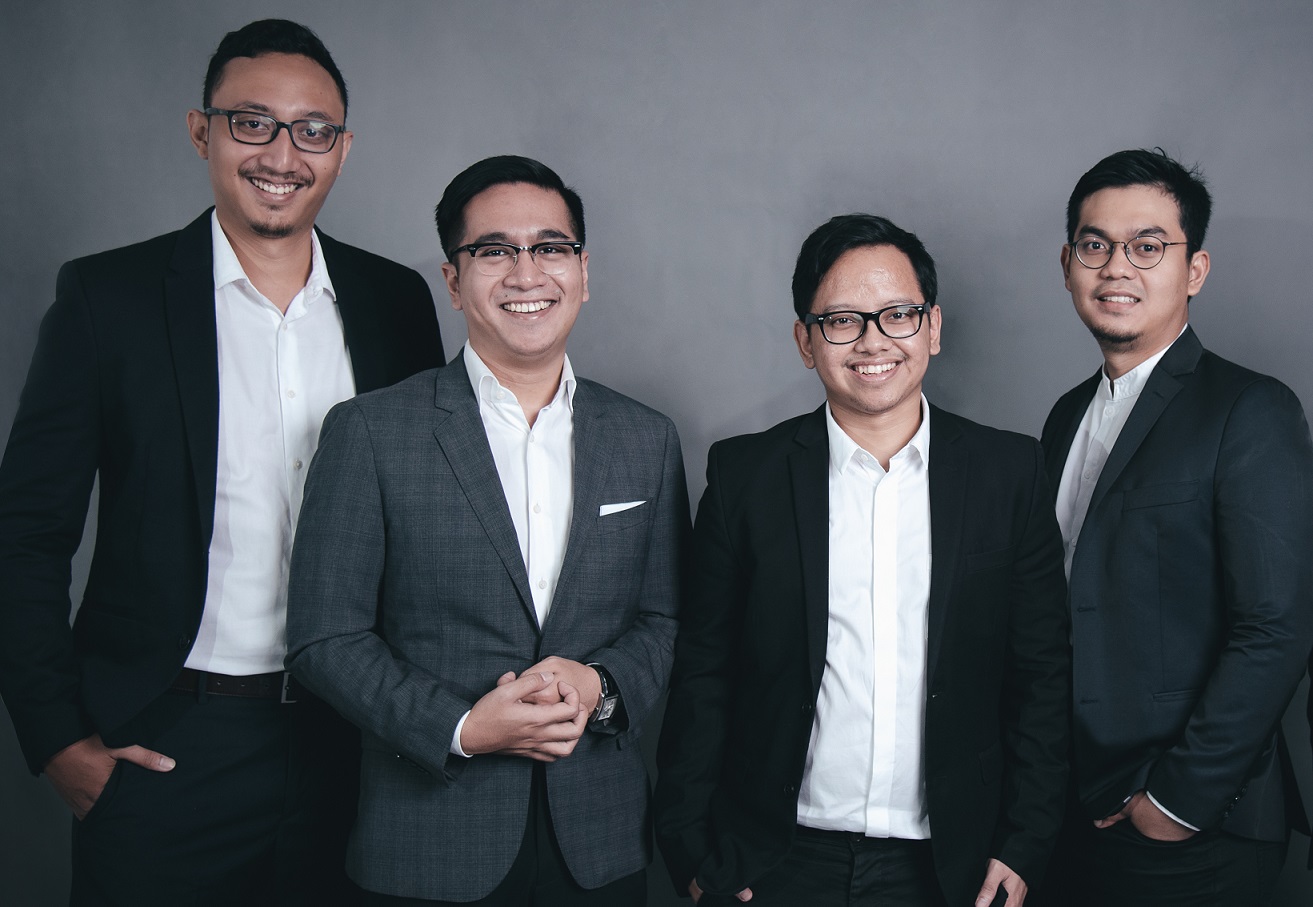
Back in Jakarta, the city’s pace suggested a different problem. Raditya described feeling that he wanted a personal assistant. He also noticed the appeal of chatting and being helped. In 2015, he launched YesBoss with Christian Franke, Wahyu Wrehasnaya, and Reynir Fauzan.
The interface was SMS. A customer could ask for help arranging a purchase, a booking, or another everyday task. It was a proposal with unusually little ceremony: send a message and let someone deal with the errand. The company name politely gave the customer a promotion.
By April 2016, the service was reporting more than 70,000 users and over 100,000 requests. It worked with roughly 40 partners, including food, transport, grocery, and ticketing services. Those were early figures, belonging to the concierge chapter of the business. They show that people understood the offer.
The ambitions extended beyond Jakarta. In March 2016 YesBoss acquired HeyKuya, a Philippine SMS concierge, as a step toward regional expansion. A business born from one city’s busyness was testing whether the same habit travelled. For a moment, the story had the familiar ingredients of a growing consumer startup: demand, partnerships, and another country.
The messaging idea continued. The buyer and the delivery model changed.
The awkward part of a useful idea
A request arriving as a short message could create a much longer piece of work behind the screen. The simplicity customers saw depended on people making arrangements. As the service grew, so did the work needed to fulfil its promises. The interface made an assistant convenient; it did not make the cost of assistance disappear.
In 2016, the company changed course. YesBoss’s consumer service closed on October 31. The business shifted toward enterprise chatbots under the name Kata.ai, retaining the same corporate entity. Raditya had to make staff cuts during the transition, a decision he has described as painful.
What carried forward was the effort to make conversation a useful interface. A company could use language technology to answer customers through messaging services they already used. The proposition became narrower and easier to connect to a business customer’s needs. Rather than handle an open-ended catalogue of errands, the software could be built around an organization’s particular questions and services.
This is the difficult hinge in his story. Demand had been real, yet demand alone did not settle how to deliver the service. Changing the customer changed the shape of the company. The pivot gave his technical background a different job.
A chatbot called Jemma gets the conversation going
An early enterprise example was Jemma, built with Unilever and offered through LINE. Its conversations included fashion and relationship topics. The product asked a different kind of question from the old concierge: could a brand create an ongoing conversational relationship with its audience?
By December 2017, Jemma had reached more than 1.7 million people. Some conversations lasted four hours. That is an unexpectedly long engagement for something with no concert encore. The figure captures an early experiment in what people would do with a conversational character, beyond issuing a request and leaving.
Other deployments were more directly functional. Telkomsel’s Veronika handled customer questions, while Kata.ai also worked with organizations including Bank Rakyat Indonesia and Alfamart. The use cases differed, giving Raditya’s new business a set of concrete jobs rather than a single consumer promise.
In August 2017, Kata.ai announced a $3.5 million Series A led by Taiwan’s Trans-Pacific Technology Fund. The financing supported further language research and expansion plans. It was a visible milestone after the change of direction, but the chatbots make the transition easier to picture: there were now recognizable organizations buying a particular capability.
Kata.ai’s announced Series A, led by Trans-Pacific Technology Fund.
Aku, saya, gue: the customer speaks first
The work had a local complication. Written Indonesian in a message can depart considerably from the version a learner meets in a classroom. In an essay, Raditya used the many ways people say “I” to illustrate the problem: formal language, slang, and abbreviated forms all arrive in the same conversational world.
To a customer, the variation is ordinary. To software, it creates work. Collecting examples, researching them, and testing interpretations becomes part of making the service usable. A system that only understands carefully polished sentences asks people to adapt themselves to the machine. That is a rather demanding assistant.
His December 2018 TEDxJalanTunjungan talk, “Key to Unlock The Future,” addressed language and communication barriers. The interest connects his technical work to something less abstract than AI as a category: whether people can get a useful response in the language they actually use.
Recognition followed the operating work. In February 2018, Endeavor selected him at its international panel in Dubai. Yet the language problem offers the clearer portrait. It places his attention on the small differences inside everyday messages, where a customer’s intended meaning can be obvious to another person and difficult for a program.
The tools change; the errand remains
Raditya has continued experimenting as generative AI has become accessible. In 2023 he posted a digital-twin demonstration, combining a generated image, script, cloned version of his voice, and video tools. He reported making it in less than an hour. The old interest in making and promoting things had acquired a new set of instruments.
By March 2025, his discussion of agentic AI focused on building useful applications with existing large language models. In an August 2026 interview, he described a related rule for his team: “never marry your models.” For someone whose company developed Indonesian-language technology, that is a telling instruction. The model can change as the work requires.
The same interview described a company serving more than 300 enterprise clients. That figure is a later snapshot, rather than a continuation of YesBoss’s consumer-user count. Its relevance to his story is the distance travelled: the audience, product, and means of delivery have all changed since the SMS service.
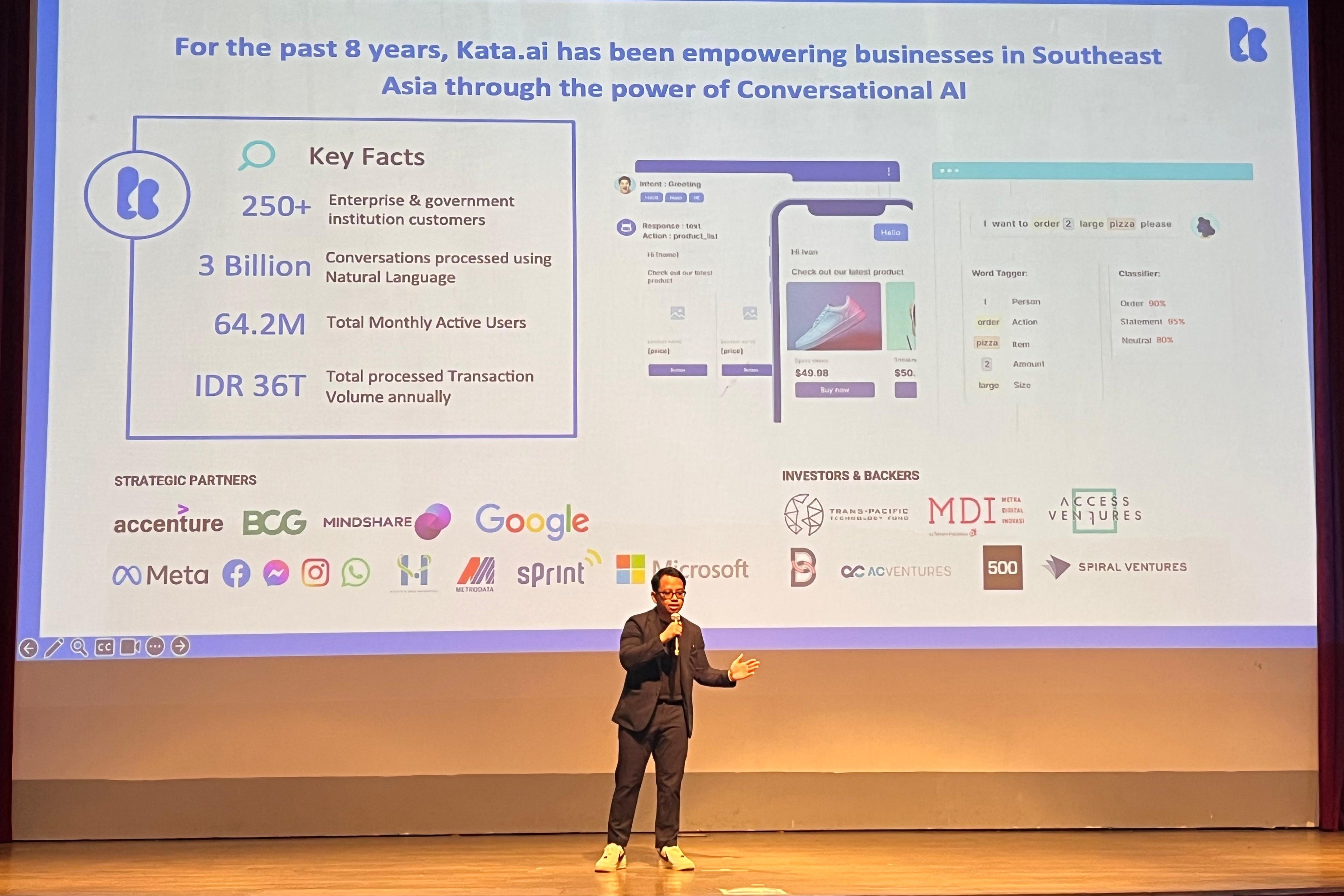
He has also spoken about the consequences of tools that can convincingly imitate people and events. At SMBC TechConnect in November 2025, he urged verification of channels, content, and requests when discussing AI-generated misinformation. Experimenting with a synthetic version of yourself and asking people to check what they encounter belong in the same public conversation.
Across these chapters, Raditya keeps returning to an everyday exchange: somebody wants to do something, and another person has to understand the request. The website for a band, the housing app, the concierge, and the enterprise chatbot each approached that exchange differently. His career leaves room for the product to change. The person at the other end still deserves to be heard.