A lawn-mowing business is an excellent place to discover that doing the job and running the business are separate occupations. The grass supplies one problem. Everything around it supplies the rest. At 13, John Beatty wrote software to help optimize his neighborhood mowing operation. Most children with a mower acquire pocket money. Beatty also acquired a reason to write code.
Years later, he would co-found Clover, the payments company whose devices sit on shop and restaurant counters. The distance between a teenage mowing round and a checkout platform looks considerable. The underlying curiosity is easier to recognize: how much work can a useful machine absorb? It is a practical question, with room for both ambition and a very ordinary customer.
His engineering career took him through Cambridge Technology Partners, Sun Microsystems and BEA Systems, then Bix and Yahoo. Distributed systems and security were part of his early work. He earned a computer science degree at Brigham Young University. Before the payment terminal, there were the less visible systems that make software cooperate across machines, organizations and users.
Bix was an online video startup acquired by Yahoo. Beatty was a founding engineer there, then worked at Yahoo before becoming an entrepreneur in residence at Sutter Hill Ventures. The sequence matters because Clover emerged from an engineer who had already seen large technology companies, an early startup and a venture firm. He had several versions of company life to compare.
The early Clover presentation still offers a useful snapshot. At FinovateSpring in 2012, Beatty was listed as co-president and vice president of engineering alongside Leonard Speiser, co-president and vice president of product, and Mark Schulze, vice president of business development. The company reported ten employees and a $5.8 million Series A. A checkout experience was being pitched by a team small enough to fit around a table.
- 2010Clover co-founded
- 2012First Data acquisition
- 2016-20Clover CEO
- NOWBench co-founder & president
A counter with room for other people’s ideas
Clover was co-founded in 2010. First Data acquired it in 2012, well before Beatty’s later stint as CEO from 2016 to 2020. This gives his career an unusual shape: much of the building happened inside a larger payments company. The founder’s work continued after the acquisition, through the period when a new product had to become something merchants could actually use.
A conventional register has a narrow job description. Ring up the sale. Accept payment. Produce the receipt. A platform asks a further question: what else might another developer make possible here? Clover’s app market gave that question a place to live. A restaurant and a retailer could share payment infrastructure while asking for different software around it.
For Beatty, this openness had a concrete expression in developer-facing work. In September 2014, he published an explanation of Apple Pay that moved through payment tokenization, user accounts and the practical burdens facing commerce applications. He was interested in how a developer might build an ordering experience without inheriting every complication of the payments business.
That is a telling choice of subject. A customer sees a phone and a terminal. An engineer sees the arrangements that allow the two to trust one another. Beatty wrote about those arrangements, making the machinery available for inspection. The point of understanding the plumbing was to give someone else a simpler surface on which to build.
His GitHub account makes the same habit visible in another form. It includes an Apple Pay cryptography demonstration in Java, as well as other software projects and forks. A founder biography can compress years into a sequence of titles. A code repository leaves a different kind of trace: a particular problem, some implementation, and an invitation to examine the work.
Beer, beacons and a working example
In October 2014, Beatty described an ordering and payment experiment at Bierhaus in Mountain View. The ingredients were Apple Pay, Clover and Estimote beacons. A customer could order from a table and pay through an app. Beacons helped restrict ordering to people who were actually at the venue. Even a digital beer order benefits from knowing where the drinker is.
The demonstration had a modest setting and a broad purpose. It put several technical components into one merchant experience. A phone, an order, a payment and a physical place had to agree about what was happening. The interesting part was the cooperation. The technology earned its keep only if the customer and the business could complete a familiar transaction.
Beatty explained that Clover was developing examples to test its platform and wanted other developers to take them further. He discussed ordering ahead, self-checkout and paying at the table as experiences developers could build. A working demonstration can answer questions that a platform diagram leaves politely unresolved. It also exposes the awkward details before they become someone else’s product launch.
This was a different sort of founder performance from announcing a distant future. Here was an actual venue, an app and an explanation of how the pieces fitted. The account is useful precisely because it is specific. It shows Beatty working between infrastructure and the small human transaction that infrastructure is supposed to serve.
The millionth device still needs to work
Clover sold its millionth device in September 2018. Beatty’s response to that milestone included a concern about keeping the hardware reliable. Scale brings an appealing round number, followed by a decidedly less decorative obligation. Each device has to function when a merchant needs it. A checkout counter is an unforgiving place for a machine to become interesting.
Clover’s engineers found that four percent of devices were sluggish for four hours a day. Monitoring helped them trace the problem to a software component involving light sensors under particular lighting conditions. They fixed the bug and checked the result. The culprit was prosaic enough to be persuasive: sometimes the grand story of connected commerce is a sensor misbehaving under the lights.
The team also used device-charging data to inform battery decisions and monitored phased software releases. These are the quiet activities beneath a product family. They connect engineering choices to the physical device a business buys, carries or keeps on its counter. Better information can change the size of a battery as well as the timing of a software update.
By February 2020, Clover Station Pro combined a merchant device with a customer-facing display and software plans for restaurants. In May that year, Clover Online Ordering brought web and app orders together with in-store orders and payments. The expanding product range illustrates the terrain Beatty had been working in: checkout, customer interaction and the organization of a merchant’s daily operations.
The technology has to survive that daily routine. An order is useful when it reaches the place where someone can fulfill it. Payment information matters when it agrees with the sale. The visible screen is only one part of the arrangement. Beatty’s work at Clover repeatedly returned to the less glamorous task of getting those parts to behave together.
An award with an awkward follow-up question
At Clover’s 2019 Girl Geek gathering in Sunnyvale, Beatty spoke about recognition for women and diversity. He was pleased, but he also questioned how difficult such recognition had been to earn. “The bar is actually just too low,” he said. A celebratory stage is a mildly inconvenient place to start inspecting the standard behind the celebration.
He connected the subject to his family and said he wanted his children to see that he had helped make the world fairer. He also described Clover’s efforts as work still developing, including its Women in Tech group. The admission gave the talk its substance. Recognition could coexist with the need to build more deliberate practices inside the company.
The view from a colleague adds texture. Product manager Sophia Nguyen described him as approachable and credited the leadership team with making employees feel valued. She also recalled his early idea of Clover as a payment hub that independent software vendors could build around. In her account, the technical openness and the ease of talking to leadership belonged to the same workplace.
That connection is worth considering without turning it into a personality slogan. A platform needs contributions from people beyond its original builders. A growing company needs information from people beyond its executives. Both arrangements depend on whether someone can bring a useful idea into the room. Nguyen’s recollection supplies a human example of what that access felt like.
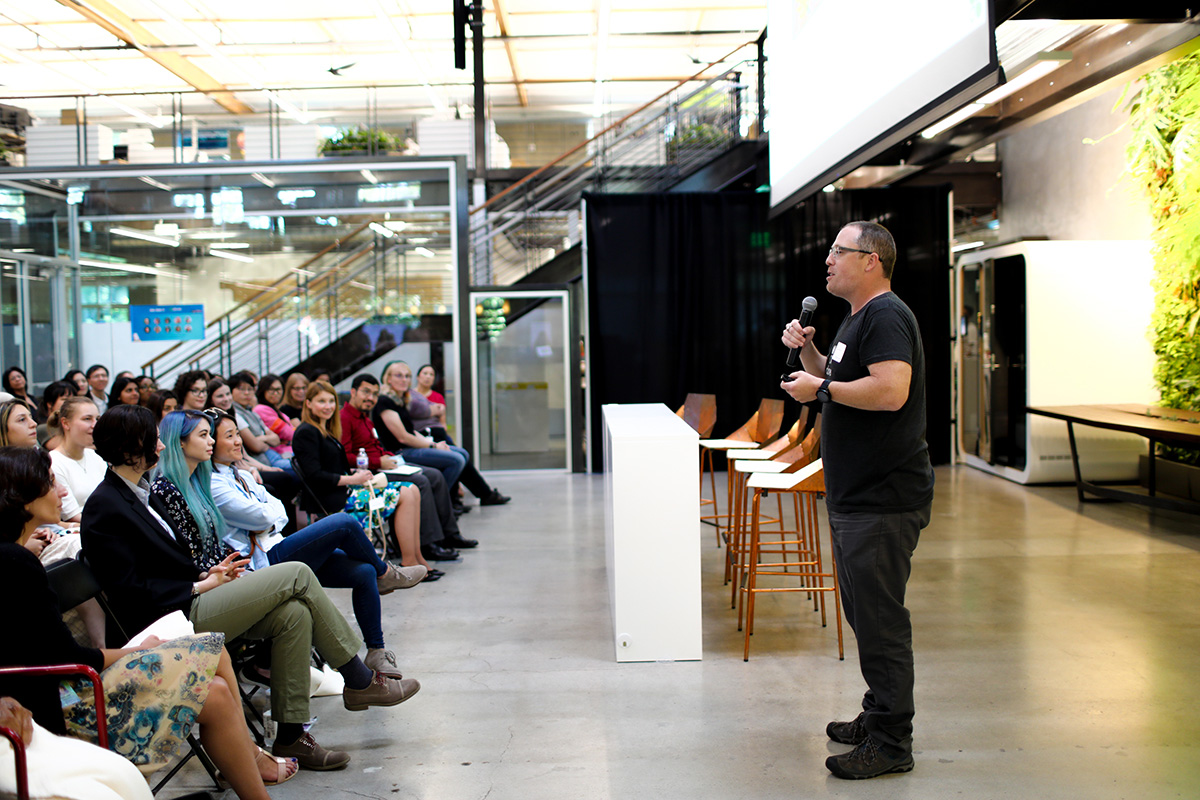
“The bar is actually just too low.”John Beatty, Clover Girl Geek Dinner, 2019
A new Bench, with familiar company
Beatty’s public profiles now identify him as co-founder and president of Bench Computing. His personal website links directly to a Bench invitation. The former Clover CEO is again working on a product, this time an AI-powered workspace intended to combine models and tools to complete tasks. The register has given way to a different working surface.
In his preview announcement, Beatty named Michael Quinlan, a founding Clover engineer who later worked at Google X, as his fellow entrepreneur in residence at Sutter Hill Ventures. Bench was incubated there and is backed by the firm. There is continuity in the people as well as the idea of assembling technical parts into something another person can use.
His examples were specific: analyzing solar-panel data, creating an audio news briefing, assembling competitive intelligence, and making a humorous presentation about a team’s completed GitHub pull requests. The last example allows the machinery a little office comedy. Even software infrastructure may eventually have to explain why someone deserves an award for a particularly memorable pull request.
The comparison with Clover is an editorial reading of his work, rather than a claim that the products are interchangeable. At Clover, payment infrastructure supported many different merchant experiences. At Bench, his stated aim is to bring models, tools and resources into one workspace. In each case, the user wants a result and the builder must organize the pieces that produce it.
There is a useful discipline in following Beatty through those particulars. The teenage business needed software. The beer garden needed a transaction that worked at a table. The merchant needed a dependable device. The new workspace needs to finish a task. His career can be read through titles and acquisitions, but it becomes more personal at the point where an engineering decision meets somebody’s working day.