A reader opens a newspaper website. The publisher can see which page has attracted attention. Somewhere in the advertising machinery, however, that perfectly present reader can become difficult to reach. Joe Root has built much of his career around this peculiar disappearance. The person has gone nowhere. The systems buying the advertising have lost a useful way to recognize the opportunity.
Root, the co-founder and CEO of Permutive, approaches the problem from the publisher’s side of the desk. The people producing the journalism, entertainment or specialist advice already have something advertisers want: an audience with interests. His company builds software to help turn that knowledge into revenue while respecting the choices readers make about their data. It is an argument about who gets paid for knowing whom.
There is a pleasing complication in the story. Root did not arrive with the final question neatly written down. He and co-founder Tim Spratt first worked on personalization for publishers. They had to discover that keeping readers engaged and making the business add up were different jobs. A useful idea became a better question.
From computing to customers
Root’s education supplied the technical foundations: a computing degree at Imperial College London, followed by a master’s in computer science at Oxford. He also began doctoral studies at Cambridge, then left before finishing to build Permutive. Universities had given him plenty of problems with formal definitions. Advertising would offer considerably less cooperative ones.
His early work crossed the boundary between making a product and persuading someone to buy it. There were software engineering roles at QinetiQ and Morgan Stanley, followed by sales and trading experience at Morgan Stanley. In 2013 he worked in product at Pact Coffee and in sales at GoCardless. Coffee, payments and advertising have different vocabularies; each eventually requires somebody to decide that the service is worth paying for.
That mix matters when looking at the business Root built. A data platform must calculate things correctly. It must also fit the priorities of a customer trying to earn revenue this quarter. His path put him on both sides of that conversation before Permutive became his occupation.

Permutive dates its founding to 2014, with Root as CEO and Spratt as CTO. Both are alumni of Entrepreneur First and Y Combinator. The latter lists the company in its Summer 2014 batch. The division of titles is familiar. The task they took on was unusually concerned with the businesses outside the technology company: publishers whose audiences were being priced by an increasingly elaborate chain of other people’s software.
The product that changed its question
Personalization had an appealing premise. Help publishers compete for engagement with social platforms by making their products more relevant. Yet Root’s account of the early work returns to the pressure on advertising prices. Publishers could have readers and still find the economics deteriorating. Helping someone stay longer did not, by itself, repair the transaction.
His later advice to product builders carries the memory of that detour: Look for the problem!
It is a short instruction with an expensive implication. Time spent refining an answer does little good if the customer’s urgent question sits elsewhere.
The company’s technical response was to move data processing onto the user’s device, an approach known as edge computing. Its Y Combinator description explains the purpose in terms of audience groups, or cohorts, that can support advertising without sharing personal identifiers. The location of the calculation becomes part of the business model. Useful work can happen where the interaction occurs, with less dependence on a journey through distant systems.
Think of a motoring publication and an advertiser interested in potential car buyers. The example is illustrative: reading patterns can help describe an audience without supplying a named itinerary of every reader’s travels across the web. The publisher’s knowledge has value at the point where the advertising opportunity appears. Root’s commercial question is how much of that value survives the trip to a buyer.
A funding round, and a stubborn dependency
In November 2021, Permutive raised a $75 million Series C led by SoftBank Vision Fund 2. That brought its reported total funding to $105 million. The money arrived as the company broadened from its publisher data management roots toward an audience platform connecting buyers and sellers.
Root’s concern extended beyond the technical fate of cookies. A substitute identifier could leave publishers facing familiar economics if they again surrendered control of their data. His position was that media owners should build and own their first-party data capabilities, then be paid for the value those capabilities supplied. Changing the label on an identifier would leave that ownership question waiting.
New funding led by SoftBank Vision Fund 2.
$105m reported total funding after the round.
By 2024 he was also describing a less visible obstacle: the volume of advertising requests. If several intermediaries send the same opportunities to a buying platform, processing costs multiply. The buyer limits what it accepts. Suppliers then favor opportunities they expect will attract a bid, concentrating attention on the inventory that already looks recognizable.
Root’s explanation makes the market’s apparent sophistication look rather selective. The machinery can process an extraordinary amount of information while repeatedly overlooking useful publisher knowledge. More routes through the system do not automatically produce a wider view of the audience.
The cookie deadline that moved
Google’s July 2024 change of direction on third-party cookies gave Root a public test of his argument. He wrote a response for customers and partners explaining why he believed publishers should keep investing in their own signals. His case rested on consumer choices and the reach already lost through cookie-dependent buying.
The distinction matters to his career. A company organized around a single browser deadline would have a different story to tell when that deadline changed. Root kept pointing to the economic experience of publishers and advertisers: which audiences could be reached, what inventory could earn, and whether campaigns produced results. A browser announcement could change the timetable without resolving those questions.
His subsequent description of audiences allows for several kinds of relationship. Some people accept identifier-based advertising. Others consent to data use within a particular publisher’s environment. Others opt out, leaving contextual signals as the appropriate route. Those choices call for different approaches, rather than an assumption that everyone should become equally recognizable.
For audiences comfortable with identifier-based targeting.
First-party behavioral signals where the reader’s permissions allow.
The content environment when personal targeting is unavailable.
In a 2025 discussion of data collaboration, Root argued that authenticated users alone are too small a foundation for the reach advertisers seek. He favored combining identity with contextual, behavioral and cohort signals, using predictive models to extend useful audiences. The ambition is to let publisher knowledge travel into a campaign without requiring raw data to travel everywhere with it.
A team people can argue in
The founder’s own routines offer a small respite from all this infrastructure. In an earlier description of his working day, Root named Gmail, Trello and Apple Notes as his tools. Elaborate productivity systems had failed to stick. Advertising may require a formidable stack of technology; keeping track of the CEO’s day apparently allowed a shorter shopping list.
By 2026, his reflections on leadership centered on a different transition. Building a product and building a company require different work. He described wanting colleagues to feel they belonged, with room for disagreement that did not damage their relationships. The intended culture made argument possible without turning every difference of opinion into a personal contest.
“The first stage is building great products.”
Joe Root, reflecting on the move from product building to company building
There is also a public commitment beyond the company. Root belongs to Founders Pledge, which connects entrepreneurial success with charitable giving. His member statement emphasizes the good fortune of having the opportunity to start a business and the wish to give back. For someone occupied with how value is distributed in advertising, it offers a personal version of the same question: where should the proceeds go?
Agents with an old assignment
Permutive’s current work adds automation to that long-running concern. Halo, introduced in October 2025, brings agents into audience management, planning and campaign optimization. The company describes it as a way to make direct buying work across more publishers and campaigns. The ambition still depends on a familiar relationship between the people with an audience and the people hoping to reach it.
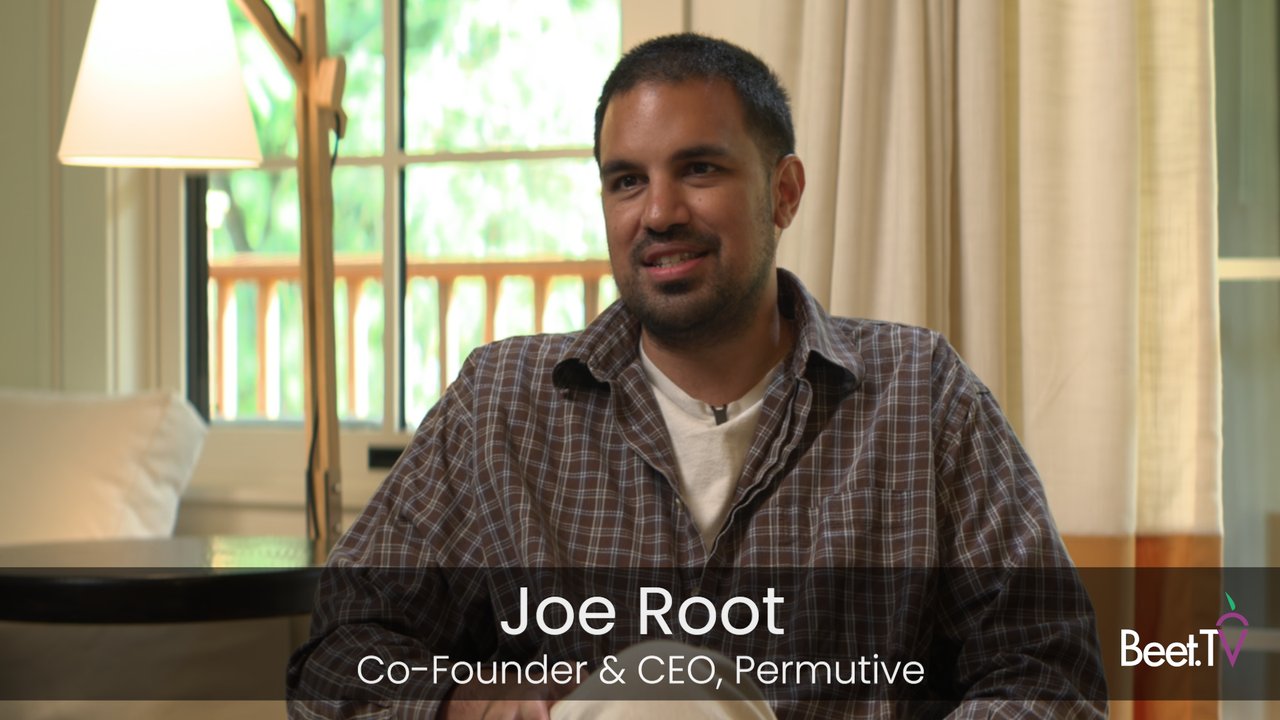
In August 2026, Root discussed how agencies were building AI into their own operations. Direct transactions had often involved proposals, email exchanges and spreadsheets. Agents could coordinate more of that work, making closer publisher relationships practical across a fragmented market. Faster administration has a purpose here: help useful audience information become a transaction before it gets lost between organizations.
The recent moves are concrete. In September 2026, Permutive announced a TransUnion integration allowing advertisers to activate audiences directly across its publisher network. In October, former LiveRamp executive David Rifkin joined as general manager for demand side sales, responsible for relationships with brands and agencies. Root is extending the company’s publisher foundations toward the people controlling media budgets.
His story keeps returning to the reader who never disappeared. The publication has the attention. The advertiser wants an outcome. Between them sits a collection of decisions about data, permissions and payment. Root has spent years trying to arrange those decisions so the relationship at the beginning still counts at the end. The reader, meanwhile, would quite like to finish the article.
Follow the conversation
- Permutive
- Joe Root on LinkedIn
- Joe Root on X
- Writing by Joe Root
- Founders Pledge profile
- Early career and product interview
- Leadership conversation
- Privacy podcast
- Data collaboration keynote
- 2021 funding interview
- Programmatic market interview
- 2026 audience signals interview
- TransUnion announcement
- David Rifkin appointment