Dwayne Lafleur had people working on the question every advertising business asks: which ad should this person see? At Cubics, his network for Facebook application developers, engineers and data scientists worked on the answer. Yet, in his account of Ezoic’s beginnings, their improvements could not match what happened when a developer improved the layout. The machinery was clever. The page was getting in its way.
- Ezoic helps publishers earn from ads, video, audience identity and subscriptions.
- Its central measure is revenue per visitor, keeping the whole visit in view.
- New applicants generally need 250,000 monthly users; smaller sites face selective admission.
The page was the experiment
Founded in 2010, Ezoic took that observation seriously enough to acquire a laboratory. A later company account says Lafleur and John Cole invested more than $5 million in web properties. The 2019 funding announcement describes early testing on more than 400 founder-owned websites. They were buying places where a hypothesis could meet a reader.
The original proposition was automated multivariate testing: try different arrangements of the same content, observe what people do, and keep improving. Independent publishers rarely have spare engineers to run that exercise across devices. Ezoic made it a product. A $5.6 million Series A in 2013, led by Balderton Capital, backed development; a $33 million Sageview investment followed in 2019.
Today, Ezoic Ads uses machine learning to adjust placements, demand competition and pricing. Publishers add an integration, configure their inventory and let the system test monetization. The customers include TheWindowsClub, Chrome Unboxed and Active NorCal: businesses with audiences to serve and limited appetite for building an advertising department from scratch.
That expertise spans ad engineering, auction infrastructure and publisher operations. Ezoic now provides React, Vue and Angular integrations for web apps alongside its publishing tools. Internally, it describes a culture of schedule autonomy, remote flexibility and untracked time off. The combination fits the origin: give people room to work, then let observed results settle the argument. The layoffs show how difficult that principle becomes when the experiment is the company itself.
The number that catches the trick
Consider an invented publisher. It adds an intrusive ad, gets a better price per impression, and congratulates itself. Readers leave sooner. They see fewer pages. Total earnings fall. The ad report looks healthier because it measures the successful part of an unsuccessful visit.
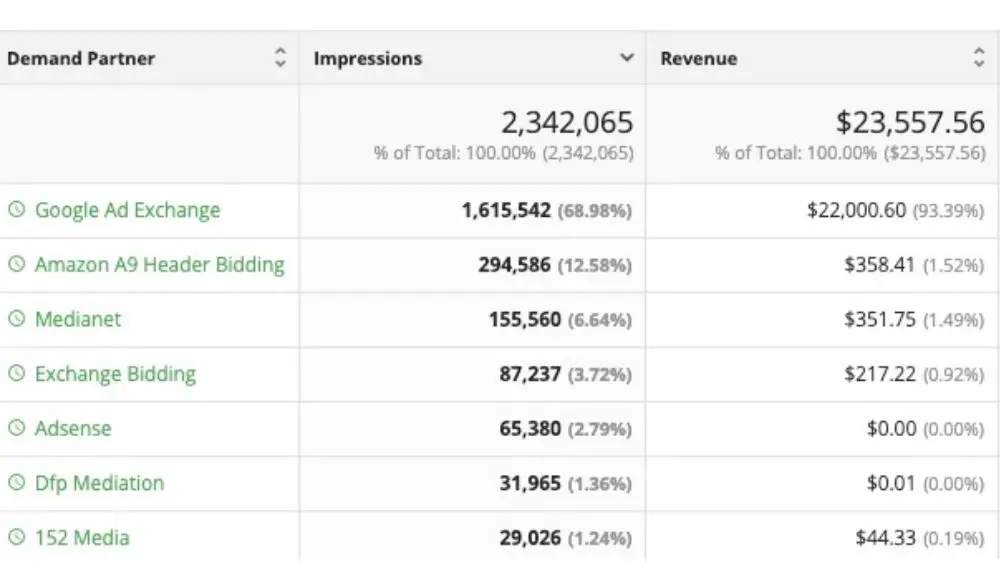
Ezoic’s favored measure, EPMV, means earnings per thousand visitors. Its Big Data Analytics connects revenue with pages, authors, traffic sources, countries, devices and engagement. That gives a publisher a way to examine which visits pay, rather than assuming every extra pageview has equal economic value.
This is a useful distinction, though competitors also optimize advertising and user experience. Mediavine and Raptive offer publisher ad management; AdSense remains another route. Ezoic’s pitch combines personalized testing with granular revenue analytics and an expanding monetization toolkit. Choosing among them requires comparing net earnings and support on your own property, with reader experience in the calculation.
The forecast that cost jobs
The company’s own history contains a less comfortable lesson about measurement. In July 2023, Lafleur told employees that advertising rates had fallen nearly 35% from their peak. Ezoic had increased its team by 62% in 2022. Now it would reduce the team by about 28%.
“This reversal shows how wrong we got it.”
Dwayne Lafleur / employee letter, July 2023
The letter attributed the decision to over-hiring and costs growing too quickly after the pandemic advertising boom. Revenue in the first half of 2022 had risen nearly 60% year over year, according to Lafleur. A strong recent result had encouraged a forecast that the subsequent market could not support.
That matters when reading Ezoic’s current claims. In May 2026, it reported a 27% average improvement in display EPMV and ad loading shortened by one second. Those are company-reported results, not a promise for a particular publisher. Audience mix, advertiser demand and the wider market still shape the outcome. Ezoic’s terms explicitly guarantee no revenue or optimization result.
The front door got narrower
Ezoic once made removing barriers a selling point. In 2021, it removed its previous 10,000-monthly-visit monetization threshold. In February 2026, the entry requirement moved to 250,000 monthly users for new applicants. The units matter: users are not pageviews, and neither figure should be casually substituted for sessions.
Existing qualifying sites retain access through continuous use. Smaller new properties can apply to the Incubator, which says it selects 20 sites or apps each month. Ezoic’s services now emphasize dedicated onboarding, account specialists and strategic management for larger businesses. The change makes eligibility an early decision, before any revenue comparison.
There is also the bill. Ezoic Ads advertises no upfront cost and operates through revenue sharing. Terms updated in June 2026 specify publisher payments of at least 82% of display-ad Net Revenue, unless otherwise agreed in writing, subject to adjustments and splits. Net Revenue is the contractual base; calling that an unconditional share of gross advertising spend would give readers the wrong arithmetic.
An optional advisor introduces another expense: the current terms split advisor commissions equally between Ezoic and the publisher. Third-party hosting or analytics costs can also change. These details make the actual account agreement more informative than an old review quoting a single percentage.
An audience with more than one price
The newer products extend the original question. ezID connects audience lists and registered users with advertising identity protocols, sharing hashed identifiers rather than raw email addresses. The Trade Desk’s OpenPath supplies a direct demand connection. Video tools let publishers host their own clips or carry relevant network videos and share the revenue.
Subscriptions adds another choice: let someone read with ads, ask them to register, or offer paid access. Its reporting puts advertising and subscription earnings together. The premise is sensible: a paywall that converts a few readers can still sacrifice valuable advertising visits from everyone it turns away.
Publishers can begin measuring alongside an existing subscription platform before deciding to migrate. That sequence makes the decision testable: see the economics, then consider changing the machinery.
A publisher can copy the discipline without copying the software. Establish a comparable baseline. Examine earnings by source and device. Watch engagement and page performance alongside revenue. Check what remains after fees. Ezoic can test the economics of an audience; it cannot conjure the audience, remove eligibility rules or make unwanted advertising welcome. Its most portable idea is simply to count what happens after the apparent win.
Website · Ads · Subscriptions · Blog · News
LinkedIn · X · Instagram · Facebook · GitHub
Watch: publisher David Layfield interview
Watch: Ezoic webinars and product videos