In 2008, Andrew Banever described a peculiar problem. Recruiters had discovered niche job boards. They could advertise to particular professions instead of shouting into the whole internet. Good news, until somebody had to register on every site, rebuild every advertisement, and reconcile every invoice. JobTarget, which helped power those specialist boards, had helped make the problem possible. Now its founder wanted to tidy up.
- JobTarget turns scattered job advertising into one workflow.
- Marketplace gives recruiters control; Programmatic automates placement and budget decisions.
- The useful test is qualified candidates per dollar, followed through to hires.
His answer was OneClick: write the advertisement once and let JobTarget handle distribution. It was an almost comically practical proposition. In an industry selling access to people, here was a company selling relief from administration. The interesting part was what that relief made possible: recruiters could use more specialist sources without multiplying the work.
The business he chose to keep
JobTarget began in 2001. Banever later told a Connecticut newspaper he had been its only employee for the first two years. By a governor’s visit in 2011, the New London operation employed about 70 people. The early business supplied career-center technology to professional organizations and publishers, putting job boards where particular communities already gathered.
Then came a revealing decision. In September 2014, JobTarget sold its career-center hosting and management business to YourMembership.com. OneClick remained independent. Banever’s explanation pointed to demand: he said the company had never had a product grow as quickly as OneClick. Job distribution had become compelling enough to deserve the company’s attention.
That history explains its position today. JobTarget sits between the employer’s recruiting software and the places candidates discover jobs. Its expertise combines board connections, advertising operations, performance data, and the decidedly unromantic work of making systems exchange information. The company says more than 10,000 businesses use its technology, from small employers to large organizations.

Two networks. Two different jobs.
Start with the numbers that can easily get tangled. JobTarget Marketplace provides access to more than 25,000 job sites. Recruiters choose the boards, purchase placements, and manage distribution in one place. They can also bring existing board credits and subscriptions into the workflow. The attraction is choice without a fresh administrative expedition for every destination.
Programmatic advertising does a different job. Its advertised network covers more than 100 sites. A recruiter sets a budget; software distributes advertisements and adjusts spending according to performance. Programmatic handles individual jobs. Programmatic+ pools a monthly campaign budget across multiple openings. JobTarget 360 adds candidate engagement and hiring intelligence to the advertising layer.
Network sizes describe access, not guaranteed placement on every site.
That distinction matters when buying. Access to thousands of boards does not mean every automated campaign runs on all of them. Nor does automation mean free advertising. Marketplace spending depends on the boards selected. A public partner FAQ lists a $5 delivery fee for otherwise free sites. Programmatic budgets and broader packages depend on the campaign and quoted terms.
The pricing history offers a useful time capsule. In 2008, Banever described a company-wide OneClick option costing $299 a month, alongside revenue sharing with job boards. That was the historical offer. Today’s buyer needs a current quote and a clear accounting of media spend, service charges, and what each package includes.
A faster hire begins in the plumbing
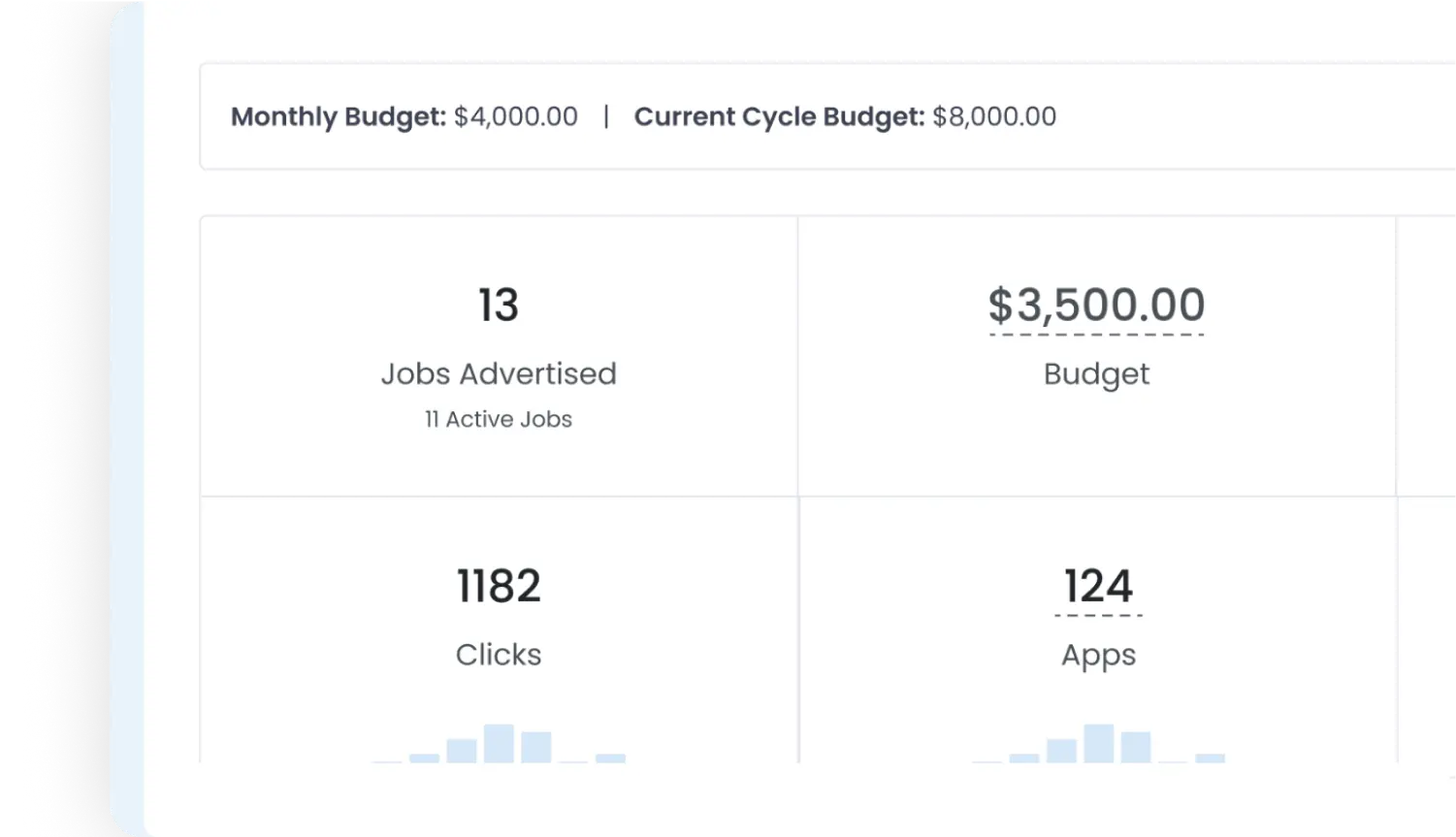
Dynamic Systems, a mechanical and process construction firm, supplies a more concrete example. Its divisions were managing postings across multiple platforms. Recruiting felt disconnected, and the company wanted better hiring-market data. JobTarget’s case study describes targeted campaigns and a shared view of budgets, performance, and competitive analysis.
The reported result was a 50% decrease in time-to-hire. Treat that as one customer’s outcome, published by its vendor. The practical detail is the shared view: divisions could see the same advertising picture. A recruiter trying to explain yesterday’s spending no longer had to assemble the answer from scattered systems.
Reported for Dynamic Systems in JobTarget’s customer case study. One customer’s result, not a forecast.
Getting someone to click is only part of the job. Easy Apply tackles the application itself, reducing the friction between interest and submission. Sourcer searches candidate databases. Intelligence and reporting help interpret results; the AI-assisted Job Description Builder helps draft the advertisement. These products address different places where a recruiting campaign can lose momentum.
A useful lesson follows: measure completed, qualified applications and eventual hires, then examine the handoffs. Cheap clicks become expensive if applicants abandon the form. Better distribution cannot compensate indefinitely for an unattractive offer or an interview process that stalls. For an occasional vacancy on one familiar board, centralized advertising may offer less practical value.
Now simplify the simplifier
JobTarget’s connections are part of its sales proposition. It advertises more than 80 ATS and HRIS partnerships; Jobvite documents an integration that returns applications into its system. For a software partner, connecting once can replace maintaining many separate board relationships. Appcast and Joveo compete in automated recruitment advertising, so automation alone is hardly exclusive territory.
The more distinctive combination is a broad purchasing marketplace, managed advertising, and those embedded connections. JobTarget says it remains independent with no outside investors. It describes a remote-first workplace. Neither statement proves product quality, but both help explain how the company presents its priorities: customer workflows and sustained product development.
“Twenty products can very easily become twenty different experiences.”
Shravanthi Reddy Chinthakuntla
Executive Director, Platform Experience · September 2026
That observation, from a company interview, brings the story full circle. Her teams work on shared navigation, reporting, and design patterns across the platform. A business built to clear away recruiting clutter now has to prevent its own tools from creating more. The standard remains the one OneClick set years ago: let the recruiter finish the task with fewer things to manage.