Joan Butters was employee number 20. She joined AIM in 1996, early enough to watch a business take shape from the inside. Years later, after leading its data mining work and holding a strategy role at Optum, she wanted another turn at building. In 2013, she co-founded Xsolis with Jim Sohr. She had already learned to enjoy the part of a company’s life when much of the work still lies ahead.
That is an instructive place to begin her story. The familiar founder biography tends to hurry toward the funding announcement. Butters’s route gives the preceding years their due. She had spent time inside organizations, working with information and the people expected to use it. A useful idea would need to survive those people’s working day.
The appeal of being early
At AIM, Butters became vice president of Data Mining Technologies and helped grow the business. The title is a useful reminder that her interest in data predates the current excitement around AI. Finding something valuable in a large collection of information was already a job, with customers, colleagues and commercial consequences attached.
At Optum, she served as vice president and general manager of Strategy and Emerging Solutions. The technology solutions she identified and developed generated more than $225 million annually. It was substantial experience to bring to a new venture: she had worked on the relationship between an idea, an organization capable of delivering it and a customer willing to pay.
Founding Xsolis gave that experience a new setting. She and Sohr brought an existing professional connection to the partnership. Their company would use data and technology to address cumbersome administrative processes, with cooperation between organizations at the center of the proposition. The name itself contains the ambition: crossing out silos.
There is a pleasing inconvenience in choosing collaboration as your business. You need a useful product, of course. You also need people in separate organizations to see a reason to work together. A demonstration can show what software does. Changing a working relationship takes a little longer than clicking through the slides.
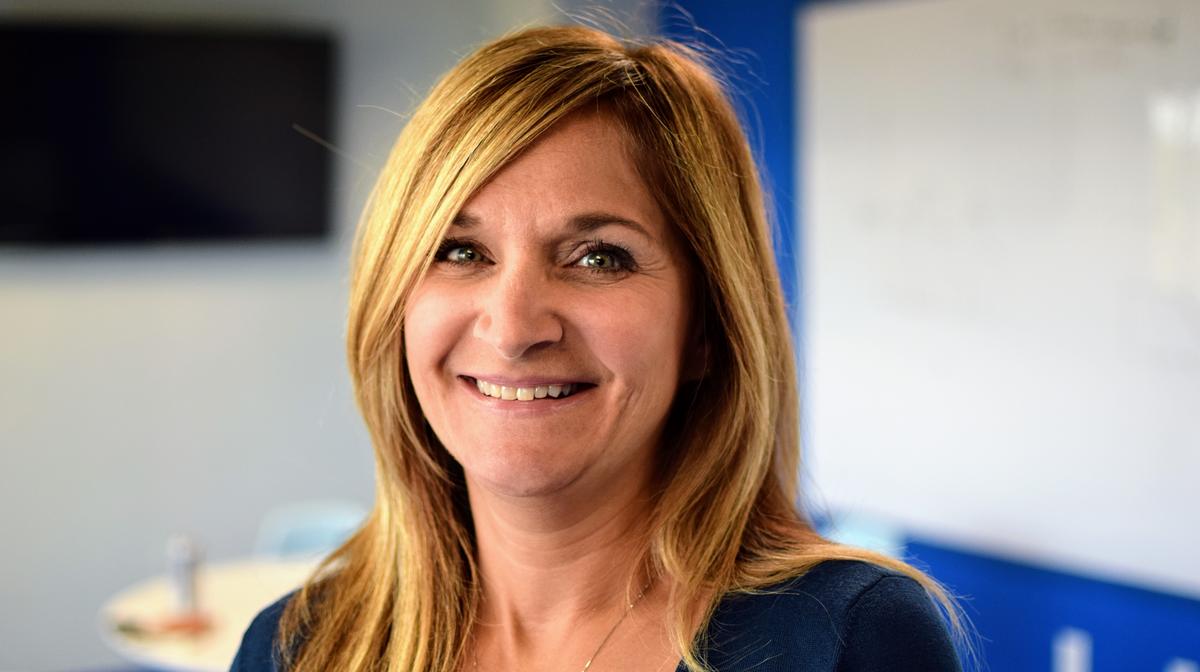
A customer cannot buy a promise
The early sales effort involved extensive travel for Butters and colleague Heather Bassett. Potential customers understood the argument; they also wanted evidence that a small Nashville business could deliver. Butters recalled the difference it made once results gave those conversations firmer ground. Familiarity with a problem could open a meeting. Proof helped open the next door.
Her impatience belongs in the picture. “I am a pretty impatient person,” she has said. There is a difference between disliking wasted effort and expecting a company to grow overnight. Her career suggests plenty of experience with the distance between recognizing a problem and persuading someone to change a process.
By 2015, Xsolis had brought its CORTEX technology to its first hospital customer. Its first health-plan client followed in 2018. The sequence matters as company history: an offering that initially served one side of a relationship developed into a way for both sides to work from shared information. The commercial proposition acquired a second participant.
Butters’s own writing in 2018 argued for a common framework and more meaningful collaboration. Her interest extended beyond better analysis inside one organization. She wanted separate organizations to have a basis for working together. That is an unusually social ambition for a business whose raw material is data.
The money arrives eight years in
In June 2021, Xsolis secured a $75 million minority growth investment from Brighton Park Capital. The company planned to expand operations, reach more customers and bring new offerings to market. Eight years separated the founding from that announcement. The calendar makes room for the work that a funding headline tends to compress.
A minority investment from Brighton Park Capital, announced eight years after Xsolis was founded.
The amount describes capital going into a company. Its significance in Butters’s story is the next set of obligations it could support: expansion, delivery and a larger organization. Money makes more things possible. It also supplies an excellent excuse for everyone’s to-do list to grow longer.
By November 2023, Xsolis had appeared on the Deloitte Technology Fast 500 for a second consecutive year. The company reported nearly 300 employees, along with increases in payer connections and hospital partnerships. Butters was then marking its tenth year. Growth had become visible in several directions at once, bringing the internal work of running the business alongside its external ambitions.
Two hundred people, one company
Earlier, crossing 200 employees in 2021 had prompted a concise response from Butters: “What a ride.” The company had added 68 colleagues in 2020 and another 33 during 2021 by the time of that announcement. A headcount milestone is easy to print. Behind it are people who must learn how to work together.
The team included backgrounds in data mining, cloud computing, education, music, videography and astrophysics. There is a small organizational challenge hidden in that list: a company needs specialist knowledge, but specialists need ways to understand one another. The person who can explain a customer’s working day has something the person building the system needs to hear.
Remote work added another dimension. In 2021, Xsolis described onboarding more than 100 people who had never been onsite. Its workplace recognition that year rested on employee surveys. For a founder, that combination turns culture into a practical question. How do people become colleagues when they have yet to share an office?
Some of the answer appeared in the company’s description of hybrid work, virtual town halls and forums. There was also a more Nashville answer: an employee X-Band performing for clients at ACME Feed & Seed. Software businesses generally have plenty of keyboards. This one had found an additional use for them.
A room where women can succeed
In March 2022, Xsolis reported that women accounted for more than half its workforce. Butters spoke about recognizing women’s talents and making the company a place where they could thrive. The accompanying employee reflections concerned inclusion, support, career changes and the influence of seeing women in leadership.
Those details add something concrete to a portrait of the chief executive. A company’s values become more legible when someone describes what it feels like to work there. Who gets an opportunity? Whose experience counts? Can a colleague bring a different background and still see a path to contributing?
Xsolis had also described working with a cultural consultant and a recruiting firm focused on diversity. Those are organizational choices, with work attached. They fit a founder’s wider responsibility: to build the conditions in which the people hired for their abilities can actually use them.
- 2013Butters and Jim Sohr co-found Xsolis.
- 2021Brighton Park Capital invests $75 million.
- 2025Butters wins an EY Southeast entrepreneurship award.
Small enough to be useful
Butters’s public advice about AI has a similarly practical cast. In a 2024 conversation, she emphasized understanding the problem, preparing the data and bringing subject matter expertise into the work. She cautioned that a powerful tool still has limits. Her advice to people entering the field was compact: “start small to go big.”
It is a business principle with a technical consequence. A well-chosen problem gives a team something specific to improve and a customer something specific to judge. Ambition can expand from there. Starting with an enormous promise leaves everyone debating what success might eventually look like.
“start small to go big”
Joan Butters · 2024 interview
She also discussed the infrastructure required to make AI useful and the need to refine that work over time. In her account, experts help determine which questions to ask, and people remain involved in evaluating the answers. The interest lies in getting useful information into an actual workflow, where someone has a decision to make.
In December 2024, Butters appeared alongside chief technology officer Zach Evans for a conversation at Chase Studio in Nashville. The discussion covered Xsolis’s origins, platform development and a move to the cloud. It is a useful pairing for understanding her role: the CEO’s commercial purpose and the CTO’s technical work meet inside the same operating business.
Twelve years to the award
In June 2025, EY named Butters an Entrepreneur Of The Year Southeast Award winner. An independent panel assessed candidates on entrepreneurial spirit, purpose, growth, impact and long-term value creation. The award put her among the region’s recognized company leaders twelve years after Xsolis began.
Her response credited the team’s innovation and dedication. By February 2026, the organization was adding financial leadership, appointing Vic Pierni as CFO. In September, Xsolis reported more than 615 hospital and health-system customers and over 10 billion AI-powered predictions. These are company-reported measures of reach and activity, each describing a different aspect of the business she leads.
The September prediction total counts AI-generated outputs, so several can relate to the same encounter. It is a measure of accumulated activity rather than a count of individual customers or people. Butters connected the milestone to the information available for developing future capabilities. Her emphasis brings the story back to familiar territory: the value of data depends on what a team can do with it next. Thirteen years into Xsolis, she was still talking about the work ahead.
The numbers have grown considerably since employee number 20. The recurring work is still recognizable: find people with useful expertise, give them a problem worth solving, persuade customers and keep improving what the organization delivers. Butters’s story has its capital announcement and its award. It also has decades of practice in the less ceremonial business of building.