A tech company with trucking in its blood
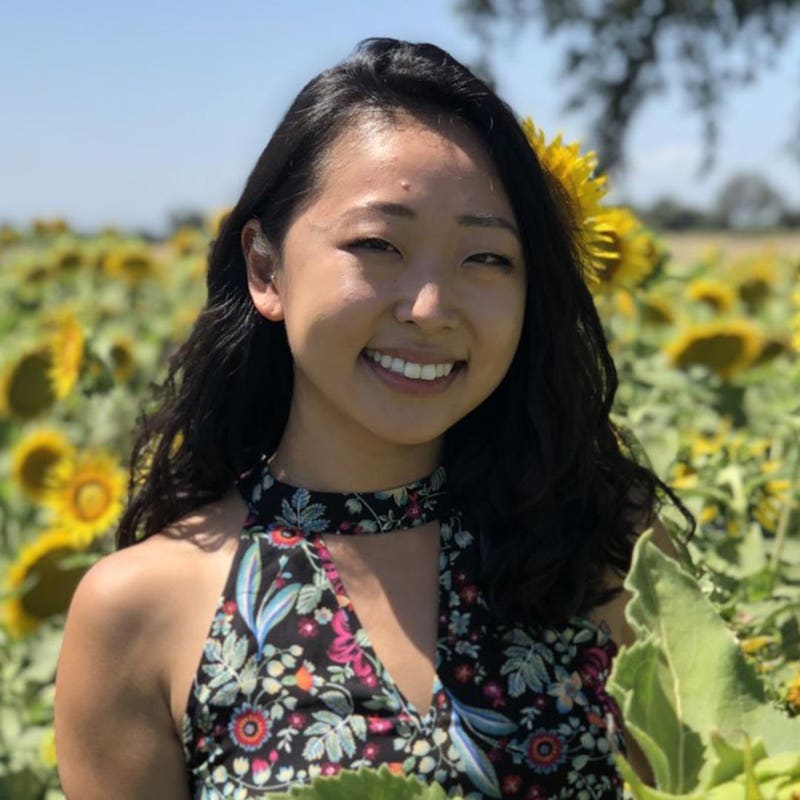
Jin Stedge runs TrueNorth, a San Francisco company that has taught software to do the oldest job in freight: find a load, price it right, and get the driver paid. The AI that does it has a name. It is called Loadie.
Loadie is a virtual dispatcher. It pulls freight from a dozen sources at once, then recommends the best options for a given truck based on where it sits, what it hauls, the driver's preferences, and - the part that matters most - which load actually turns a profit. For an independent trucker who used to spend evenings scrolling loadboards and mornings chasing invoices, that is a quiet revolution. TrueNorth started as a carrier. It grew into something closer to an operating system for the people who move America's goods.
The company's mission fits on a bumper sticker: profits to truckers. Stedge means it literally. Early users were projected to earn 30% more a year. Insurance costs that ran $20,000 to $30,000 came down to roughly $10,000. Same-day pay replaced the industry's grinding 30-to-60-day wait. These are not slogans. They are the receipts.
The model is unglamorous by design. TrueNorth takes a 15 to 18 percent cut of a driver's gross revenue and, in exchange, absorbs the parts of the job that have nothing to do with driving: finding customers, booking loads, optimizing routes, invoicing, and collecting. The pitch is not that a trucker will haul more freight. It is that the trucker will keep more of what the freight is worth, and get that money the day the job is done rather than a month later. For a business that lives and dies on cash flow, the timing is the product.
Stedge was born in South Korea and came to the United States at age seven, adopted into an American family whose living came off the highway. Her grandparents were owner-operators who ran up to six trucks in the 1980s, dispatching by phone and mail. Her uncles drove. Her cousins drove. Her cousin Tom is a fourth-generation trucker who, decades after those six trucks, still faced the same brutal choice: take a fleet job with lousy pay, or go independent and drown in the math.
That choice became the company. Stedge and her cousin Tom's problem are on a first-name basis. When she describes why TrueNorth exists, she does not reach for a market-size chart. She reaches for a relative.
Her father, a military veteran, had missed the family trucking tradition himself. He made up for it by arranging lunches between his daughter and working truckers - a small, deliberate nudge toward a world she would spend her career rebuilding. As a young woman, she did not see herself behind a wheel. She saw herself at MIT.
At MIT she studied aerospace engineering - the physics of things that fly. She did neuroscience research. She worked as a research assistant at the University of Washington. Then came a stretch in HR tech, with strategy and operations roles at Zenefits and Intercom, followed by a turn as Chief of Staff at Scotty Labs, an autonomous-driving startup spun out of SRI International.
Scotty was where she met Sanjaya Wijeratne, a senior software engineer who would become her co-founder and TrueNorth's CTO. When DoorDash acquired Scotty in 2019, the two did not chase the next shiny autonomy problem. They went in the opposite direction - toward the driver everyone else was trying to automate away.
It is a contrarian bet, and she makes it with an engineer's precision. Self-driving trucks, she argues, will not meaningfully displace drivers for a decade. Long-haul work is stubbornly, wonderfully human: cresting the Rockies, tarping freight by hand, running miles without a cell signal. A trucker's job is not holding a wheel. It is a hundred small judgments a robot cannot yet make. So instead of replacing the driver, TrueNorth arms the driver - with dispatching, a CRM, financial dashboards, market data, and automated invoicing folded into one place.
TrueNorth went through Y Combinator's Winter 2020 batch and launched in February 2020. A $3M seed followed that March. An $8.5M Series A, led by former Stripe executive Lachy Groom, arrived that November. Then, in December 2021, the headline number: a $50M Series B, co-led by Groom and the Altman brothers - Sam, Max, and Jack - with Sam Altman having backed the company early. Flexport Fund, Tribe Capital, K5 Global, 137 Ventures and others joined. Total raised to date: $61.8M.
The recognition came with it. Forbes named her to its 30 Under 30 list, headlining the story as the MIT aerospace engineer whose trucking company raised $50 million. At the time, roughly half of TrueNorth's 50 employees were women - a statistic that reads like a typo in an industry this male, and one Stedge built on purpose.
The path that led there was anything but linear. Aerospace to neuroscience to HR software to autonomous driving to freight is not a career ladder; it is a scavenger hunt. But each stop left a residue that shows up in TrueNorth. The engineer's habit of breaking a messy system into solvable parts. The operator's eye for the workflow that quietly wastes an hour a day. The researcher's patience for problems that do not yield to a single clever trick. She did not find trucking despite that detour. She was equipped for it because of the detour.
The most interesting thing about TrueNorth is that it changed its mind. It began by running trucks - a carrier that happened to have great software. It became an AI loadboard: the software layer that sits above the trucks, matching freight to capacity and stripping out the paperwork in between. Revenue grew roughly 3.4 to 3.5 times in a six-month stretch. Building a loadboard, though, means wrestling with the industry's darker corners - fraud, phantom loads, bad actors gaming the marketplace - and Stedge talks about that fight as openly as she talks about the wins.
There is a symmetry in that pivot worth sitting with. The old family business ran on relationships and a Rolodex - who you knew, who paid on time, which broker to trust. Loadie is an attempt to encode that instinct into software: a machine that knows which loads are worth taking and which are traps. The industry Stedge grew up around solved these problems one phone call at a time. She is trying to solve them once, for everyone, and let the phone stay in the driver's pocket.
It helps that she does not romanticize the work or the technology. Fraud on digital loadboards is real and rising - stolen freight, fake carriers, brokers who vanish before payment - and Stedge treats it as a core engineering problem rather than an unfortunate footnote. The same rigor she once pointed at aerospace and neuroscience now goes toward vetting, trust, and the unsexy plumbing of who gets paid and when. That is the tell of a certain kind of founder: the interesting problem is not the one that photographs well. It is the one that keeps a driver from getting burned.
Ask her where this goes and she points five years out, to a version of freight where an independent driver has the same software superpowers as the biggest fleet in the country. Her grandparents ran six trucks with a phone and a stack of mail. Their granddaughter is trying to run a whole industry on a model that finally works for the person doing the driving.