The books had arrived. The reading had not. Jim Wolford had helped send books to Nakivale Refugee Settlement in Uganda, then returned to discover them still boxed up. They were in the wrong languages. It was an awkward result for a technology executive accustomed to getting things done, and a useful rebuke to the idea that generosity automatically knows its destination.
Wolford admitted the mistake. With Alight and its Uganda team, he went back to the people who would use the library. Residents needed a say in what it contained and how it worked. A donor could pay for a building; the people around it would decide whether it belonged in their lives. For someone remembered for blunt opinions and quick decisions, this was an unusually revealing moment: he could change his mind.
“The vision is theirs, it shouldn’t be mine.”
Jim Wolford, on Nakivale’s library
That sentence gives a useful way into Wolford’s life. He co-founded Atomic Data, bought an IT company serving creative businesses, and invested in barbecue. He also spent years helping people acquire things that are easy to take for granted: books, a first opportunity at work, someone willing to put money behind an idea. His interests wandered. His willingness to get involved was rather consistent.
A school bill, paid in grass clippings
James Dale Wolford was born in Omaha, Nebraska, on April 25, 1968, the youngest of five children. At thirteen he started a lawn care business. Its earnings helped pay for his education, including Creighton Prep, from which he graduated in 1986. There is something admirably practical about this first business plan. Before the data centers and stadium networks, there were lawns that needed cutting and school bills that needed paying.
He went on to Saint John’s University in Collegeville, Minnesota, studying political science and history. Those subjects make a pleasingly untidy entry in the biography of an IT entrepreneur. A career can look inevitable when reduced to a company founding date. Wolford’s route involved sales, corporate risk management, and learning how businesses made decisions before he began selling them a different way to run their technology.
His early employers included Mutual of Omaha, MassMutual, and Melnychuk Financial. At Visi.com he worked in business strategy. The thread was the relationship between a company’s ambitions and the risks attached to pursuing them. Computers would become his business, but the business problem came first: what did an organization need to accomplish, and what might get in its way?
Keeping the machinery out of the way
In 2001, Wolford founded Atomic Data with Larry Patterson and John Dowdle. Its field was the work behind other people’s work: data centers, networks, cloud services, technical support. These are businesses in which success often has a peculiar public face. When everything works, the customer gets to think about something else. The applause tends to go elsewhere; the phone calls arrive when something breaks.
His earlier experience in risk management helped shape the offering. Atomic Data set out to make IT simpler for organizations that needed dependable systems without assembling every part themselves. By 2019, Atomic Data and its Apple-focused affiliate, The Foundation, reported combined revenue above $40 million. The number describes a particular year and a combined business, rather than a permanent label to attach to Wolford’s name.
He had purchased Foundation Technologies in 2006. It served creative industries, a different constituency with its own tools and working habits. Matt Woestehoff, who helped lead that business, later described the freedom Wolford gave its managers alongside financial guidance. That arrangement required a quality less photogenic than entrepreneurial confidence: allowing other people enough room to manage.
Atomic Data appeared on the Inc. 5000 in four consecutive years from 2015 through 2018. The recognition is one measure of growth. A more interesting question is what the growing company allowed Wolford to attempt next. His answer increasingly involved taking the same practical attention to places where a failed connection could inconvenience thousands of people at once.
The stadium has a second game running
Football supporters arrive to watch football, a perfectly reasonable preference that conceals an enormous supporting cast of systems. Minnesota United named Atomic Data its official Wi-Fi, IT, and cloud partner for Allianz Field. The relationship already included front-office support dating to 2014. At the new stadium, the work extended to the local network, internet telephones, and Wi-Fi used by fans.
Designing those systems meant accepting responsibility beyond the installation. Atomic Data would manage, monitor, and support them. A stadium’s technology has to work when the crowd arrives, rather than at a more convenient hour chosen by the technology. Wolford’s business had found a setting where the consequences of preparation could become immediately visible.
By 2021, his company’s sports clients included the Minnesota Wild, the PGA Tour’s 3M Open, and Cincinnati’s TQL Stadium. Sports Business Journal included him in its Power Players coverage that year. These connections widened the geography of a Minneapolis company. They also gave a distinctly public setting to his old concern with business risk: a full venue is a persuasive argument for having thought ahead.
A library earns its place
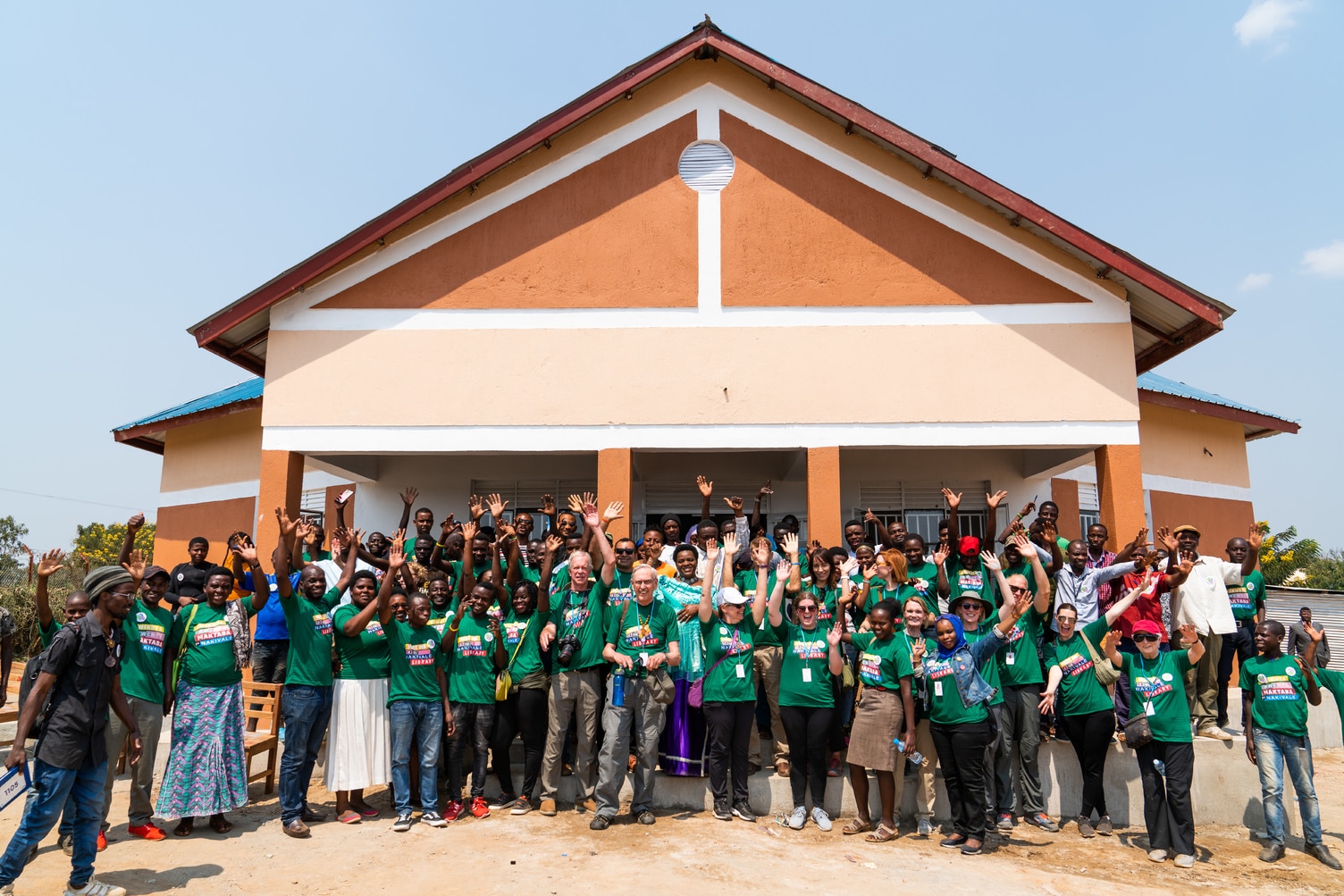
Wolford first travelled to Uganda with Alight in 2012. The relationship eventually produced the Nakivale Community Library Network, built with local partners and an initial $100,000 donation from Atomic Data. The central library opened in 2019. Its purpose reached beyond supplying shelves: readers could gather, children could hear stories, and people could make work of their own.

The early mistake with the books helps explain why this mattered. A library cannot be designed entirely from the donor’s side of the ocean. Language, reading level, and local interests determine whether a collection gets used. Once community members became partners in shaping it, the project could answer more useful questions than how many books could be shipped.
By 2023, Alight reported more than 4,200 registered books, largely in Kiswahili, French, Kinyarwanda, and English. Nine full-time staff supported the operation, and the team had held more than seventy mobile library engagements. Those details suggest an institution doing the ordinary work that makes an ambitious idea durable: employing people, choosing materials, and reaching readers beyond the building.
The local writing and illustrating of books added another dimension. People in the settlement could help create the stories on offer. For a project begun by an overseas businessman, that was a substantial change in authorship. Wolford’s willingness to support it made room for a future that did not require him to supply every idea.
Ten books, chosen by the reader
Back in Minneapolis, the practical question was closer to home. Start Reading Now funds book purchases for children in first, second, and third grade. Each child can choose ten new books at the start of summer. The choice matters. A book selected with enthusiasm has a better invitation into a child’s day than one delivered with the solemn air of an assignment.
Atomic Data had already supported the organization with money and volunteers when a larger intervention became necessary. In February 2021, leadership moved to a board led by Atomic Data employees, with Wolford becoming chair. Hannah Wagner and Scott Evangelist joined the board alongside him, while existing members and program staff helped carry the transition through.
He wanted to preserve the work and expand its reach. The organization had a mechanism that was easy to understand: children, vouchers, books to keep. Supporting operations gave that mechanism another season. It was an unglamorous form of generosity in the most useful sense, concerned with whether the next round of work would actually happen.
Room at the table, smoke in the kitchen
Wolford’s appetite for involvement also had a literal expression. He made barbecue at home and hosted monthly barbecues for Atomic Data clients. A colleague from Texas encouraged him to buy a trailer. When chef Noah Miller approached him about investing in Bark and the Bite’s food truck, Wolford had already spent enough time around smoke to be interested.
His investment grew as the venture developed a restaurant. Miller supplied the cooking creativity; Mark Myers handled operations. Wolford took an active interest without becoming the daily operator. “I preached patience,” he said of the search for a suitable location. Patience sounds particularly sensible when there is a lease to sign and somebody else is holding the tongs.
There was a playful side to his working relationships, too. Woestehoff remembered a San Francisco outing with Wolford and colleague Stacie that ended in pedicures and bright orange toenails. He also recalled being told, just before a fundraising auction, to bid without a budget. The recollections have the texture of an employer who could make an ordinary work trip unexpectedly difficult to describe on an expense form.
He paid attention in quieter ways. When employee Alex Yantifovich’s interest in mushroom foraging came to his notice, a foraging bag appeared on Yantifovich’s desk. Laura Best, founder of Passion Collective, remembered Wolford offering support after spotting her in their neighborhood. The gesture began with a conversation and became a continuing relationship. His business network had a habit of turning into something more personal.
The work keeps his name
Wolford died on May 5, 2023, aged 55. He lived in Golden Valley with his wife, Amy, and was the father of two sons. His companies continued, with Chris Heim appointed joint CEO of Atomic Data and Foundation Technologies in August 2024. Succession necessarily changes a business; it also reveals which habits people consider worth carrying forward.
In October 2025, Atomic Data described its Wolford White Glove Award, recognizing employees for service, commitment, and creative problem-solving. Lifeworks has a separate Jim Wolford Community Impact Award; its 2026 recipient was Leah Henrikson. These are specific ways of keeping his name attached to conduct rather than simply placing it on a wall.
The books in boxes remain a fitting detail to remember alongside the awards. Wolford had the means to send them and enough humility to acknowledge that the shipment had missed its purpose. He returned to the people who knew better. Somewhere between paying for an idea and allowing others to shape it, a library acquired the chance to become useful.