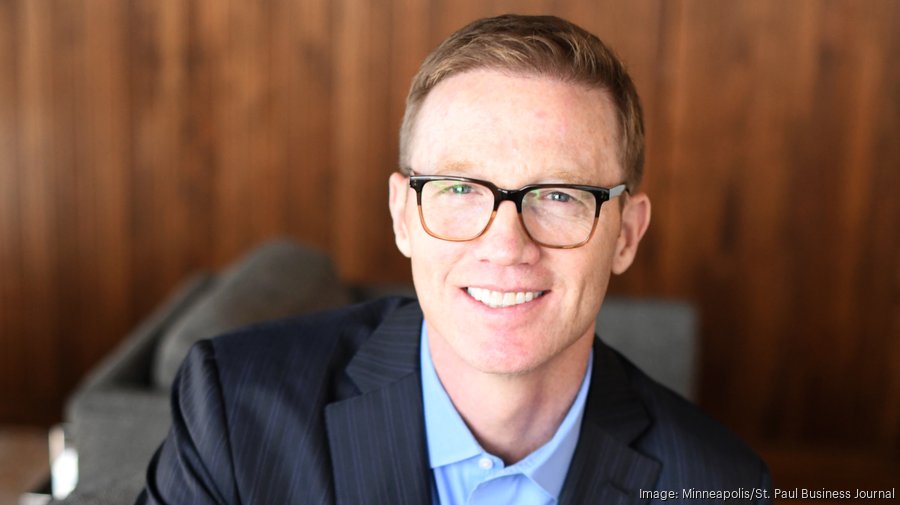
Rob Nelson’s business began with a conversation, not a grand thesis. During his senior year at Bemidji State University, someone introduced him to financial advising. The investing was interesting. The role was more interesting: the possibility of becoming the person clients called when the problem did not fit neatly inside one professional box.
He graduated in 1993 with a business administration degree and joined Ameriprise Financial Services and its predecessors that June. It was the beginning of a career that would outgrow the ordinary borders of wealth management. Nelson kept noticing that a client could have a financial adviser, tax professional, lawyer and insurance specialist, yet remain the only person responsible for making all four speak to one another. The client had assembled expertise and inherited a second job.
That second job became NorthRock Partners’ opportunity. Nelson’s practice moved into an independent registered investment adviser in 2013. Over time, the firm assembled investment management, financial planning, tax preparation, estate and legal guidance, insurance oversight, banking, cash flow and philanthropic support. NorthRock calls the result a Personal Office. The useful part of the phrase is the promise beneath it: somebody will attend to the joins.
“What are the pain points of my clients?”Rob Nelson, Financial Advisor Success podcast01 / Follow the unfinished work
The loose end is the product brief
In a 2023 conversation with financial-planning writer Michael Kitces, Nelson described the firm in wonderfully unglamorous terms. NorthRock might receive a client’s paycheck and provide a monthly income stream. It could pay bills, arrange lending, file taxes in all 50 states, monitor employer benefits, coordinate insurance and oversee the broader balance sheet. This is wealth management as a life with drawers: someone has to remember where everything goes.
The breadth came from observation rather than a fondness for crowded service menus. Clients moved for work. Professional athletes earned money across state lines. Corporate leaders dealt with equity compensation. Families wanted to give but discovered that good intentions arrive with forms, governance and administration. Each recurring complication posed the same choice: coordinate an outside expert or build the capability inside NorthRock.
The coordination surface / Personal Office
Nelson’s filter for bringing a service in-house has two parts. Can it scale? Can NorthRock be excellent at it? If either answer is no, he has said, the firm will continue to outsource the work. That makes the model more disciplined than it first appears. Adjacency alone is not a strategy. A new department earns its place by resolving a repeated client burden and surviving the test of consistent delivery.
The growth followed. Nelson told Kitces that NorthRock had gone from roughly $1 billion in direct assets in 2017 to $5 billion by 2023, serving clients across about 45 states. The firm’s 2025 regulatory brochure reported approximately $6.23 billion in discretionary assets and $366 million in non-discretionary assets as of the end of 2024. Numbers date quickly in wealth management. The organizational lesson ages better: listen closely enough and clients will describe the company they need.
Athletes made coordination visible
The need becomes especially plain around athletes and entertainers. Their careers can be mobile, public and compressed. Income may combine salary, bonuses, endorsements and investments. Agents, managers, lawyers, relatives and advisers all enter the picture. The person with the least spare time can wind up conducting the orchestra.
Nelson has served as an NFL Players Association registered financial advisor since 2012. In 2019, NorthRock announced that four-time NBA champion Tony Parker would lead its sports, artists and entertainment division. Parker brought a client’s-eye view of the complexity. NorthRock later developed the NorthRock X brand for athletes, entertainers, executives and entrepreneurs. The specialist division made the company’s larger logic easy to see: excellent advice can still fail when nobody owns the sequence.
There is also a humane reason to coordinate. Clients do not experience taxes, investments, insurance and family decisions as separate industries. They experience Tuesday afternoon. The professional categories are useful backstage. In front of the curtain, life remains stubbornly whole.
03 / Capital with a destinationGenerosity enters the plan
Nelson’s thinking about philanthropy began long before it had an organizational name. In a 2026 Foundation X conversation, he recalled growing up in a small farming community and watching the county sheriff give his time to anyone who needed it, on duty or off. Later, a client he had served for years modeled the same instinct with both time and resources. Nelson saw the effect and found it, in his words, “a little addicting.”
Charitable giving moved into NorthRock’s advisory process because clients were already bringing it into the room. Their questions were financial and personal at once. How should a gift be structured? What should it support? How could a family preserve an intention across generations? What does the paperwork require? A tax deduction may begin the calculation, but it cannot supply the reason.
“It just is a beacon, just an example of what unconditional generosity means.”Rob Nelson, speaking about his hometown sheriff
Foundation X grew from that gap between generous intent and practical execution. Nelson has said that even with decades in finance, setting up and managing charitable initiatives could be unexpectedly complicated. The organization helps individuals, families, businesses and communities establish foundations and giving strategies, then supports the machinery required to keep them running. Its premise is appealingly democratic: organized generosity should not belong only to people who already have a large charitable institution.
The work also changes the advisory relationship. Asking what clients want their resources to accomplish can reveal values that an asset-allocation questionnaire will never detect. Nelson argues that generosity belongs in the central conversation because it helps an adviser understand the person behind the balance sheet. Money becomes less abstract once it has somewhere meaningful to go.
04 / Build beyond the founderA promise measured in decades
In December 2023, a subsidiary of Sammons Financial Group acquired a majority interest in NorthRock. Regulatory disclosures show that Nelson and partner Todd Moser retained substantial minority interests of less than 25 percent each and remained active in leadership and daily operations. A sale can sound like an ending. Nelson described the partnership in terms of duration.
He wants NorthRock to be capable of executing client legacies 30, 50 and 60 years into the future. That ambition places a heavy demand on the institution. Advice must become process. Relationships must become durable teams. The firm must remember why a plan exists long after the meeting in which it was designed. Succession, in this view, is not merely who gets the founder’s chair. It is whether the promise survives the founder’s presence.
The organization around the organization
Nelson’s public roles sketch the same pattern outside the firm. He chairs Foundation X, has chaired and served on the Ashby Legacy Fund board, and has been president of the Arrow Giving Foundation. NorthRock’s current biography also lists the Taylor Foundation board and Schwab Advisory Board. These are not interchangeable appointments. Together, they place him where financial services, local institutions and organized giving overlap. He appears most interested in the point where an intention needs a structure before it can endure.
His family life is described more simply. Nelson and his wife, Lucinda, live in Minneapolis. They enjoy traveling with their son, Brady, and daughter-in-law, Tracy, and spending time with family and friends. The detail is ordinary in the best way. A business built around complicated lives is still accountable to what the complication is for: time, relationships and the freedom to be present for them.
That sensibility also helps explain Nelson’s preference for the word “advice” over a narrow emphasis on products. Investments are necessary, but the consequential call may concern a charitable project, an estate decision or the practical demands of a relocation. He continues to combine the CEO’s job of setting direction with direct client interaction. In an industry that can turn every human concern into a department, staying close to the conversation is a useful defense against elegant irrelevance.
NorthRock’s story is often told through assets, acquisitions and a growing national footprint. Nelson’s more distinctive contribution may be a method of looking. Pay attention to the problem the client keeps carrying from one expert to another. Decide whether your organization can take responsibility for it. Build only if the answer includes both scale and excellence. Then make the handoff disappear.
It is a modest-sounding formula for a complicated business. It also explains why philanthropy sits beside tax planning, why athletes sharpened the service model and why a financial adviser thinks about promises sixty years away. The work between the work is where a plan becomes a life.