Ronald Diamond asked a question that ought to have been easy. At Stanford, with members of multibillion-dollar families on a panel, he wanted to know what a family office was and why each family had created one. Five people gave five different answers. He recalls that none was wrong. The money was real; the shared definition was harder to locate.
It is a useful place to begin with Diamond, an investor based in Highland Park, Illinois, whose work keeps returning to the space between people who could benefit from knowing one another. A fortune can buy a great many things. A common vocabulary apparently requires a meeting.
Diamond founded Diamond Wealth and now serves as its chairman. His project brings family offices together around private investments, while his other work brings their questions into classrooms, podcasts, and conversations. Viewed together, those activities suggest a practical preoccupation: how to make accumulated wealth less isolated, and the people responsible for it better equipped to act.
The first employer did not last
Diamond graduated from Northwestern University in 1987 with a degree in economics, earning magna cum laude honors. He began his career at Drexel Burnham Lambert. It was a beginning that looked rather different after the firm collapsed in 1990.
He has recalled being surrounded by much older colleagues who had lost much or all of their money. He returned to Chicago and started a hedge fund. In his telling, experience arrived while he was already doing the job. He built the fund, benefited from favorable conditions, sold it, and began investing his own capital.
The fund was Pinnacle Capital, a $250 million hedge fund. His earlier roles also included senior managing director at Bear Stearns. The sequence matters more than the impressive nouns: employee, founder, seller, investor. Each position changes the relationship between the person making a decision and the money at risk.
There is an appealing lack of choreography in that career. Diamond's account allows room for luck and learning. The early detour also makes his later interest in institutional durability understandable. Wealth has a history. So do the organizations meant to protect it. Neither should be mistaken for a permanent fixture.
Drexel analyst
podcast launch
board chair
A fortune still has limits
The central idea at Diamond Wealth is investment alongside other families. Its stated focus is private markets, including private equity, venture capital, real estate, credit, and special situations. Those categories are broad. What connects them here is the effort to bring people and resources together before committing capital.
In March 2026, Opto Investments described Diamond's syndicate as comprising more than 130 families, with individual family assets ranging from $250 million to $30 billion. Those are the families' asset sizes, rather than a statement of assets managed by Diamond Wealth. Keeping that distinction clear helps explain the arrangement. The participants arrive with their own wealth.
Collaboration gives the smaller participant a way to work with larger ones. It gives families a setting in which to compare practices and examine opportunities. The appeal is easy to see without pretending that a group makes every investment sound. A bigger table still needs people willing to ask an inconvenient question.
Diamond Wealth's public vision places trust and resource sharing alongside investing. This is a revealing choice of emphasis for a financial firm. The useful contribution may be an introduction, an experienced colleague, or a conversation that changes how an opportunity is understood. A transaction can be the result of that work; it need not be the first sentence.
Shared diligence
Peer relationships
The introduction without an invoice
Diamond's account of a New York conference supplies a small, telling complication. He introduced someone raising venture money to another attendee. Afterward, the fundraiser wanted to know why Diamond had made the connection: the other person did not invest. Diamond had simply thought the two people would benefit from meeting.
The mismatch is almost comic. One person had come to a cocktail party looking for capital; another thought a conversation might be worthwhile. The same handshake could belong to two different economies.
Diamond has described making mutually useful introductions frequently, without needing a role in what follows. His impatience is directed at the demand for an immediate payoff. It is a plausible philosophy for someone whose work depends on repeated contact. An introduction judged only by whether it produces money today is a very short experiment.
His father, a banker, offered a related lesson: an entrepreneur should look for the smartest person in the room. Diamond's own description of delegation rests on finding people he trusts who know more than he does in particular areas. There is a certain efficiency in letting another person be clever. It also saves the considerable effort of performing omniscience.
Private money, public conversation
Family Office World began as a podcast in November 2019. The show offered a way to explore an industry whose workings could be difficult for outsiders to understand.
A podcast is a sensible instrument for a person whose working material includes questions and introductions. It lets a conversation outlive the event that produced it. A listener can encounter the reasoning rather than merely the final investment decision. The host, meanwhile, has an excuse to ask people how they actually do things.
Diamond's conversation with Tony Pritzker and Paul Carbone examined patient, flexible family capital. Carbone publicly thanked him for the interview. Diamond highlighted topics including compensation for professionals outside the family, family values, and the ability to compound an investment without a forced sale. These are organizational questions as much as financial ones.
The project has developed into Family Office World Media, with education, events, a newsletter, and video conversations. Its stated audience extends beyond family principals to service providers, founders, and students. Diamond is its founder, host, and CEO. Recent listed discussions include ETFs, tax-aware investing, and a conversation with Dan Ives.
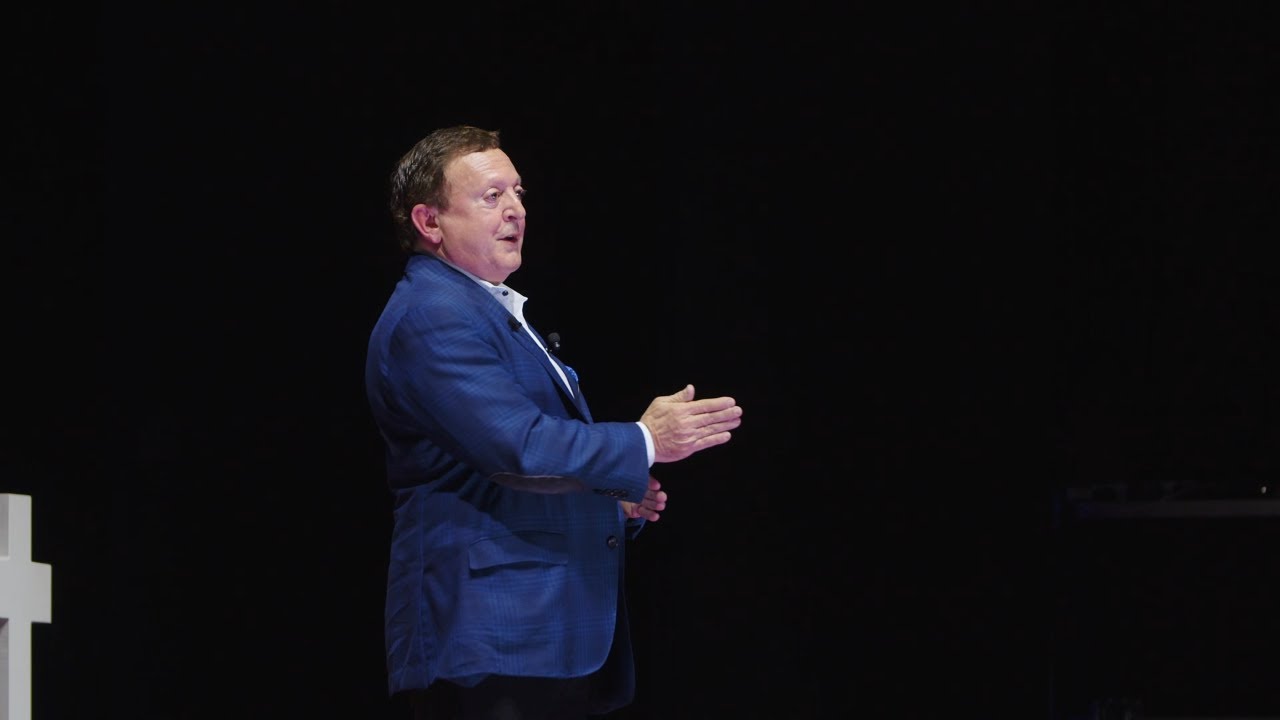
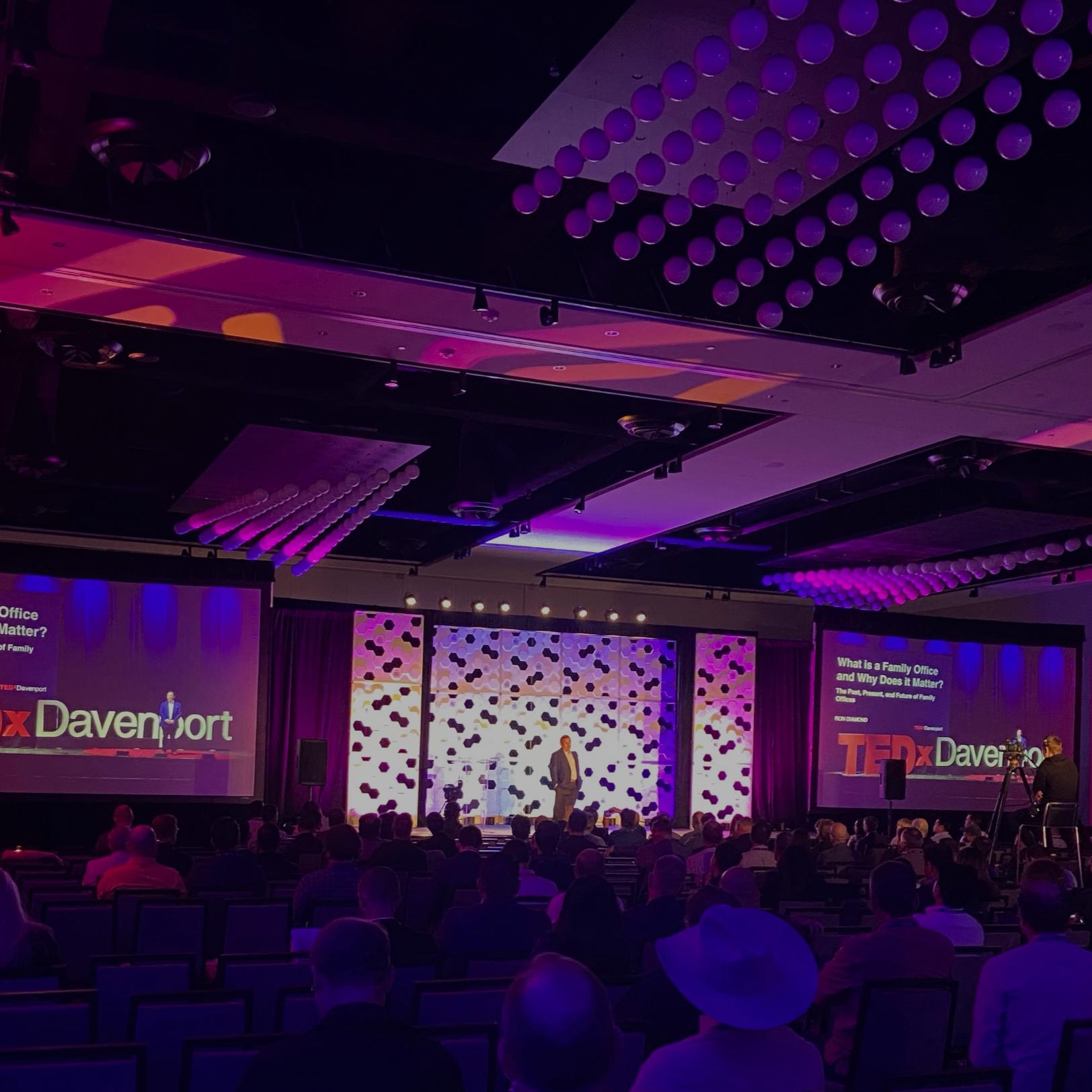
The move onto a TEDx stage in Davenport in 2023 carried that educational impulse into a different room. His talk asked what a family office is and why it matters. The question from Stanford had acquired a public audience. The subject still required explanation before anyone could sensibly discuss its ambitions.
Patience goes back to school
Diamond's work with academic institutions gives the conversation another home. He previously chaired the advisory board for Stanford's Disruptive Technology and Digital Cities Program and helped launch its family-office initiative. His current biography also records teaching family-office courses at Oxford, Stanford, Harvard, and Chicago Booth.
At the University of Chicago Booth School of Business, he sits on the Family Office Initiative's steering committee. The initiative launched in October 2024. Its work connects research, education, and practitioners, and its events are designed to operate without sponsorship or solicitation.
That last detail deserves attention. A room in which everyone can be sold something is different from one in which people can ask a question without immediately becoming a prospect. Removing the pitch changes the possibilities for conversation. It leaves more room for the unglamorous subjects that determine whether an organization works.
The initiative's first summit, held in May 2025, brought together more than 160 attendees representing 147 family offices. Booth also introduced an MBA course called The Family Office. Investment performance, leadership, and relationships were among the summit's subjects. A family office begins to look less like a mysterious address and more like an organization that can be studied.
Diamond's participation fits his broader aim of helping families become better organized and learn from one another. Education provides a way to examine assumptions that a successful investor may have had little reason to question. An excellent balance sheet does not automatically answer a question about leadership.
The optimist's awkward question
Diamond's public discussions also make room for what can go wrong. In a December 2025 interview about family wealth and agriculture, he described himself as optimistic while emphasizing the need to consider failure before making an investment. The two attitudes can occupy the same chair.
“What happens if it doesn't work?”
Ron Diamond, on his starting question for an investment
His example involved families that had invested directly in real estate when borrowing was cheap. Higher rates changed the calculations. A decision that had appeared straightforward under one set of conditions could become much less comfortable under another. The observation puts some friction into an otherwise sunny picture of entrepreneurial wealth.
In March 2026, Opto appointed him chair of its advisory board. His remit includes advising a platform that supports private-market selection and due diligence. The appointment connects the interpersonal side of his career to the systems used to evaluate investments. Introductions create possibilities; examination determines what deserves further attention.
He has also discussed artificial intelligence as a means of improving smaller family offices' capacity to screen opportunities. His interest lies in what the tools might let people do. The practical question remains familiar: who has the experience, information, and organizational support to make a considered decision?
Five things that do not fit on a balance sheet
For all the conversations about capital, Diamond has a compact list of personal priorities: love, gratitude, attitude, balance, and laughter. He returned to those five principles in a 2025 conversation with Simon Bowen about leadership and the purpose of wealth.
The list gives laughter equal billing with balance. It is a pleasing arrangement in a profession that can make a quarterly report sound like a moral verdict. It also suggests a broader measure of a working life. Relationships, appreciation, and perspective can survive the closing bell.
His family-office work keeps moving between those two scales: the institutional questions of investment and governance, and the personal questions of what wealth is supposed to accomplish. The podcast, the classroom, and the investing group are different places to hold that discussion. Their common requirement is another person willing to participate.
Return to the Stanford panel and its five answers. Diamond's question did not produce agreement. It produced something useful to work on. A room full of capital still had room for curiosity. For an investor who spends so much time connecting people, that is a rather good opening.