The Profile · Issue No. 0084
Geetha Murali
A biostatistician who became a political scientist who became the CEO of one of the world's largest literacy organizations. The connecting thread is sharper than it looks.
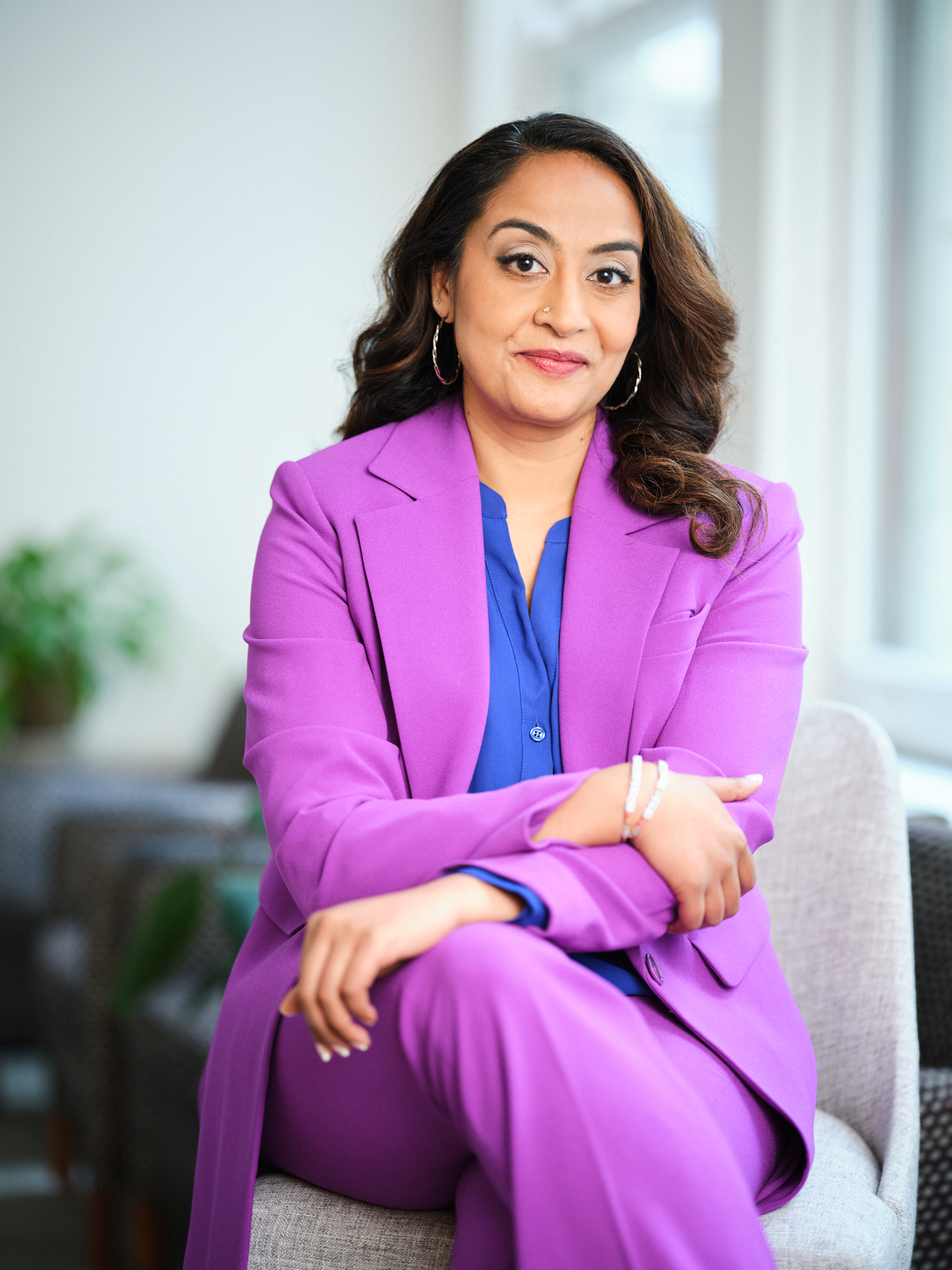
A biostatistician who became a political scientist who became the CEO of one of the world's largest literacy organizations. The connecting thread is sharper than it looks.
On any given Tuesday, Geetha Murali is on a video call that bridges nine time zones. The agenda is usually some combination of two things she happens to be unusually qualified to discuss: how to measure whether a child can actually read, and how to keep a 1,200-person nonprofit moving in the same direction across 29 countries.
She is the chief executive officer of Room to Read, the San Francisco-headquartered nonprofit that publishes children's books in local languages, builds school libraries, trains teachers, and runs life skills and mentorship programs for adolescent girls. She is also the first non-founder CEO in the organization's history. The promotion landed in 2019. The world it landed into looked, within months, like a stress test designed by a particularly cruel grant committee.
The pandemic closed schools. Room to Read responded by delivering lessons through whatever was available: radio, SMS, printed packets, and, in a few logistics stories that have since become organizational lore, by camel and by boat. Murali described the approach as flexible-but-sound. The phrasing is hers and it is characteristic. She talks like someone who has read a great many program evaluations and still believes the work is fundamentally about kids in rooms with books.
The numbers she repeats most often: 29 countries, 60 million children benefited, 20,000-plus partners and volunteers, 1,200 staff. She does not present them as a victory lap. She presents them the way a biostatistician presents a baseline. You have to know where you started to know what changed.
Most résumés stack neatly. Murali's does not. She holds a master's in biostatistics from the University of North Carolina at Chapel Hill. She also holds a master's and a PhD in South Asian politics from UC Berkeley. The first taught her how to interrogate a dataset. The second taught her why the dataset exists in the first place.
Before Room to Read, she worked at GlaxoSmithKline and at Chiron, the vaccine company. She did education-technology work with the American India Foundation's Digital Equalizer Program and with Adobe Youth Voices. She joined Room to Read in 2009. She spent roughly a decade inside the organization before being named CEO, the last several years as chief development and communications officer, which is the elegant title for the person who is responsible for the money and the message at the same time.
Internally she is known for a hybrid sensibility: the rigor of someone who built models for a living, plus the regional fluency of someone who wrote a dissertation about the politics of the subcontinent. The combination shows up in how Room to Read sets targets. The organization does not just hand out books. It measures whether kids can read them.
Source: Room to Read public reporting and CEO bio materials.
In interviews and on conference stages, Murali tells a version of the same family story. Her mother, as a young woman in India, was on a path that ended in a child marriage. That marriage did not happen. The decision was made by her mother. The arc of one family bent on that single hinge. Murali frames her own career as a single-generation translation of that decision into institutional form. The phrase she has used: from child bride to CEO in one generation.
It would be tidy to call this the explanation for her work on girls' education. It is more accurate to call it the reason she does not need to be persuaded. Room to Read's Girls' Education Program runs life skills curricula, mentorship and community engagement designed to help adolescent girls complete secondary school. It is the line of work she will not let drift.
One of the quieter facts about Room to Read is that it is a publisher. The organization commissions, develops and distributes children's books in dozens of local languages, supporting authors and illustrators in the communities the books serve. Translation is not the goal. Authorship is. A child opening a book in a language her grandmother also speaks is a different reader than one decoding an import.
The publishing arm interlocks with the libraries Room to Read helps establish, the teacher coaching the organization runs, and the reading-skills assessments it uses to figure out whether any of it is working. Murali speaks about literacy as a stack. You need the spaces, the materials, the trained adults, and the measurement. Pull one out and the rest is decorative.
"My family's trajectory was changed by the single decision of one young woman, my mother, and my path was reshaped from child bride to CEO in a single generation."— Geetha Murali
"Once you're able to read, all of a sudden, the world opens up to you, and you can develop the learning pathways that can help you make good, informed choices."
"The future of education is based on flexible but sound approaches that reach children where they are."
"When you think you're at your limit, just push yourself a little bit further."
"I cannot think of a better way to shape the future of this world than investing in the young people who will one day be its caretakers."
Knighted by the King of Cambodia for her contributions to education in the country.
Named one of 50 Outstanding Asian Americans in Business and a WIRED leader shaping the next 25 years.
Inaugural CNBC Changemaker (2024). YPO Global Impact Award recipient.
Started in pharma at GSK and Chiron, pivoted through ed-tech, then went all-in on literacy at scale.
Holds graduate degrees in two different worlds: biostatistics (UNC) and South Asian politics (UC Berkeley).
Often opens talks with the fact that her mother was nearly married off as a child. The family arc was bent by that one averted decision.
During school closures, Room to Read delivered lessons by camel, boat, radio and SMS to reach kids in remote regions.
Featured by the BBC, Bloomberg, ABC, CNBC and The Times of India.
Fifteen ways to describe Geetha Murali in fewer than 280 characters. Pick a favorite.