Jim Vena was riding through Chicago with reporters in November 2025 when the scenery began making his argument for him. Trains were parked. Freight was waiting. A Union Pacific locomotive at Bedford Park had spent more than 17 hours awaiting a handoff. For a railway executive promoting a merger, the view was inconveniently useful. America had plenty of steel on the ground. Getting from one company’s steel to another’s was the nuisance.
Vena’s response was characteristically practical. Combine Union Pacific with Norfolk Southern, he argued, and more freight could stay on one network across the country. “We’ll just run straight through,” he said. There was a large corporate transaction behind that small sentence. There was also nearly half a century of railway work.
His authority in that conversation came from an unusual sequence of jobs. Before the board meetings and investor calls, he had worked as a brakeman, conductor and locomotive engineer. A parked train was familiar equipment, with familiar consequences. The executive looking out the window had once worked on the other side of it.
A summer job that kept going
Vena was born in southern Italy and grew up in Jasper, Alberta, after his family moved to Canada in the early 1960s. At 15, he worked a summer rail gang, throwing ties from gondola cars. He disliked the assignment. His father encouraged him to stick with it. The railway, initially an unpromising way to spend a summer, became his career.
He joined Canadian National as a brakeman in 1977. University remained part of the picture: he earned a Bachelor of Science in Mathematics and Chemistry from the University of Alberta and later an Advanced Graduate Diploma in Management from Athabasca University. Science and railway work shared space on his résumé. The locomotive cab offered a rather immediate examination of whether a plan worked.
In his first message as Union Pacific CEO, Vena recalled unpredictable schedules, difficult weather and nights away from home. His wife, Karen, and their two children had lived through the moves and demands with him. He also described colleagues who had changed his outlook. That history gave his promises to employees a personal reference point, even when those employees had reasons to question his approach.
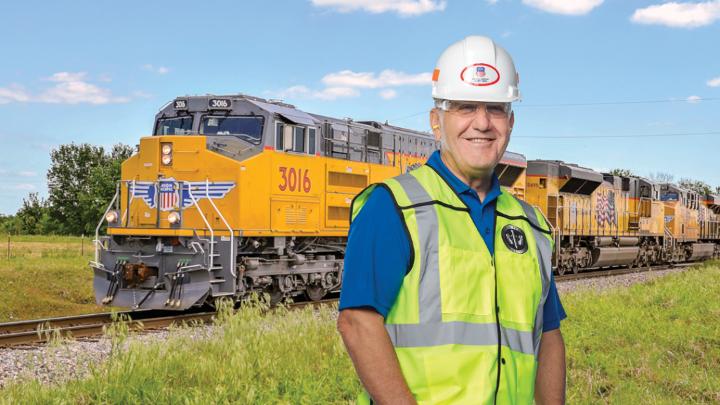
Thirty-six years to the operating chair
CN’s announcement of his promotion in February 2013 recorded a career built across operations and marketing. By then, Vena had led all three of the railway’s operating regions. The new chief operating officer had seen the business through different geographies and different responsibilities. Running trains and persuading customers to put freight on them had both been part of the education.
Claude Mongeau, then CN’s CEO, put him in charge of an operating agenda that joined service with efficiency. Engineering, mechanical and supply management functions were also to report to Vena after another executive’s retirement. The assignment reached beyond keeping a timetable. It included the physical railway, the equipment and the supplies needed to make the timetable credible.
Vena retired from CN in June 2016. Union Pacific brought him back into railway management in January 2019 as chief operating officer. Its Unified Plan 2020 had already begun the previous October. His task was to lead operations and help implement that plan, bringing experience with precision scheduled railroading to a company already changing how it worked.
Jasper, Alberta
operating officer
operating chief
chief executive
Union Pacific later credited the team he oversaw with more than $1 billion in efficiency savings. He moved to an advisory role in 2021. When the board appointed him CEO in 2023, it explicitly emphasized operating experience. Mike McCarthy became chairman and Beth Whited became president as Vena succeeded Lance Fritz. The operating specialist now had the wider company to answer for.
The price of a leaner railway
The appointment did not produce universal applause. Some major unions were cautious about bringing back an executive closely associated with precision scheduled railroading. Union Pacific’s earlier changes had cut jobs and altered its operating footprint. A record that appealed to investors could look different from a crew member’s seat. Both reactions belonged to the same career.
Vena continued to defend lean operating principles. In September 2023, he said further changes would be less sweeping than during his first stint, while stressing service and daily execution. His concern was the accumulation of small operating mistakes. The point is easy to follow: several manageable delays can become a network problem before anybody has made one spectacularly bad decision.
He also wanted decisions made faster. In November, he told employees that departments had reviewed management layers, spans of control and team structures. The stated aim was to give employees more authority to act. Those changes arrived during inflation, lower volumes and rising costs. Empowerment and economy were being pursued together, which made the details of implementation consequential for the people doing the work.
“I won’t mince words when the truth must be spoken.”
Jim Vena, first-day message to employees, August 2023
His commercial message was equally direct. At customer forums in Omaha that September, he told shippers, “We want you to win.” More than 100 customers attended the industrial and bulk discussions. He spoke about understanding their businesses and making decisions quicker. Reliability had a purpose beyond a railway’s internal scorecard: customers needed their own plans to hold together.
Recognition with some weight to it
By March 2025, Vena had created a ceremony for employees whose work supported that strategy. Union Pacific’s inaugural CEO Excellence Awards recognized 41 employees. A committee considered more than 200 submissions, with categories covering work from safety and service to asset use and engineering. Representatives accepted trophies cut from actual rail. Each weighed 11 pounds. Corporate recognition had acquired a practical carrying requirement.
The winning groups showed how broad the railway job had become. One team handled a surge in potash shipments. Another implemented NetControl, the transportation management system. The Big Boy steam tour team received recognition too. Vena used the event to acknowledge people outside the room, along with those accepting the hardware. The railway’s results depended on a much larger cast than its executive roster.
When he accepted the Railroad Innovator Award at RailTrends in November 2025, he again directed attention toward the team. “This honor belongs to the people who run this railroad,” he said. Around him were leaders whose responsibilities included operations, finance, technology and customers. The award carried his name; the operating system required all of them.
The full-year figures gave that argument something measurable. Union Pacific reported $24.5 billion in 2025 operating revenue, up 1 percent. Its reported operating ratio was 59.8 percent, compared with 59.9 percent in 2024. The ratio expresses operating expenses as a share of revenue. A lower number means less of each revenue dollar went into operating costs; it cannot, by itself, describe a customer’s experience.
In January 2026, Vena told employees the railway had set full-year company records for freight-car velocity, locomotive productivity and terminal dwell. He also emphasized keeping resources in reserve. That qualification mattered. Spare capacity can look idle on an ordinary day and prove useful when demand or operating conditions change. Efficiency still needs room to absorb a surprise.
The pause in the middle of the map
The proposed Norfolk Southern combination takes his attention from improvement inside one railway to the boundary between two. Announced in July 2025, the plan would join networks across roughly 50,000 miles and 43 states. Its attraction, in Vena’s account, is the chance to remove interchange delays, offer more direct service and compete for freight that otherwise travels by highway.
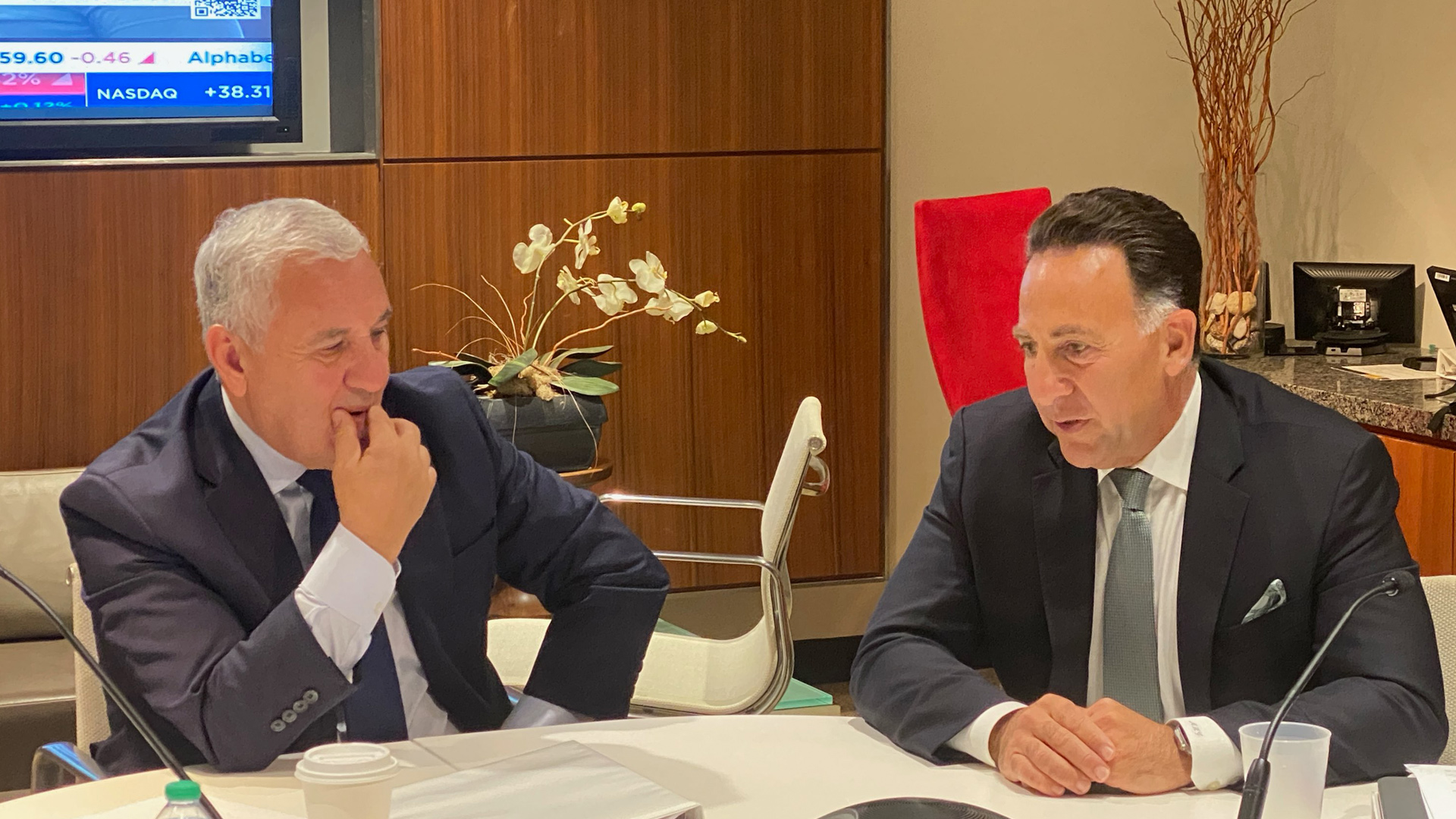
Norfolk Southern CEO Mark George described months of conversations preceding the agreement. Vena likewise said the transaction had grown through a dialogue. The business logic emerged as the two leaders discussed what their companies could do together. No elaborate steak-dinner origin story was required. A railway merger apparently can begin with the unfashionable business of talking.
+ waitingEastern network
The proposed combination aims to reduce interchange delays. Benefits depend on approval and successful integration.
Vena also said integration should proceed carefully, drawing on mistakes he had seen across his career. That is a meaningful restraint for someone otherwise impatient with stationary freight. A combined map does not automatically produce a combined operation. Technology, crews, customer commitments and operating practices have to work together after the announcement has disappeared from the news ticker.
A timetable he cannot dispatch
As of October 21, 2026, the transaction remained under regulatory review. The original application had been found incomplete in January. A revised application followed in April. In August, the Surface Transportation Board removed the proceeding from abeyance and established a schedule for considering its merits. Opening that review did not settle whether the merger should happen.
The timetable called for comments by November 18, 2026, and responses by February 16, 2027. In September, the board denied several requests for summary denial of the revised application. In October, it accepted four late-filed descriptions of anticipated responsive applications. The proposal was advancing through a contested process, with its outcome still to be decided.
Meanwhile, Vena’s responsibility remained the existing railway. The freight already booked could not wait for a future network to materialize. His career had brought him from handling railway equipment to arguing over the shape of the industry. The daily obligation was recognizable all the same: give the customer a service worth buying, and make sure the next train moves.