Jim Tananbaum was studying for an MBA when he helped start GelTex Pharmaceuticals. Business school ordinarily gives students a case study to discuss. He helped create one. There is a pleasing excess to that choice: why settle for debating somebody else’s decisions when you can arrange to have your own decisions become consequential?
The episode supplies a useful starting point for a career that can look, at first glance, like an accumulation of institutions and acronyms. Yale. Harvard. MIT. Two companies. Two investment practices. Foresite Capital. Foresite Labs. Read the names as a list and the person disappears behind them. Read them as successive attempts to bring different kinds of expertise together and a more interesting character begins to emerge.
At Yale, where he graduated in 1985, Tananbaum studied applied mathematics and electrical engineering and computer science. He continued his studies at Harvard and through the Harvard-MIT program, earning an MBA along the way. The attraction of computation had begun in high school. His academic route made room for several interests rather than requiring an early declaration of loyalty to one.
There was also rugby at Harvard. The detail is useful chiefly because it restores some grass and mud to a biography crowded with degrees. A person can attend several celebrated institutions and still spend part of his time trying to advance a ball while other people object. The credentials tell one story; the rugby team supplies a welcome change of scenery.
A company before the diploma was cold
In 1991, Tananbaum co-founded GelTex with Harvard professor George Whitesides. In 1997, he helped found Theravance with collaborators including Whitesides, Roy Vagelos, and Mathai Mammen. These were partnerships between people whose experience came from different places. Tananbaum’s place in the arrangement included the work of turning a proposition into an organization.
Theravance gave him a second role as founding chief executive. He raised more than $350 million during his tenure. That figure measures a practical responsibility: persuading people to provide resources for work that is still unfinished. A founding CEO must repeatedly translate a future possibility into a present commitment. The translation has to survive questions, budgets, and the arrival of Monday morning.
The company-building experience matters to the investor he later became. A young company is an assembly of obligations as much as an assembly of ideas. Someone has to recruit, decide what happens first, and explain why the next stage deserves support. Tananbaum had occupied the seat from which those demands arrive together. His later career kept returning to company formation.
The distance between a cheque and a company
His investment career included a partnership at Sierra Ventures and the co-founding of Prospect Venture Partners. By 2011, he had established Foresite Capital. The move gathered the entrepreneurial and investment portions of his working life into an organization of his own. It also gave him a place to pursue a thesis about computation and scientific enterprise over time.
The names connected to that work include Bruce Cozadd, Daphne Koller, Bob Tjian, and Molly He. Their companies include Jazz Pharmaceuticals, Insitro, Eikon Therapeutics, and Element Biosciences. The roster illustrates the social machinery of investing: an idea belongs to people, and an investor’s relationship with those people can extend across the awkward stages that precede a finished business.
A company does not become coherent merely because accomplished people have joined it. Technical vocabulary can conceal disagreement; polite agreement can conceal incompatible expectations. Tananbaum’s recurring attention to teams makes his career interesting beyond the size of any fund. The central problem is organizational. How do people with distinct kinds of knowledge manage to make decisions together?
Foresite’s answer has included providing resources beyond financing. In its early-stage work, the firm helps assemble companies; it also has a later-stage investment practice. That breadth creates different encounters with founders. Sometimes the enterprise is still taking shape. Sometimes the question is how to support an existing organization through its next period of growth.
Making room for the translators
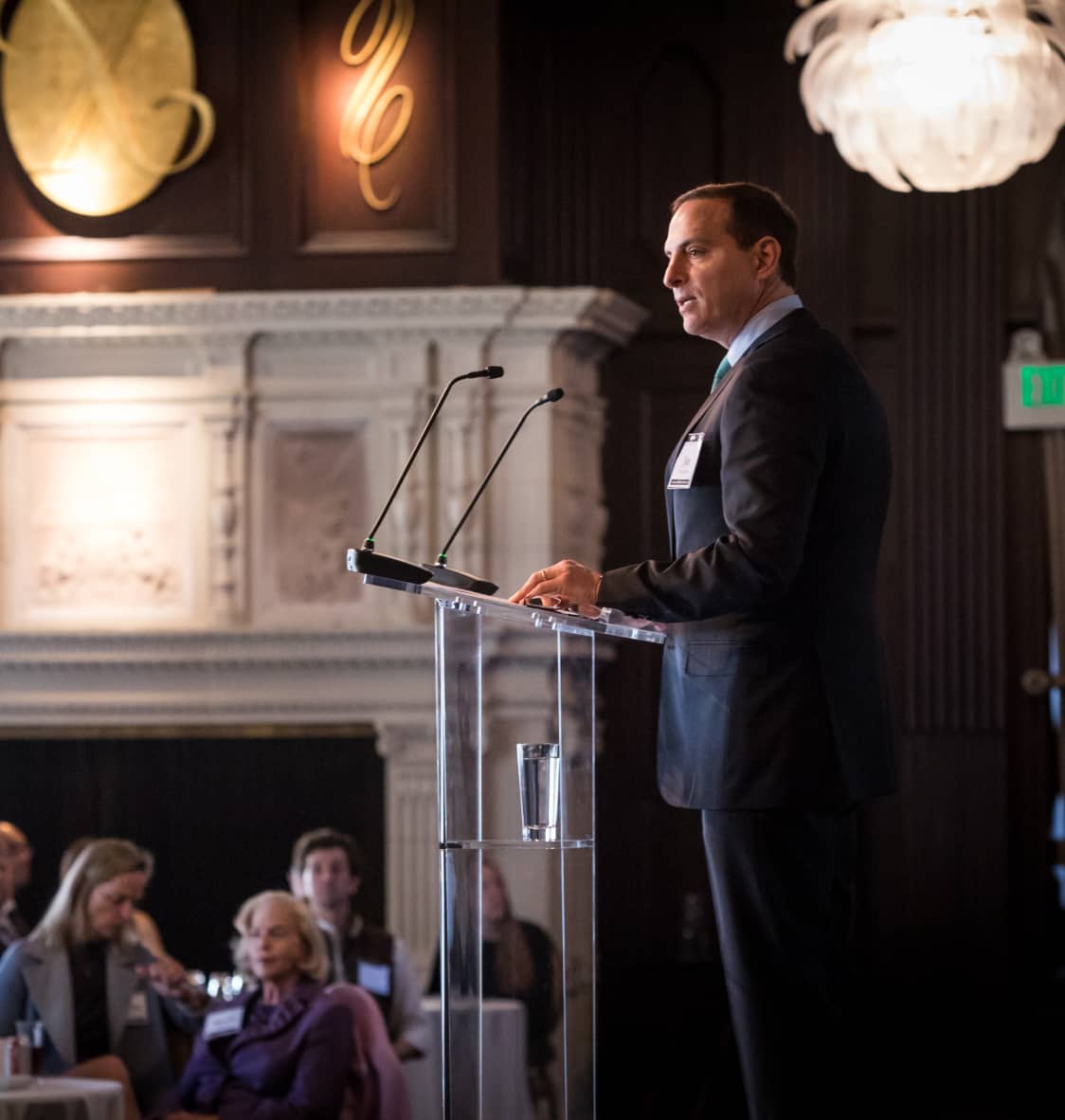
In October 2019, Foresite launched Foresite Labs, an incubator co-founded by Tananbaum and Vik Bajaj. A fund can evaluate a company that already exists. An incubator adds the possibility of helping create it. The distinction changes the calendar: some of the important work happens before there is an established organization to visit or a management presentation to inspect.
Labs brought data science into company formation, with shared expertise and infrastructure available to entrepreneurs. In a 2021 conversation, Tananbaum described the difficulty of getting technical founders from different disciplines to understand one another. Engineers and scientific entrepreneurs could each bring considerable skill while lacking familiarity with the other’s methods. The platform was intended to help them work across that distance.
This is the less theatrical side of a career associated with artificial intelligence. The software may attract the attention, but the organization still needs people who can decide what a result means and what should happen next. A model can produce an answer. Colleagues must agree on whether they have asked a useful question.
For Tananbaum, the incubator extended a pattern already visible in his earlier partnerships. Build a setting in which specialists can do something together that would be difficult separately. It is an appealing ambition because it is concrete enough to organize around, yet demanding enough to resist the comforting fiction that a conference introduction completes the job.
An enthusiast willing to keep score
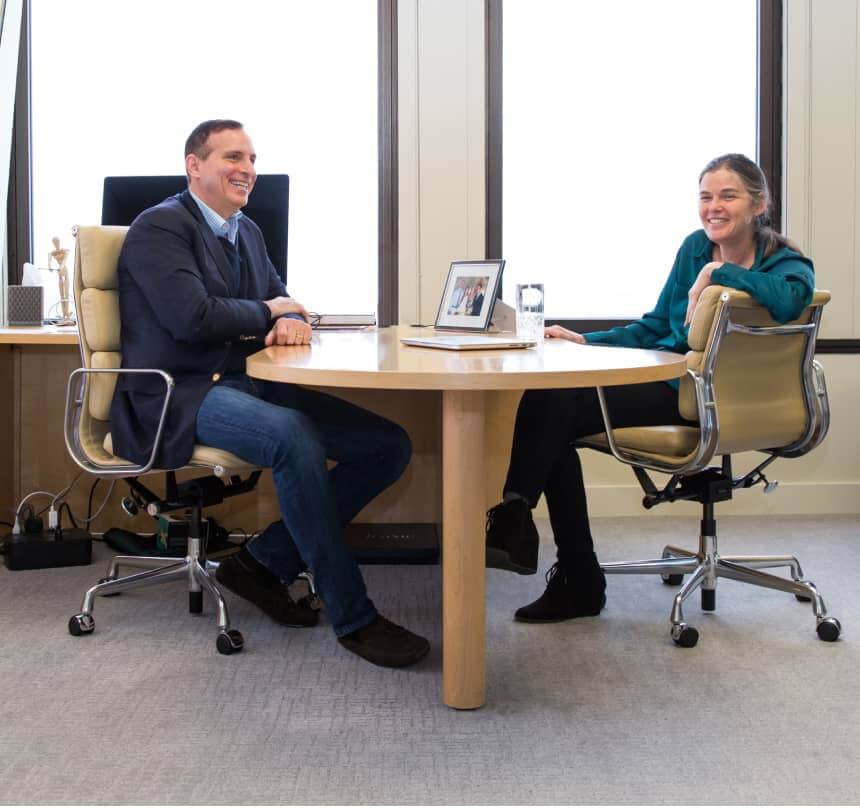
Tananbaum’s public enthusiasm for AI has room for a qualification. Speaking with Nick Moran in 2025, he said the firm had been trying computational tools for sourcing and analysis for years. He did not claim that these tools had already improved investment performance. He distinguished that question from the possibilities he saw in new companies.
That admission deserves attention. In an investment presentation, the future tends to arrive wearing excellent clothes. It is easy for interest in a technology to become an assertion that every application of it is already working. Tananbaum allowed an unresolved result to remain unresolved. The tools were evolving; their effect on his own investing still needed to be demonstrated.
He also described a preference for continuing to hold successful investments when his confidence in the team, execution, and market remained intact. That preference came with a requirement to revisit the assumptions. Time alone cannot validate a decision. A familiar company can change, and the explanation that once justified owning it can lose its force.
The combination is revealing: patience with an enterprise, attention to the people running it, and willingness to check whether the original case still holds. It gives his interest in the future some present-tense discipline. Even a person drawn to long horizons has to inspect the ground beneath his feet.
A sixth fund for Foresite Capital. A commitment of capital to the firm, rather than a measure of Tananbaum’s personal wealth.
The learner still has homework
The public honors include five appearances on the Forbes Midas List: 2015, 2016, 2017, 2018, and 2021. Such lists turn complicated careers into something conveniently countable. They are markers of recognition, while the interesting work remains the series of judgments and relationships that cannot be squeezed into a ranking.
In a 2017 interview, Tananbaum called himself “an academic at heart.” He recalled a difficult period starting out independently, saying roughly 99 of every 100 prospective investors had turned him down. The story places a useful counterweight beside the honors: an established career did not remove the possibility of hearing no.
That same interview supplies a modest domestic detail. He put family first and singled out dinner together as a favorite activity. The familiar scene makes room for something the institutional biography cannot show. For all the talk of assembling people professionally, there is also the group around a table whose purpose needs no investment thesis.
“an academic at heart”
Jim Tananbaum · 2017
A return to Yale, on a longer clock
Jim and Dana Tananbaum have supported scholarships at Yale College and fellowships at its School of Engineering and Applied Science. They are also parents of two Yale College graduates. The university appears in this biography as a place of study, a family connection, and an institution to which they have returned as donors.
In 2022, their support helped establish the Tananbaum Center for Theoretical and Analytical Human Biology under Ruslan Medzhitov. Its collaborative approach draws on fields including mathematics, physics, and computer science. The organizational resemblance to Tananbaum’s commercial work is striking: bring expertise together, supply a setting, and allow questions to travel between disciplines.
The comparison has limits. Academic inquiry and venture investing answer to different expectations. A fellowship can support a person before anyone knows where the work will lead. A company has to build an operating business. Supporting both makes space for different clocks, including the slower clock of ideas that need room to develop.
His ties to Yale continued into its 2025 reunion campaign, which listed him as honorary co-chair of the Class of 1985 gift committee. Forty years after graduation, the connection remained active. A campus can become a line on a résumé; in this case, the relationship kept producing new commitments.
- 1985Graduates from Yale
- 2022A collaborative research center, supported with Dana
- 2025Honorary co-chair, Class of 1985 reunion gift committee
The museum belongs in this story
LACMA announced Tananbaum among eleven trustees elected since 2020 in March 2023. Jim and Dana also appear among donors to the museum’s building campaign. Here the biography takes a turn away from investment committees and academic departments toward an institution whose work includes making art available to a public.
He attended LACMA’s 2023 Art+Film Gala, which honored Judy Baca and David Fincher. The occasion is a useful reminder that a venture investor’s evenings need not all involve another venture investor. A museum puts different kinds of achievement in the same room. It also brings a different vocabulary for deciding what deserves attention.
It would be too tidy to make art trusteeship proof of a business philosophy. The connection is simpler and more human: Tananbaum has made commitments outside his profession. The museum belongs in his story because the person is larger than the job title, even when the job title has generated most of the public record.
Fifteen years, and another beginning
Foresite marked its fifteenth year in 2026. Two years earlier, it had announced a $900 million sixth fund. In February 2026, Tananbaum wrote publicly about the next phase of Foresite Labs after Bajaj moved to become co-CEO of Prometheus. He thanked his collaborator and described plans to keep developing infrastructure and broadening the community of founders and technical talent.
The post closes this chapter with an organization still being assembled. A collaborator moves into a new role; the institution continues; the founder considers what it needs next. The pattern reaches back to the MBA student who helped start a company. Tananbaum’s career keeps finding another occasion to put people around an idea and give them somewhere to begin.