At six, Armaan Ali had a business title that many adults would accept without negotiating the salary: Official Taste-Tester. His family’s confectionery business in Bangladesh provided the setting. It is an agreeable beginning for a venture capitalist’s biography. Before the investment committee, there were biscuits.
The detail also offers a way into the rest of his story. Ali’s account of his grandfather, who built a biscuit company with his brother, centers on the time and effort involved in making an enterprise endure. Years later, in San Francisco, Ali would build a firm whose business depends partly on seeing what people might become.
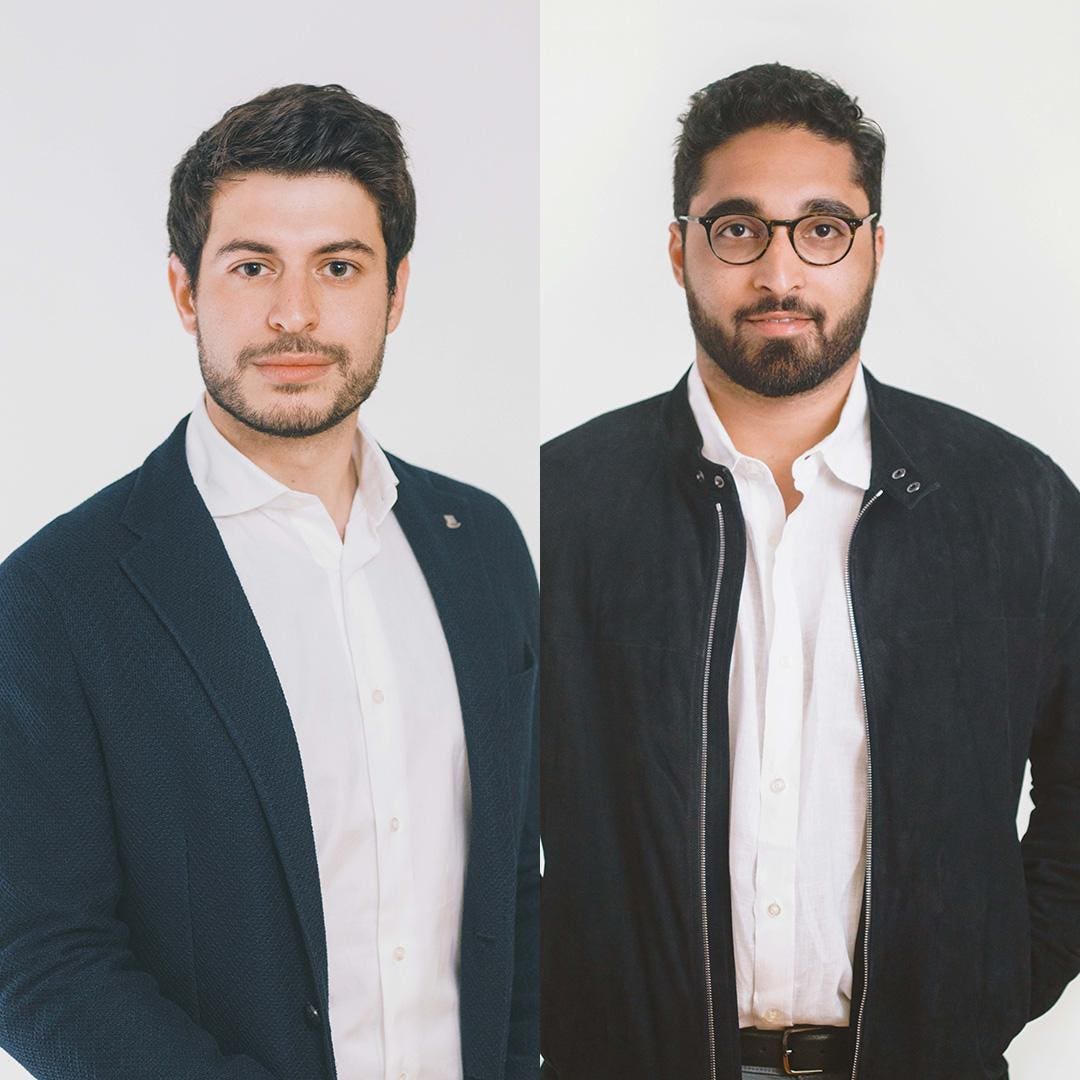
Human Capital, which he co-founded with Baris Akis, brings venture investment and talent support together. Its history includes finding engineers jobs, helping founders assemble teams and incubating companies. The connecting idea is straightforward: an ambitious person’s next job and their eventual company may belong to the same story.
A biscuit business, a longer clock
Ali credits his grandfather with teaching him to think over long horizons. The family business began small. What stayed with him was the example of sustained work: a person committing to something for long enough that it could grow beyond its beginnings.
That is a useful influence to carry into a profession organized around rounds, announcements and valuations. A financing round has a closing date. Learning whom to trust takes a less obedient amount of time. Ali’s public explanation of his outlook gives patience a place in the business, alongside ambition.
“Great things take time.”
Armaan Ali
At Stanford, he found other people with the same appetite for building over years. Akis was among them. Ali studied economics; Akis studied computer science. They also worked together on the Stanford Social Entrepreneurial Students’ Association, known as SENSA. Ali co-founded the organization and served as its chief financial officer.
A student organization might seem a modest entry on a venture investor’s résumé. Here it matters because it brought their interest in entrepreneurship into contact with the practical question of helping peers pursue it. The partnership had work to do before it had an investment firm to run.
The classmates before the companies
In February 2014, Ali wrote a small seed check for Stanford classmate Ryan Breslow’s venture. Breslow and Eric Feldman were working on a digital wallet for buying and spending bitcoin. The business would change direction toward online checkout and become Bolt.
It is a revealing point in the chronology. Ali was backing a peer while the idea was still developing, before the familiar company identity had arrived. The investment belongs to the untidy early part of entrepreneurship, when a team can be committed to building and still need to discover exactly what to build.
The episode does not establish a formula for picking companies. It does show that Ali’s involvement with founders began at close range. A classmate was trying something. Ali helped finance it. The later company name makes the moment easier to recognize, but the decision came earlier.
Ali’s professional path also included the investment team at General Catalyst, where he worked from 2016 to 2017. That experience sits beside the campus work and early investing in his background. Economics, student entrepreneurship and venture investment gave him several ways to think about the same emerging businesses.
Akis brought another perspective. He had built and sold a company while at Stanford and had encountered recruiting from the positions of entrepreneur, candidate and investor. In his account of the firm’s origins, those encounters exposed a problem: capable engineers struggled to identify which young companies would be good places to work.
A job can lead to a company
During conversations with Stanford peers in 2015, Akis heard many describe plans to join large technology companies while they worked out what to do next. He and Ali saw room for a service that could help engineers understand their alternatives and choose companies where their work could matter.
The founders launched their business in 2015 as Nav Talent. Its approach emphasized relationships with engineers over time, including after a placement. Akis’s description made an explicit commitment to members’ careers and to providing services without charging those members.
The distinction has practical consequences. A job search requires an answer now. A career keeps producing new questions. Someone who needs help choosing an employer may later need advice about greater responsibility, a different team or a company of their own. A relationship has to survive the first answer to be useful for the next one.
A reading of the firm’s career model. People can take different paths.
In October 2019, Nav Talent announced its new name: Human Capital. The founders described a business that had expanded to 25 university campuses and connected hundreds of engineers with roles. Its investment operation had approximately $140 million in assets under management at that point.
The name change expressed that expansion. Engineers could join a company through the network and later start one with the firm’s backing. The founders named Brex, Bolt, Qualia and Nova Credit among ventures where they had been first investors. Recruiting and investing were becoming connected parts of a longer relationship.
The work between the check and the result
By the end of 2020, Human Capital’s reported assets had reached $250 million, with an engineering network exceeding 5,000 members. Ali chaired the investment committee, led capital raising and oversaw the network’s development. He and Akis appeared together on the Forbes 30 Under 30 Venture Capital list for 2021.
A dated snapshot of Human Capital’s investment business.
Those responsibilities put Ali at the intersection of two kinds of judgment. An investment committee must decide which companies merit capital. A talent organization must understand which people a company needs and why someone might want to join it. The conversations overlap, but each requires its own work.
Human Capital added recruiting operators in 2021, including chief operating officer Jim Baaden, who had led global recruiting at Uber, and colleagues with experience building teams at Airbnb and Dropbox. The firm described support that included mapping talent needs and creating recruiting processes, tools and materials.
For a founder, those are concrete services. A plan to hire engineers becomes a series of decisions about responsibilities, interviews and offers. For an investor, participating in that work means staying involved after the financing announcement has finished its brief social career.
There is a pleasantly unglamorous quality to this part of Ali’s business. A company can raise money in one announcement. It still has to persuade people, one by one, to spend their working lives there. Someone must keep track of the conversations.
Room to try before certainty arrives
The Delta Fellowship extended the firm’s interest in young builders. Its student grants offered $50,000 without taking equity, alongside mentorship. Ali publicly supported the program and expressed an unusually personal response to what the firm was offering.
“I wish we had this support when launching Human Capital!”
Armaan Ali, on the Delta Fellowship
When a second cohort was announced in 2021, the program welcomed students at different stages, from early questions to prototypes. Some first-cohort participants had tested ideas; others had shipped features or met collaborators. Exploration was part of the work the grant was meant to make possible.
That is consistent with the early network’s logic. A person can deserve attention before they have a finished company narrative. Supporting them may involve a job, a conversation, a grant or an investment, depending on what they are trying to do. The useful response changes with the circumstances.
The fellowship also gives Ali’s statement a little texture. Having become an investor, he could still recognize the value of support he and Akis would have welcomed as founders. The memory of starting their own business remained relevant to how they helped other people start.
A memory longer than a sales cycle
In January 2022, Human Capital described building its own relationship-management platform. Conventional customer software had not suited the firm’s needs. Its proposed system recorded interactions and organized relationship data in a graph, allowing a person’s history to develop over time.
The technical choice reflected the business ambition. An engineer’s progress cannot always be described as an opportunity moving toward a sale. The next useful intervention might be an introduction, recruiting guidance or support for a future company. Remembering previous conversations helps make the next one less generic.
Company building continued to broaden the firm’s activities. On February 11, 2026, Monaco publicly launched its AI sales platform. The company identified Human Capital as its incubator and a repeat investor. Ali celebrated working on the business with Sam Blond and Brian Blond.
Monaco’s announcement described more than $35 million raised and a founding team with sales, product and engineering experience. For Ali’s story, the significant detail is the incubation: Human Capital had helped bring a company into being, extending its work beyond finding jobs and financing existing ventures.
On May 12, Monaco announced a $50 million Series B led by Benchmark, with Human Capital participating again. Ali’s public response celebrated Sam and Brian Blond’s work. The relationship had carried from incubation into another stage of funding.
The distance from biscuits to software is considerable. The family influence Ali describes remains easy to recognize in his stated aim to keep helping engineers and founders over years. People develop; their work changes; the institution has to find ways to remain useful.
An early biography also mentions his dog, Turtle, and a shared enthusiasm for snacking. It is a welcome interruption to the vocabulary of capital allocation. The taste-tester grew up, acquired an investment committee and kept a place for snacks. Around him, the business became more complicated. The interest in what might grow remained.
Follow the relationships
Profiles, essays and announcements for further reading.
- Human Capital’s website ↗
- Armaan Ali on LinkedIn ↗
- Armaan Ali on X ↗
- The founders’ account of the Human Capital name ↗
- Baris Akis on the firm’s beginnings ↗
- The 2021 Forbes profile ↗
- Building software to remember relationships ↗
- Monaco’s February 2026 launch announcement ↗
- Monaco’s May 2026 financing announcement ↗