In November 2007, Jim MacIntyre was answering questions about a company that had agreed to be bought. There were revenues to discuss, products to combine and customers to reassure. Yet his explanation of the business began with a problem that survives every acquisition: companies could collect more information than they knew how to use.
“Collecting the data is the easy part,” he said. The difficulty came afterward, when someone had to work out what mattered and do something about it. A database could grow impressively while the business remained none the wiser. In the right circumstances, a dashboard is simply a very expensive way to admire your confusion.
MacIntyre had co-founded Visual Sciences, become chief executive of the company that acquired it and led the combined business ahead of its next sale, to Omniture. Today, he is chairman and CEO of Product Lab, with a career that connects building software, running companies and advising other founders. The connecting thread is a practical question: how does a technical capability become something a customer can actually use?
“Collecting the data is the easy part.”Jim MacIntyre · 2007
A booking system before the boardroom
His first software business began during high school in Burlington, Vermont. It developed a booking system for talent agencies around Boston. Later, he took a six-year break from college to work for the Cisneros Group, handling computer networks and mergers and acquisitions. He eventually earned a BA at the University of Vermont.
By 1998, he was running OneSoft, an Internet commerce company founded in 1995. Its partnership with Compaq bundled commerce software with servers. More than 30 percent of its stock had been set aside for employee options. The young business needed both distribution and people who could deliver its products.
Those details make an unusually grounded beginning for a technology career. Booking agencies had schedules to manage. A large business group had systems to connect. Merchants needed a way to sell online. Before the later analytics companies and investment roles, there were already customers with work waiting to be done. A useful program had to survive contact with that work.
The academic path wandered; the commercial interests were more consistent. MacIntyre studied philosophy and economics, subjects that ask different questions about decisions and incentives. His early business experience supplied an immediate test: would anyone pay for the answer? No seminar could settle that question on a customer's behalf.
Giving the numbers a picture
With David Scherer, MacIntyre co-founded Visual Sciences. He led the business as CEO; Scherer led its technology. Their software worked on streaming data and interactive visualization, allowing users to investigate activity rather than wait for a finished report to arrive.
Visual Site addressed Internet activity. Visual Call applied the platform to interactive voice response systems. The distinction matters. A company's customers might move between a website and a telephone service, while its internal reporting kept those encounters in separate compartments. The product family addressed several places where customers and organizations met.
In October 2004, Visual Sciences announced an investment and licensing agreement with In-Q-Tel, the venture group funded by the CIA. The agreement included software licenses, an investment and a board observer. Its stated purpose included developing additional applications for government and commercial users. The company's ambitions already extended beyond measuring a retail website.
The visual part of the business also had a human premise. Data needs a form that someone can understand. A technically correct result can still be awkward to explore, especially when the useful question occurs only after seeing the first answer. Interactive software leaves room for that second question.
MacIntyre was also a contributor to Eric T. Peterson's 2005 book Web Site Measurement Hacks. His contributor biography traced his interest in site measurement to bulletin board systems in the 1980s and thanked Aaron Bird and Karen Brothers for helping with his contributions. Alongside the corporate titles was the quieter business of sharing methods with practitioners.
The buyer becomes the name
In February 2006, WebSideStory acquired the privately held Visual Sciences. The announced consideration was $57.3 million, with cash, notes and shares; the transaction also included warrants and employee options. Visual Sciences had 40 employees and more than 40 customers. MacIntyre and Scherer initially continued as CEO and CTO of the subsidiary.
The pairing brought Visual Sciences' analytical technology together with an established digital marketing business. It also changed MacIntyre's job. That October, WebSideStory announced he would become president, CEO and a director, effective November 20. He succeeded Jeff Lunsford, while Bill Harris became chairman. A founder from the acquired company was now running the parent.
There is a considerable distance between those two desks. A founder can know a product intimately and still have to learn how to coordinate a larger collection of products, customers and employees. MacIntyre's remit now included WebSideStory's analytics and marketing applications as well as the business he had helped create.
In May 2007, the combined company adopted the Visual Sciences name. MacIntyre explained the choice through the visual presentation of complex information and the discipline of hypothesis, testing and measurement. He also described a broader view of customer activity, including contact centers and retail points of sale. The name was an argument about what the company should cover.
- WebSideStory acquires Visual Sciences, LLCThe private analytics business joins the public company.
- The combined company takes the Visual Sciences nameOne brand for the enlarged analytics business.
- Omniture completes its acquisitionThe purchase closes on January 17.
After the announcement, the work
Omniture announced its agreement to acquire the combined Visual Sciences in October 2007. An announcement creates its own awkward interval. Customers still need support. Sales teams still need to sell. Employees have a future to think about, while management has another quarter to finish.
On the acquisition call, MacIntyre was asked about continuing to sell HBX, a product whose future would be considered alongside Omniture's SiteCatalyst. He said the company intended to keep selling it vigorously and described combining useful features in a future offering. The question put a practical customer concern inside a conversation otherwise dominated by the transaction.
The deal closed on January 17, 2008. Omniture said MacIntyre would stay through a transition, assisting with integration and the product roadmap. Other Visual Sciences executives took responsibility for specific product lines and migration services. The business had changed ownership; the products still needed people who understood them.
This is the less photogenic portion of an exit. It involves deciding what survives, how customers move and who is responsible when something stops working. The signature on the agreement cannot do any of those jobs. MacIntyre's transition role kept him close to the details that made the transaction useful beyond the shareholders' vote.
Back to the checkout
In 2010, GSI Commerce appointed MacIntyre to lead its global e-commerce technology products and services business. He had been a special technology advisor to founder and CEO Michael Rubin since May 2009. The appointment gave him responsibility for technology strategy and delivery across that business.
It returned him to the commerce problems he had worked on at OneSoft, with another organization and another scale. He talked about product innovation and service delivery. Those two concerns belong together: a product can promise convenience in a presentation and still give its customers a long afternoon of trouble.
The move also shows why a biography built entirely around acquisitions misses part of his career. At GSI, the job involved operating a business and delivering technology. It was another turn at the work that comes between an idea and a customer experience, where ambitions become specifications, schedules and responsibilities.
An investor with the operator's questions
In January 2012, Tealium announced a $1.1 million financing from a group of technology executives and investors that included MacIntyre and Lunsford. MacIntyre joined its board. Tealium addressed enterprise tag management, helping organizations manage the snippets of code used by their digital marketing tools.
The old analytics connections were visible, but this was a different product problem. Understanding customer activity depends partly on getting the collection machinery to work. A useful analytical application has little to say if the information it needs arrives inconsistently. Tealium operated close to that machinery.
When Tealium later reflected on its early backing, it thanked Product Lab and MacIntyre among the investors who helped it assemble engineers and begin building. Capital has a fairly concrete destination in that account: people with the ability to make the product. The investment story includes the payroll.
In 2016, Swedish product information company inRiver appointed him chairman. His interest centered on how marketers could improve customers' experience of product content across distribution channels. He said he wanted to help bring its offering to more North American marketers. Product descriptions, images and information were another part of the same commercial encounter.
Another kind of data, another partnership
In April 2023, MarketGrader announced a partnership with MacIntyre, Product Lab and Rob Foregger, the co-founder of Personal Capital and NextCapital. The two partners would take minority stakes, join the board and provide strategic advice. MarketGrader's founder, Carlos Diez, wanted help expanding the commercial use of its research and platform.
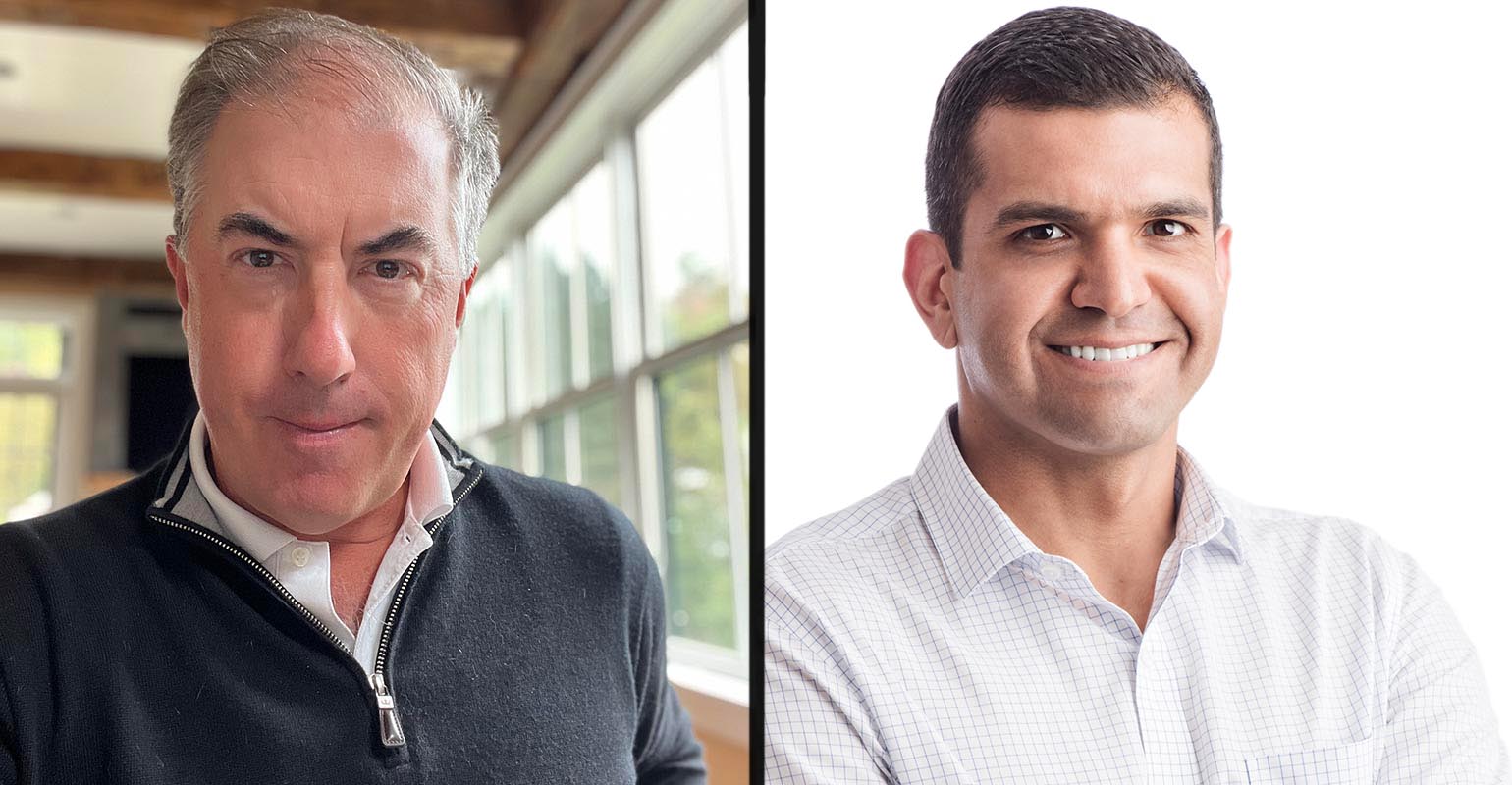
The setting had moved from customer analytics to equity research. The practical challenge remained recognizable: a company with analytical intellectual property wanted to reach more users through products and services. MacIntyre brought experience from building software businesses; Foregger brought a background in financial technology. The partnership combined advice, ownership and access to Product Lab.
MarketGrader's current team page lists MacIntyre as a director and senior advisor, alongside his chairmanship and CEO role at Product Lab. His work now includes helping other organizations make decisions about their products and businesses. It gives an operator's experience a place at someone else's table.
Across these roles, the recurring object is the space between information and action. A booking system, an analytics application, commerce technology and an investment research platform each has to make that passage in its own way. MacIntyre's career has followed several of them, sometimes as the builder, sometimes as the executive and sometimes as an investor. The numbers arrive. Someone still has to decide what to build with them.
Follow the work
- The early OneSoft years
- Web Site Measurement Hacks (book preview)
- Product Lab website
- Jim MacIntyre on LinkedIn
- MarketGrader team
- The WebSideStory appointment
- Omniture acquisition completion
- Tealium’s early financing
- MacIntyre joins inRiver
- The MarketGrader partnership
- MarketGrader coverage and photograph
- Tealium’s account of its early backers