Jim Berlin lost his job and, for a moment, kept his swagger. In 1996, the trucking company USF Red Star dismissed him in front of its drivers. He walked out with a parting declaration that they would regret letting him go. Around the corner, the performance ended. He had children in high school, two decades in trucking behind him, and no obvious next move. The future chairman of a global logistics business was wondering what on earth he would do now.
There is something reassuring about the corner in this story. Entrepreneurship often gets described from the comfortable end, when the invoices have been paid and the founder has a respectable photograph. Berlin remembers the interval when confidence was mostly a public service. He had spent roughly ten years driving trucks and another ten managing trucking operations. He knew the work. Finding a place that wanted him to do it his way had proved more difficult.
A possible opening arrived through GE Transportation. During a conversation about work, Berlin was asked whether he had his own company. He said yes. Then he stopped at a county clerk’s office and registered one. Logistics Plus began with the pleasing administrative efficiency of a statement becoming true before anyone had much time to inspect it.
A purchase order with room to grow
The original assignment was modest and specific: help manage domestic inbound transportation for GE’s locomotive business in Erie, Pennsylvania. A one-year purchase order for $120,000 supported three employees. Berlin had neither a vast organization nor a complicated proposition. Parts needed to arrive so somebody else could build something. His company would help make that happen.
His preparation had come from freight terminals rather than a formal business education. A New York City native who attended the University at Buffalo, he had worked as a driver, dockworker and terminal manager, much of that time with TNT Red Star, later USF Red Star. These are jobs where a missing shipment has an address, a deadline and a person waiting for it. Logistics was already concrete to him.
The customer kept widening the assignment. In 1997, GE asked Berlin and his five-person team to help with shipments from suppliers in Mexico. In 1998, some of the company’s 15 employees were placed in GE sourcing offices in the Czech Republic, Poland and Russia. The following year brought expansion into India, China and Indonesia, along with work for other customers and industries. A domestic task was becoming an international occupation.
Those early steps help explain Berlin’s cheerful resistance to elaborate planning. The route emerged from doing the previous job well enough to be asked to do another. Each new country also brought a practical education in what the original purchase order had left out. The business grew around the customer’s next problem, with Berlin following the work across borders.
- 1996Erie
Inbound logistics - 1997Mexico
Supplier shipments - 1998Europe
Sourcing offices - 1999Asia
Three new markets
The station nobody had quite finished with
By 2003, Logistics Plus needed more space. Berlin bought Erie’s Union Station, a 1927 Art Deco building whose diminished railway business had left much of it underused. The third floor had sat largely vacant for nearly thirty years. A cautious buyer could have compiled a substantial list of reasons to keep looking. Berlin saw a headquarters.
The work involved a replacement roof, renovated offices and the retention of the station’s original architectural character. Other businesses could occupy the building alongside Logistics Plus. A brewery, café, studios and offices helped give a former transport hub another daily purpose. The building would accommodate people doing things, which is usually a better preservation strategy than simply admiring it from outside.
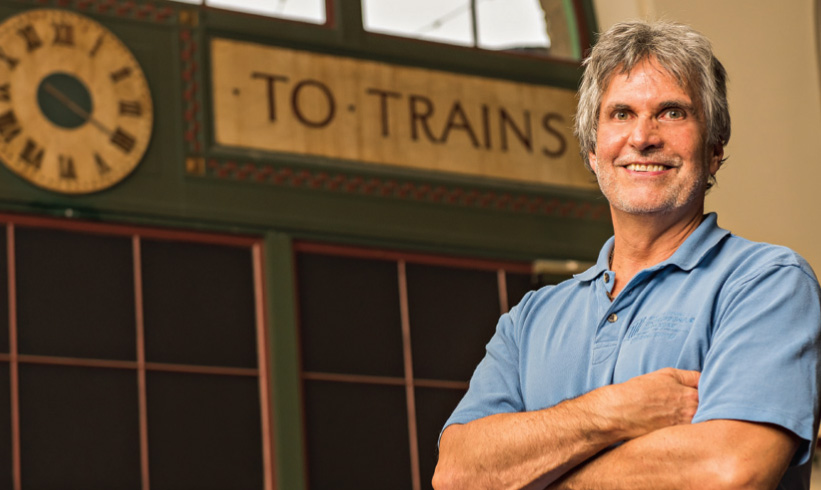
The station also gave Berlin’s global business a very local address. Flags along its roof made the international connections visible from the street. His involvement spread into the neighborhood, including efforts around Griswold Park and public murals. The connection between company growth and the surrounding city became something residents could walk past, rather than a paragraph in a corporate report.
Buying an old station says something about his appetite for unfinished business. A new office might have offered fewer complications. This one offered a useful building, a piece of Erie’s history and room for other enterprises. The trains still had their place; the freight company was bringing a different sort of traffic.
A football education, with heavy desks
Berlin has a joking name for his business training: the Thomas School of Business, after Buffalo Bills running back Thurman Thomas. The idea is to follow the big players into the opening. It is an unusually honest bit of founder mythology. He gives the customer a leading role and leaves himself responsible for noticing where the opening is.
His Bills loyalty dates to his arrival at college in Buffalo in 1969. In January 2021, he attended the team’s home playoff victory over Indianapolis and secured tickets for the AFC Championship game in Kansas City. At work, Steelers and Browns supporters had plenty of company. The Bills contingent could finally walk Union Station’s halls with a little extra authority. International trade may require diplomacy; office football evidently allows exceptions.
The office’s furniture supplies another small explanation of the business. On The Freight Pod, Berlin recalled furnishing the station with heavy desks from an Erie company that was closing, paying $100 for the lot and carrying them upstairs. He also described a coach-flight culture. The story has the texture of someone who would rather spend money making something work than making it appear expensive.
“Treat people the way you want to be treated.”
Jim Berlin, on the company’s guiding rule
He expects considerable independence in return. Berlin’s description of Logistics Plus is of a rough, improvisational workplace, suited to people who enjoy unfamiliar problems and a laugh along the way. Someone seeking the same instructions every morning might find it exhausting. Someone itching to make a decision might feel at home. His accounts leave little doubt that the fit matters.
His explanation of logistics is equally unceremonious. Goods move; delays happen; customers still need results. Weather, congestion and operating hours do not become less inconvenient because someone has explained them accurately. The employee’s task is to search for another workable answer. It is an outlook formed close enough to the loading dock to know that an excuse occupies exactly as much space as the goods that never arrived.
When the next problem was a war
Ukraine made that outlook much more consequential. Logistics Plus opened its first office there in 2017. When Russia launched its full-scale invasion in 2022, the country was already part of the company’s working life. Colleagues had families, apartments and jobs there. Events on the television had names in the employee directory.
In March 2022, the company announced a fund to help Ukrainian employees and their families with food, lodging and other needs. Berlin seeded it with $500,000. The initial ambition was to raise at least another $50,000, a target the company said supporters had already exceeded. The scale of that first commitment matters: help began with money put up, before the appeal asked others to contribute.
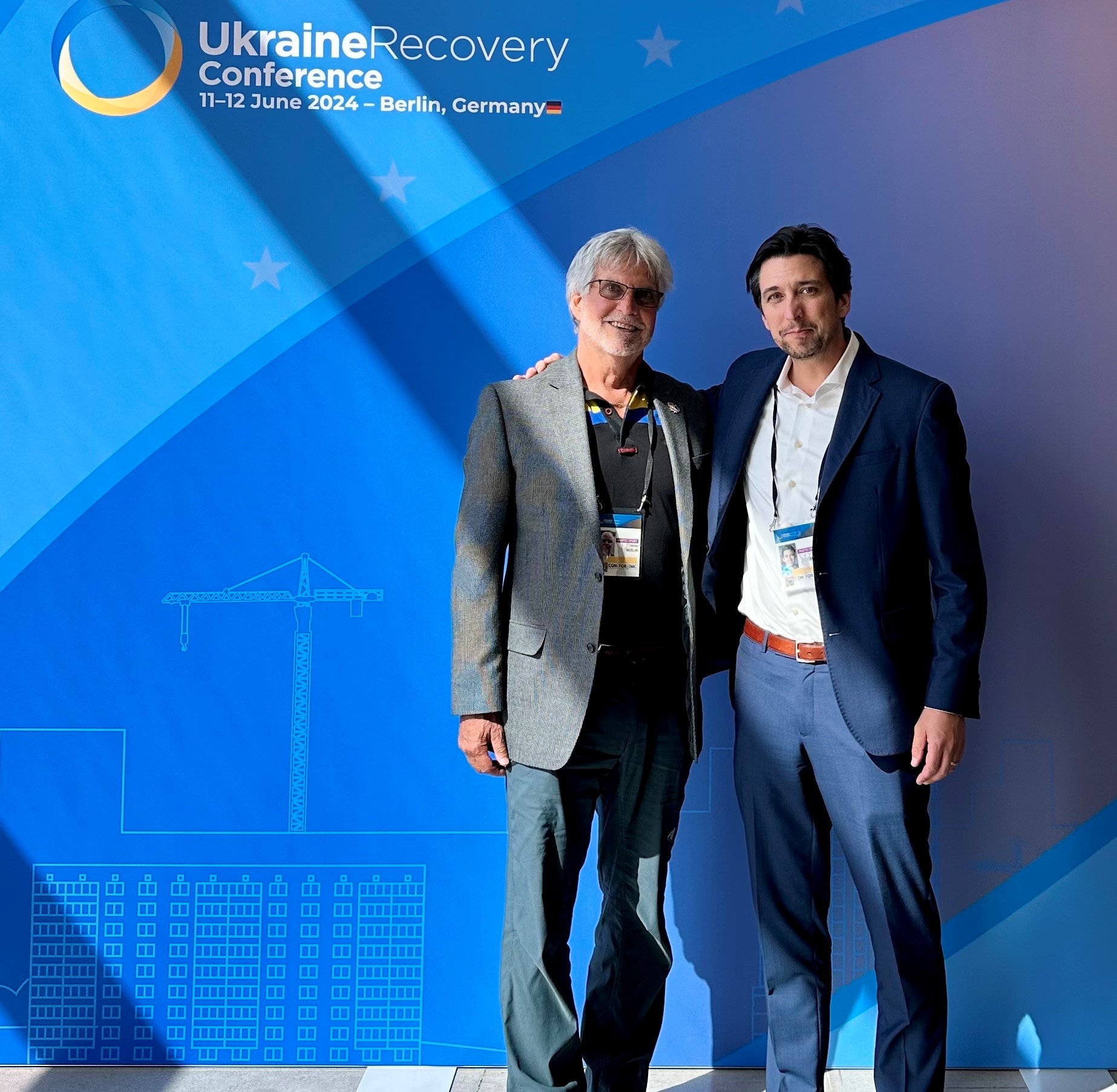
The commercial commitment continued too. Logistics Plus expanded its Ukrainian presence after the invasion, buying a Kyiv logistics company and opening an Odesa office. In an October 2026 account of his work, Berlin described the delivery of 100,000 tons of steel pipe for Ukraine’s oil and gas industry. Ships, port workers and hundreds of truck movements had to be coordinated under attack.
He said the cargo went uninsured because premiums were too expensive, and that a Turkish captain’s willingness to sail made the operation possible. Berlin was present during unloading. His account dwelt on Ukrainian colleagues continuing to work amid missile attacks and disrupted daily life. The familiar language of finding a solution had acquired an altogether different weight.
In June 2024, he became one of three American business representatives on the newly established G7 Business Advisory Council for Ukraine. A June 2026 reappointment extended his service for another year beginning July 1. The council connects business leaders with Ukraine’s government and international donors on reconstruction, investment conditions and ways to reduce risk. Freight experience had brought him into conversations about rebuilding an economy.
Two Union Stations, plenty still to do
Berlin’s role at home changed in May 2026. He moved from chief executive to chairman, and Yuriy Ostapyak became CEO. Ostapyak had joined Logistics Plus in 2005 and worked across sales, operations, forwarding and procurement before serving as chief operating officer. Berlin described the daily leadership as being in capable hands; his own responsibilities would continue through strategy, Ukraine support and Erie initiatives.
By then, the company reported annual revenue approaching $1 billion and operations spanning more than 55 countries. The distance from the first purchase order is striking, but the change in title also marks a quieter achievement. A company begun around one person’s promise now had an experienced colleague ready to lead it. The founder could move without requiring the whole organization to follow his chair.
Erie recognized its part of the story in September, when Berlin received the Louis J. Tullio Community Service Award. The recognition encompassed public art, investment in young people and years of civic work. His support had included the Success Through Sports Foundation and a Ukrainian hockey camp and cultural exchange. These projects put his enthusiasm for sport to work beyond the Bills schedule.
October brought another ceremony, this time at Union Station in Washington, where the Center for European Policy Analysis honored him with a Lifetime Achievement Award. His son Derek, the company’s senior vice president of global government solutions, interviewed him onstage. His brother Doug described two men more comfortable in T-shirts and sneakers finding themselves at a black-tie event. Berlin joked about the danger of giving his son a microphone and fifteen minutes to undo a lifetime’s reputation.
There is a pleasing symmetry in the two stations. In Erie, Berlin found an old building that could work again. In Washington, he was recognized for keeping things moving when the ordinary routes had broken down. Between them sits thirty years of freight, friendships, questionable furniture and fresh complications. His new job leaves plenty of room for fresh complications.