In 2004, Jeremy Bloom ran into a peculiar sporting obstacle. He could ski for his country. He could play football for his university. Receiving sponsorship money to pay for the first, however, cost him permission to do the second. The NCAA ruled him ineligible for college football after he accepted skiing endorsements. Colorado lost its receiver and return specialist. Bloom lost the chance to finish what he had started.
There is something almost comic about being too professional at skiing to remain an amateur at catching a football. Bloom had already competed in the Olympics, and training for another Games required money. His two ambitions fitted inside one person rather more easily than they fitted inside the regulations. Appeals failed. The rulebook won that round.
Twenty years later, in December 2024, Bloom became chief executive of X Games. Between those dates, he went to another Olympics, was drafted by the Philadelphia Eagles, founded a nonprofit and co-founded the marketing software company Integrate. The résumé can look like several people have accidentally submitted the same application. Its more interesting continuity is his repeated encounter with the arrangements around talent: who gets paid, who gets judged, who gets another opportunity.
Now he has a position from which to change some of those arrangements. X Games has become a team competition as well as a collection of individual contests. His newer company, Owl AI, is working on technology for sports judging and analysis. The former athlete has acquired some influence over the machinery that surrounds the athletes.
A childhood with two finish lines
Bloom was born in Fort Collins, Colorado, in 1982 and grew up in Loveland. At eleven, he set himself a specific appointment: the 2002 Winter Olympics in Salt Lake City. Childhood plans generally allow more flexibility than that. His did not require any. He made the team.
Skiing was also a family education. His grandfather taught him on the slopes at Keystone, using miniature candy bars as incentives. Before there were sponsors, there was chocolate. Bloom later remembered his grandmother living in the family home for the first nineteen years of his life. Those details matter because the grandparents reappear in his adult work, long after the sweets have presumably been eaten.
Football proceeded alongside skiing. At Colorado, his first touch in a college game became a 75-yard punt-return touchdown against Colorado State in 2002. His first career reception, against Kansas State, went for a 94-yard touchdown, the longest pass play in school history. He seems to have been particularly unwilling to waste introductions.
Colorado football debut
in dual moguls
ends over ski endorsements
Eagles draft, pick 147
In skiing, he won the 2003 world championship in dual moguls. His 2005 season included six consecutive World Cup victories. The Olympic medal proved elusive: ninth in 2002, sixth in Turin in 2006. An international career can contain plenty of winning without supplying the particular ending everyone recognises.
After Turin came the NFL scouting combine and, that April, the Eagles' fifth-round selection. He later spent time with the Pittsburgh Steelers. He never appeared in an NFL regular-season game. That qualification belongs in the story: making it to a roster and establishing a playing career are different achievements, and Bloom's next substantial chapter would happen elsewhere.
The spreadsheet after the stadium
Bloom's introduction to business came with an unusually bracing piece of advice. He had taken classes through an NFL entrepreneurship programme at Wharton. When he talked about starting a company, professor Peter Linneman suggested he first work for someone else. Bloom recalls the instruction as: “Go lose somebody else's money first.” It was an economical antidote to the idea that sporting confidence automatically qualifies someone to run a business.
He took a customer acquisition marketing job and encountered a less photogenic kind of disorder: leads and spreadsheets. Information arrived through different channels and needed sorting, checking and passing along. Companies spent money attracting potential customers, then struggled to organise the results. A fast receiver had found a slow administrative process.
Integrate, co-founded in 2010, addressed that problem. Its launch announcement described a customer-generation exchange that let buyers and sellers negotiate directly and used quality controls to verify leads. Over time, the business became a software platform connecting marketing channels and governing incoming data. Its name was a reasonably literal account of the work.
The change of business model was costly. Bloom has described a 2014 reset in which roughly sixty percent of the team was let go as Integrate shifted from a media business toward software. Money was tight and investors were unwilling to supply more. An athlete's familiar promise to try harder offered limited help with the cash balance.
This is the part of his career that complicates the neat sports-to-business analogy. A founder has colleagues whose livelihoods are affected by his decisions. Reinvention can sound wonderfully adventurous until it arrives as a smaller payroll. The years between founding a company and selling a stake in it deserve more space than an arrow on a career diagram.
In December 2021, Audax Private Equity acquired a majority stake in Integrate. The announcement left financial terms undisclosed. Bloom remained chief executive after the transaction and later stepped down to take the X Games job. He had stayed with the business for well over a decade, long enough for an athletic second act to become a substantial working life of its own.
“Is this good or bad for the athletes?”
Jeremy Bloom, on the question behind X Games decisions
His grandmother's place in the business plan
Wish of a Lifetime predates Integrate. Bloom founded it in 2008 in honour of his grandmother, Donna Wheeler. During his ski travels, he had noticed how older people were treated in other countries. One memory involved a crowded bus in Japan: passengers got up to make room for an older woman. He carried the observation home.
The resulting organisation grants wishes to older adults. Its history includes a Broadway performance and a reunion between football rivals from the segregation era. By its current count, it has fulfilled more than 3,300 wishes. It became an AARP charitable affiliate in August 2020, extending an undertaking that started with one family's example into a national organisation.
There is a pleasing reversal here. Bloom spent his early years trying to achieve things unusually young. The nonprofit makes room for people with aspirations still unfinished much later in life. He does not have to pretend that everyone dreams of a podium. Sometimes the important event is a reunion, a journey or a performance that has waited years for its audience.
An owl joins the judging panel
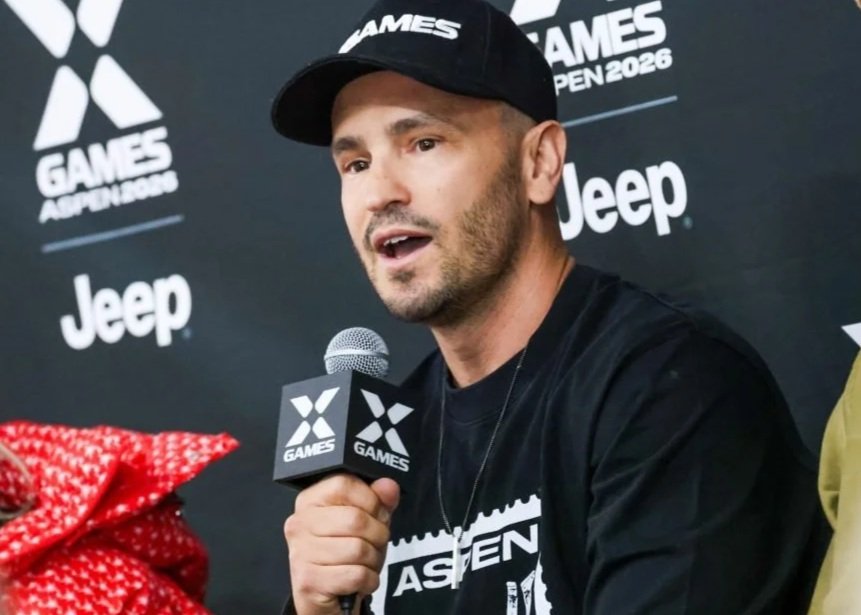
On taking over X Games, Bloom contacted Google co-founder Sergey Brin about collaborating. An early result appeared at Aspen in January 2025: an experimental AI system analysing snowboard superpipe runs. The trial ran alongside the official competition. Its scores did not decide the medals.
The distinction matters. Bloom was testing whether software could add useful information to a judged sport, where height, difficulty and execution must be assessed in seconds. The system used Google Cloud technology, with input from judges and athletes. A successful demonstration would still leave the larger question of how such information should influence a real result.
Bloom has also described possible uses in coaching and commentary in different languages. In that account, the same analysis that helps explain a run to a judge might help a competitor study it or let a viewer follow it more closely. His interest stretches beyond producing a number at the bottom of a screen.
In June 2025, the project became a standalone company backed by an $11 million seed round led by S32, with Menlo Ventures and Susa Ventures participating. Bloom is Owl AI's founder and executive chairman. It gives his career a curious symmetry: a former competitor in a judged sport is now helping build tools intended to make judging more consistent. Whether the tools earn athletes' confidence is part of the work ahead.
Someone else gets drafted
The league project offers a more visible experiment. X Games' owners, MSP Sports Capital, had already proposed a team format before Bloom arrived. His assignment was to help make it work. Individual medals would remain, while athletes also accumulated points for clubs across a season. A result would have consequences beyond one afternoon.
At the first summer draft in March 2026, skateboarder Chloe Covell became the opening pick for XC New York. Four clubs assembled coed rosters of ten athletes, five men and five women. For Bloom, who had once waited to learn his own draft destination, the view had changed considerably.
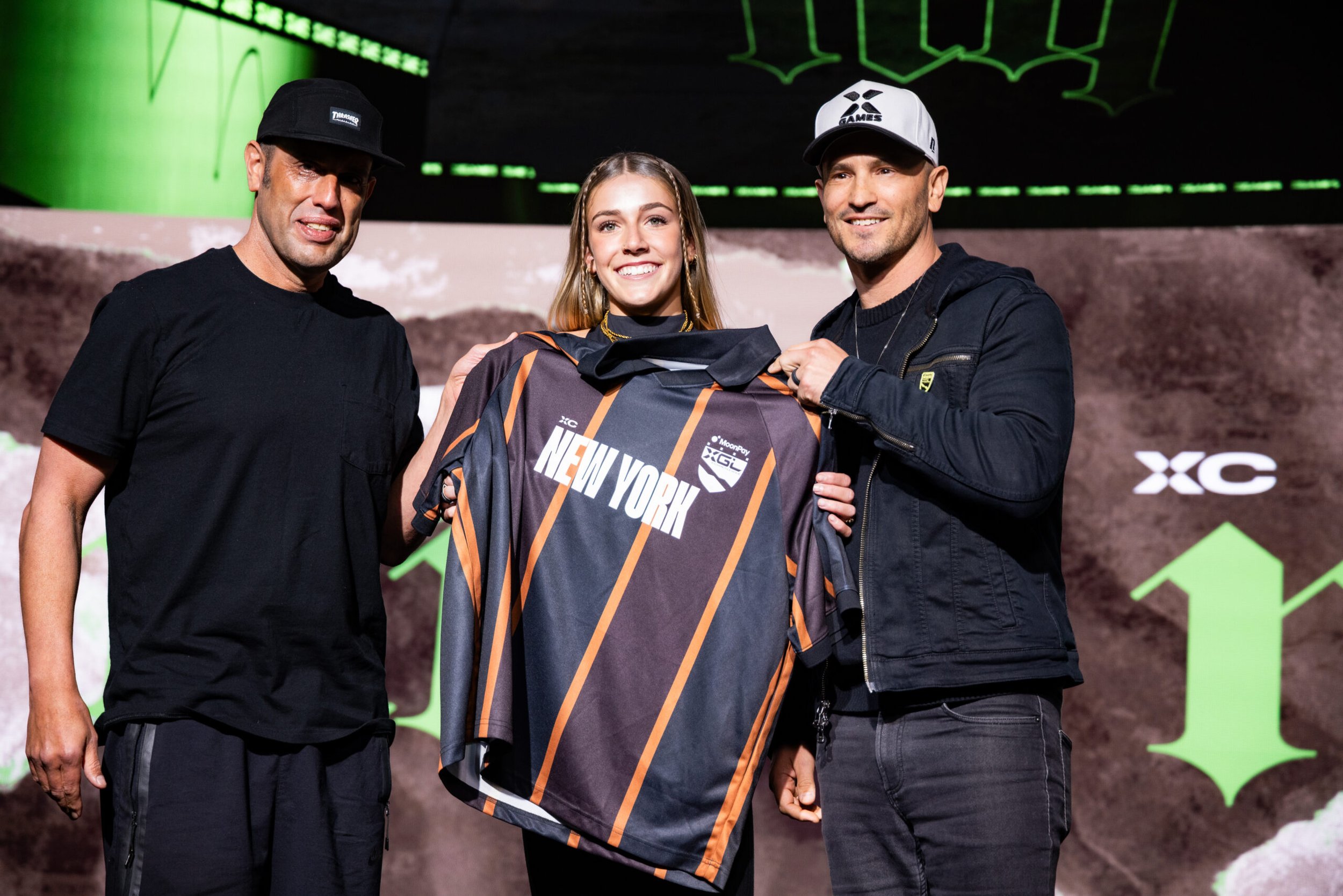
The first summer season supplied a useful test of the premise. After stops in Sacramento, Chiba and New Orleans, XC New York finished with 2,640 points to XC Tokyo's 2,630. The final event settled a season-long contest, and New York took the $500,000 championship prize. A ten-point difference gave the league format a concrete ending.
Ten points between a good summer and a championship.
The winter draft followed in September. Eileen Gu went first to XC Golden State and Mark McMorris second to XC New York. Forty skiers and snowboarders joined four clubs. Their first season is scheduled to begin in Aspen in January 2027, move to Calgary in February and finish in Ruka, Finland, in April.
A place to come back to
In October 2026, X Games announced Legends, its first formal alumni programme. Led by former freeskier Kristi Leskinen, it is open to current and former competitors, with a directory, event access and professional opportunities. About 4,600 athletes have competed at X Games since 1995. A long history had produced a sizeable scattered family.
The programme fits a question that follows Bloom through his different jobs: what happens to people when the competition moves on? He has experienced the abrupt end of college eligibility, the limits of an NFL career and the difficult rebuilding of a company. His nonprofit recognises ambitions that outlast other people's attention. At X Games, he can give former competitors a continuing place in the organisation.
His present work is full of new beginnings: teams, technology, another winter season. Yet one of its more telling details is this invitation to return. At eleven, Bloom made an appointment with the Olympics. In his forties, he is helping decide how many other appointments a sporting life might contain.