Jens Grede once described a wardrobe containing 500 T-shirts. He mostly wore two. For a person who makes his living persuading people to buy clothes, this was an admirably inconvenient confession. All that choice, all those purchases, and the morning’s decision still came down to a small, dependable shortlist. Somewhere between the crowded wardrobe and the two shirts that escaped it lies the business he has spent his career learning.
“I own 500 T-shirts, but I probably only wear two over and over again,” he said in 2017. At the time, he and Erik Torstensson were building FRAME beyond its beginnings in women’s denim. The observation was funny because it sounded wasteful. It was useful because it described a customer’s attachment to something that works. Fashion companies can fill wardrobes. Becoming the thing someone reaches for again is a more demanding assignment.
Grede is now the co-founder and chief executive of SKIMS, the company he launched with Kim Kardashian in 2019. Emma Grede, his wife and business partner, is a founding partner. His working life has passed through magazines, advertising, denim and shapewear. The progression has brought him steadily closer to the consequences of a purchase: someone eventually has to wear the thing.
Two Swedes, one rented flat
Grede grew up in Sweden and began working at Stockholm New magazine as a teenager. In 2000, Tyler Brûlé brought him to London to work at his creative agency. There he met Torstensson. Their partnership did not begin with mutual admiration. They initially disliked each other; within weeks they were sharing a flat. Rivalry, it seems, can be an unusually efficient estate agent.
The two founded Saturday Group in 2003. The agency years placed them among the people who turn clothing into an image and an image into a reason to shop. They worked across campaigns, publishing, digital projects and celebrity partnerships. For anyone inclined to view fashion advertising as an attractive photograph followed by lunch, the breadth of that work is a useful correction.
By 2014, Saturday was a group of a dozen businesses, with interests stretching from distribution to talent management. Its magazine Industrie put fashion’s working machinery into print. The photographers, executives and other people behind the pictures became subjects themselves. Grede had started in publishing; now publishing sat alongside businesses concerned with making, presenting and distributing fashion. He was acquiring a view of the industry from several different desks.
Those desks also brought relationships. One Industrie interview introduced him to Andrew Rosen, the Theory founder who became an investor and adviser. This is a particularly fashion-world version of professional development: ask someone questions for a magazine and discover a future backer. The connection would matter when Grede and Torstensson moved from explaining other people’s brands to taking responsibility for their own.
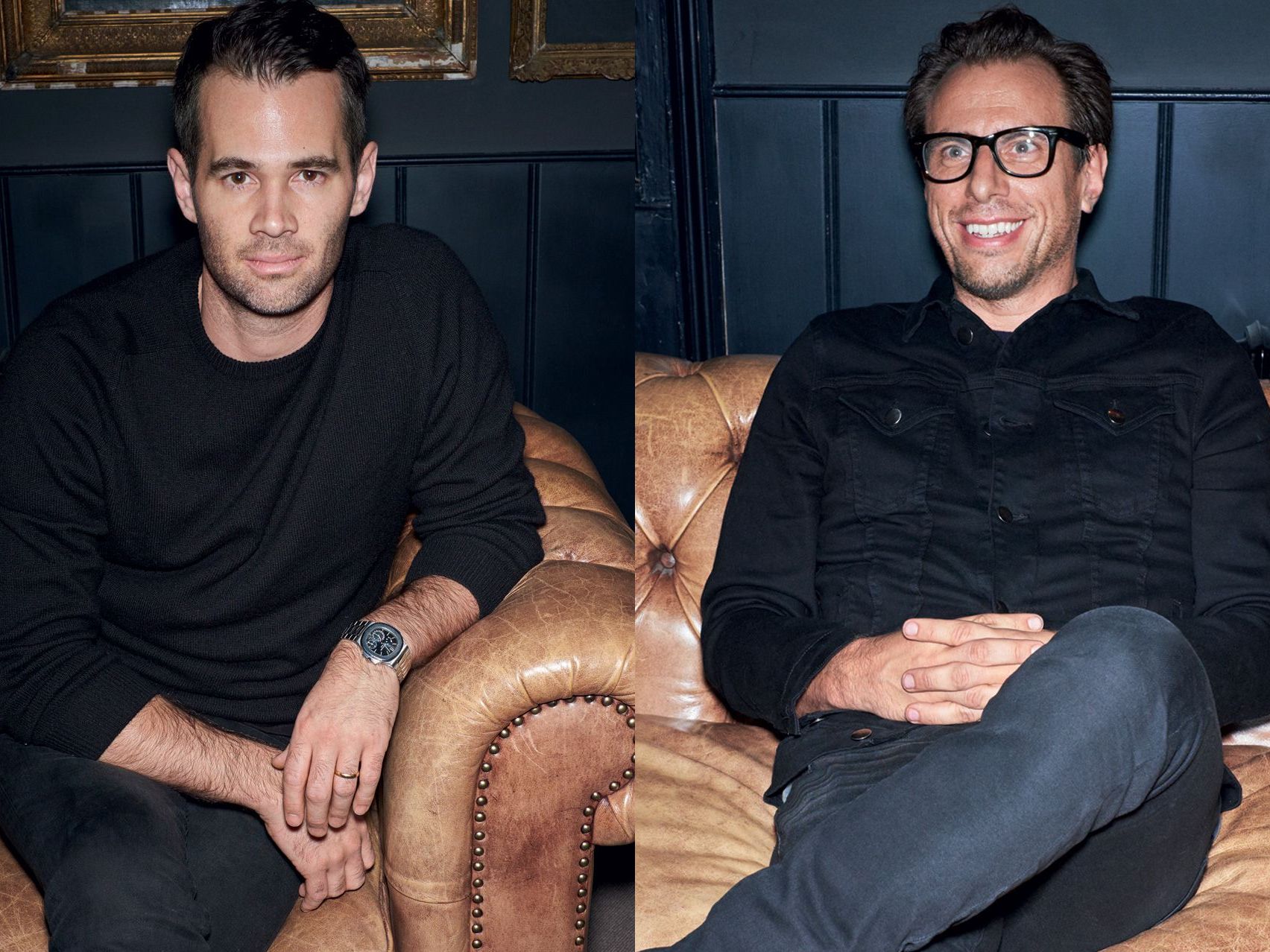
The jeans were the easy part of the story
FRAME launched in 2012, beginning with women’s jeans. Denim was familiar territory for two people with years of fashion marketing behind them. It also gave their visual ideas a physical form. A campaign suggests a way of living. A pair of jeans asks for a waist measurement. The transition between the two may sound modest until you are the person responsible for both.
Their relationships helped the label find an audience, including models such as Karlie Kloss. Yet the change from agency to brand owner introduced a less glamorous obligation. Once the clothes carried their label, the promise belonged to them. A creative brief could be approved and filed away. A garment continued its career in somebody else’s wardrobe, beyond the founders’ supervision.
In 2016, BBDO Worldwide bought a majority stake in Wednesday Agency Group, the agency business Grede and Torstensson had developed. The deal kept its leadership in place while connecting it to a larger advertising network. For Grede, the period also marked a growing commitment to owning consumer businesses. He had spent years helping clients decide how they should appear. He now had more of his own inventory to consider.
There was a correction along the way. Grace, a dress label launched after FRAME, failed. Grede later acknowledged that the product had not been good enough. That admission deserves room beside the successful launches. Advertising experience, industry friends and a polished presentation had not settled the customer’s decision. His explanation located the problem in the clothes themselves. It is a useful detail in a career too easily reduced to an address book.
“Before a brand, there are products.”
Jens Grede, speaking at BoF VOICES, 2024
Kim had a world in mind
With SKIMS, Kardashian brought a particular conception of the product and its appearance. Grede has described being drawn to the aesthetic world she wanted to create: its colours, its visual identity and its attitude toward the customer. In his account, the appeal was specific enough to stay with him. The next task was assembling the people and practical steps that could turn it into something for sale.
That distinction matters to understanding his role. Grede still identifies as a marketer, but his discussion of starting a company quickly arrives at execution: a team, a workable cost and an order in which things can happen. A mood board offers the pleasure of possibility. Manufacturing imposes quantities. It also has the discourteous habit of requiring decisions before the picture is perfect.
The partnership combines different kinds of experience. Kardashian is SKIMS’ chief creative officer. Emma Grede’s work includes product and a history of building Good American with Khloé Kardashian. Jens brings the agency years, FRAME and the work of running the company. Reducing the arrangement to a celebrity lending her name would leave most of the actual jobs out of the description.
The early SKIMS proposition addressed limitations in shapewear, including the range of shades and sizes available. Grede has emphasised the fabric development that preceded launch. These details provide a firmer explanation of the business than attention alone. An audience can be invited to look at almost anything. Clothing must then survive the entirely personal examination of being put on.
In 2022, SKIMS received the inaugural Innovation Award presented by Amazon Fashion at the CFDA Fashion Awards. Kardashian and both Gredes accepted it. The award recognised a business whose public visibility was already considerable, but its stated focus was product innovation. In this career, the photograph and the garment keep returning to the same negotiating table.
- 2003Saturday GroupBuild the image
- 2012FRAMEOwn the label
- 2019SKIMSRun the business
- 2025NikeSKIMSEnter activewear
Selected founding and launch dates. Descriptions are an editorial reading of the progression.
The next customer walks through a door
NikeSKIMS, announced in February 2025, extended the business into a long-term partnership with Nike. Its first collection arrived on September 26, spanning seven collections and 58 silhouettes. It paired SKIMS’ approach to fit and appearance with Nike’s performance expertise. For Grede, it was another way to move a familiar brand into a different part of a customer’s day.
There is a practical distinction between announcing a partnership and giving it a place in somebody’s routine. A new label must explain why it belongs beside the things already in the drawer. NikeSKIMS launched through both companies’ websites and selected stores, bringing the proposition into physical spaces as well as feeds. The customer could encounter the idea, then encounter the fabric.
In November 2025, SKIMS announced a $225 million financing round at a $5 billion valuation. The company said it expected to exceed $1 billion in net sales that year. The figure was a forecast at the time. The more revealing statement concerned where the business intended to go: toward becoming predominantly physical over the following years.
A shop brings a different sort of exposure. The visitor can examine a seam, ask a question and leave empty-handed. The entire experience takes place at human speed. For a business associated with the reach of its founders and campaigns, choosing more of these encounters is a commitment to a form of retail whose details cannot be delegated to a photograph.
The people running those encounters are becoming part of Grede’s public agenda. In January 2026, SKIMS appointed Kim Seymour as chief people officer, reporting to him. Later that year, he joined Kardashian and Emma at a three-day gathering of store leaders. The subjects of growth now included teams whose work happens far from a campaign shoot.
A newspaper, then the television remote
Grede’s own account of his interests is pleasingly broad. He reads newspapers in the morning and watches programmes including Love Island and The Great British Bake Off in the evening. In June 2025, he joined United Talent Agency’s board, bringing his consumer and media experience into another organisation concerned with the relationship between talent and audiences.
He and Emma married in 2012 and have four children. Their lives combine business and family rather than presenting them as sealed compartments. He has described a view of company-building shaped by team sports, with his own role closer to coaching. That description fits a career built through repeated partnerships, even as the companies and responsibilities have changed.
The 500 T-shirts remain a useful place to leave him. Somewhere inside an abundance of images and choices, two garments had earned an unusually durable position. Grede’s companies operate on a much larger scale now. The customer’s decision is still small enough to happen while standing in front of a wardrobe, wondering what to wear.
Continue the conversation
Visit SKIMS and FRAME. Follow Jens on Instagram or LinkedIn.