The bowtie arrives before the biography. It is bright, exact, and easy to remember, which makes it a useful visual signature for a marketer. For Jennie Platt, though, it carries the weight of an old workplace question. Early in her career at a U.S. financial institution, after she had come out to her family and begun dressing in a way that felt more authentic, a leader pulled her aside. Advancement, the person suggested, might be easier if she presented in a more traditionally feminine way.
Platt later reduced the message to five words: “Your bowtie or your career.” The line is sharp because the proposed bargain was so ordinary. Nobody was revoking a title. A senior person was simply describing the dress code they believed power preferred. The advice worked on her at first. Her confidence dropped, and she wondered whether ambition required an edited version of herself.
Then another leader offered evidence to the contrary. This colleague was an openly lesbian woman, the first professional role model Platt had known who reflected an experience like hers. The mentor listened, guided, and supplied something more valuable than reassurance: proof that another route was possible. “For the first time, I could see myself through someone else’s success,” Platt has written.
“When I finally felt like I could be myself in the workplace, I wasn't only happier at work, I was better at my job, too.”Jennie Platt
The first lessonVisibility is an operating system
That episode became more than a story about personal style. It gave Platt a practical view of mentorship: a mentor can change the set of futures another person considers available. She kept the bowtie. She also built a career through the machinery of large financial institutions, where the difference between a promise and an experience is measured across millions of interactions.
Her route was deliberately broad. After graduating from Princeton in 2001, Platt joined American Express. Over 11 years she moved through account development, business planning, product management, and marketing. She then went to Citi, where she led new product development and innovation for Citi Cards from 2012 through 2018, followed by roles in lifecycle marketing, priority customer segments, and U.S. consumer-bank customer marketing.
The long route to the CMO office
Products + marketing
Innovation + customer strategy
Integrated marketing + CMO
The sequence matters because it explains her expansive definition of marketing. A credit-card feature is part of the brand. So is the timing of a customer message, the data used to personalize it, the branch interaction that follows, and the technology carrying the whole exchange. By the time Platt joined TD in 2022 as Head of U.S. Integrated Marketing and Customer Strategy, she had spent two decades learning how the message and the machine meet.
She became TD Bank U.S. Chief Marketing Officer in 2023. Her publicly described remit includes brand advertising, sponsorships, creative services, product and customer marketing, digital strategy, distribution, regional programs, and marketing transformation. The organization numbers about 250 professionals. It is less a conventional advertising department than a connective layer across the bank.
The second lessonHow to lead when you cannot play
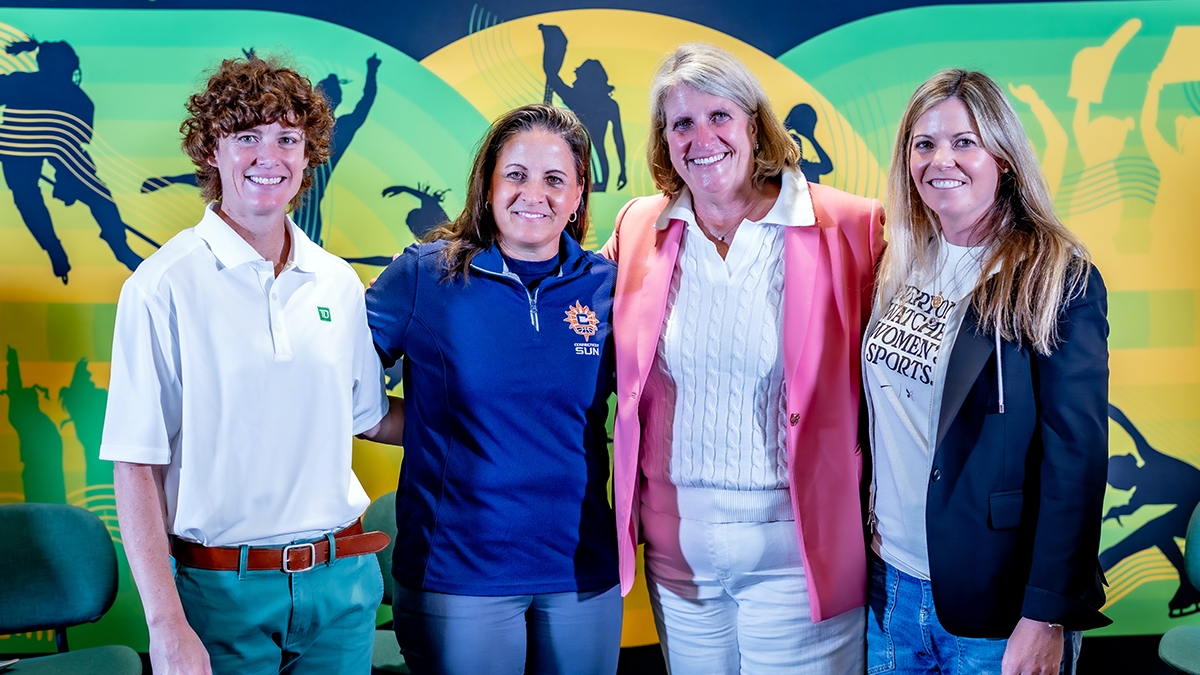
Years before the bowtie conversation, Platt learned another version of the same lesson on a soccer field. She arrived at Princeton with soccer central to her identity, then spent her freshman season on the sidelines. The experience was humbling, she recalled during a 2025 panel at TD Garden. She had to find a way to encourage teammates and affect the culture even when she could not contribute on the field.
It is a clean leadership metaphor, but Platt tells it with the uncomfortable part intact. Losing the role you expected can leave you unsure of your value. Her answer was to separate contribution from possession of the ball. A person can improve a team by creating confidence, reading the situation, and helping other people perform. The lesson survived the season because corporate life produces its own versions of sudden substitution: a plan breaks, a market moves, technology changes the work, or a leader needs to step back so someone else can step forward.
Her stated goal for her own team follows directly. She wants colleagues to feel supported, empowered to pursue shared goals and personal potential, appreciated, free to offer feedback, and able to experiment. Fun belongs on the list too. It sounds soft until one recognizes the management problem underneath it: creative and analytical teams only surface useful dissent when speaking carries less social risk.
The banking testCan scale still feel personal?
Platt’s current business question is the institutional version of the mentorship story: can a huge system make a person feel seen? In a podcast conversation about TD’s customer strategy, she described data as a tool for understanding and anticipating what a customer might need next. But she also placed responsibility for the brand far beyond marketing. A frontline banker and a colleague managing technology on the back end both shape whether the promise feels true.
That distinction is important in banking, where “personalization” can collapse into a better-targeted offer. Platt’s framing demands more. The message has to be useful. The timing has to make sense. Technology should create speed without stripping away explanation or judgment. The institution needs enough coordination that a customer does not experience its departments as separate companies.
TD sharpened that position in February 2026 with a unified North American platform called More Human. The public campaign presents digital progress as worthwhile when it helps people, and it pairs that idea with a refreshed visual identity. For Platt’s U.S. team, the interesting work begins after the launch. A two-word platform becomes credible only through repeated small experiences: a clearer screen, a relevant alert, an employee who can solve the problem, a handoff that does not make the customer start over.
A human brand is not a tone of voice. It is a chain of decisions that leaves somebody with less friction and more clarity.
The approach also explains the role of community and sports in Platt’s portfolio. TD’s partnerships with the Boston Celtics and Bruins include local initiatives alongside arena-scale visibility. At a renovated community-center gym in Boston, Platt described community as part of both TD’s and the Celtics’ DNA. The bank’s marketing value and the neighborhood’s practical value occupy the same program. That does not remove the commercial logic of sponsorship; it makes the exchange easier to inspect.
The multiplierTurning one mentor into a network
Platt’s inclusion work follows the same preference for systems over slogans. She chairs TD’s enterprise-wide Forever Proud Executive Steering Committee and serves as a 2SLGBTQ+ executive lead within the bank’s inclusion leadership. Public profiles credit her with supporting North American Pride campaigns, expansion of a company mentorship program, and the formation of a diversity council across marketing and corporate and public affairs.
Her advocacy has received external notice. Crain’s New York Business included her among its 2023 Notable LGBTQIA+ Leaders. INvolve placed her at No. 15 on its 2024 Outstanding Role Model list. In 2025, the Financial Communications Society selected her for its Leadership Award. Platt has also served on the TD Charitable Foundation board and the Boston Bruins Foundation’s board of advisors.
Awards make tidy milestones, but the mentor story supplies the more revealing measure. Platt wants to become for others the kind of leader who once helped her see a future without disguise. Formal programs matter because chance encounters are unevenly distributed. Executive sponsorship matters because belonging without access can become a cul-de-sac. Visibility matters because people scan senior rooms for evidence about who gets to stay.
This is where the bowtie stops being a flourish and becomes part of the business plan. It signals continuity between the person who enters the room and the executive who makes the decision. It reminds colleagues that polish need not mean sameness. And it makes Platt’s central claim visible before she speaks: ambition can be additive. The point is not that everyone should dress loudly. It is that nobody should have to spend the morning calculating which honest detail might cost them the afternoon.
The two formative scenes in Platt’s story now fit together. On the sideline, she learned that influence is larger than a formal role. With her mentor, she learned that example is larger than advice. At TD, those lessons meet the scale of a bank: build the conditions, coordinate the team, and make the person on the other side feel considered. Then do it again, across an organization large enough that the promise can only survive if thousands of people know it belongs to them.