The modern restaurant has acquired a peculiar new room. It has no tables, no chairs and no charming waiter pretending not to notice a third request for hot sauce. It lives inside a phone. Jeffrey Appelbaum has spent the better part of a decade trying to furnish that room with the one thing a screen does not naturally provide: trust.
His company, Salted, operates restaurant brands built for delivery and takeout. A customer may know moonbowls, Califlower Pizza or the Mediterranean concept Xenia without knowing that the same group sits behind them, much as a shopper can know a cereal without studying the conglomerate that owns the box. The food comes from a compact kitchen; several brands may share one address; software watches the flow. By 2026, Salted described a network of more than 35 locations. An investor's account placed nearly 600 cooks across 10 states.
Numbers make the business sound settled. Its history is anything but. Salted began in 2014 as an online cooking school, a subscription library of polished lessons from chefs. There were more than 200 instructors and thousands of paying members. The early proposition was wonderfully direct: culinary school, minus the tuition, commute and small matter of reorganizing one's life around a toque.
The cooking school that ate its homework
Customers enjoyed the lessons and asked for ingredients. Appelbaum listened. In 2016, Salted introduced SaltedEats, an on-demand meal-kit service that delivered locally sourced components with a companion video. He resisted a mandatory subscription because schedules are fickle and an abandoned box of ingredients is a melancholy sort of still life. The customer's request had revealed a flaw in the original experience. A lesson that ended with “now go shopping” was not quite finished.
The meal kits solved one problem and exposed another. Salted was still asking the customer to do the cooking. By 2018, the company had become something else: an operator of its own restaurant brands, built around food that could withstand a car ride and kitchens that did not require a conventional dining room. The screen remained. The responsibility moved from the customer back to Salted.
This was Appelbaum's third act at Salted and hardly his first encounter with digital commerce. Before it, he co-founded the social-media marketing firm Buzzpoint, founded the group-buying company DealQuad and worked as vice president of growth and innovation at BeachMint. He had spent years learning how internet companies find customers, hold their attention and invite them back. Restaurants had usually treated the web as a menu board or an ordering chute. Appelbaum saw the possibility of running the whole relationship with an e-commerce sensibility.
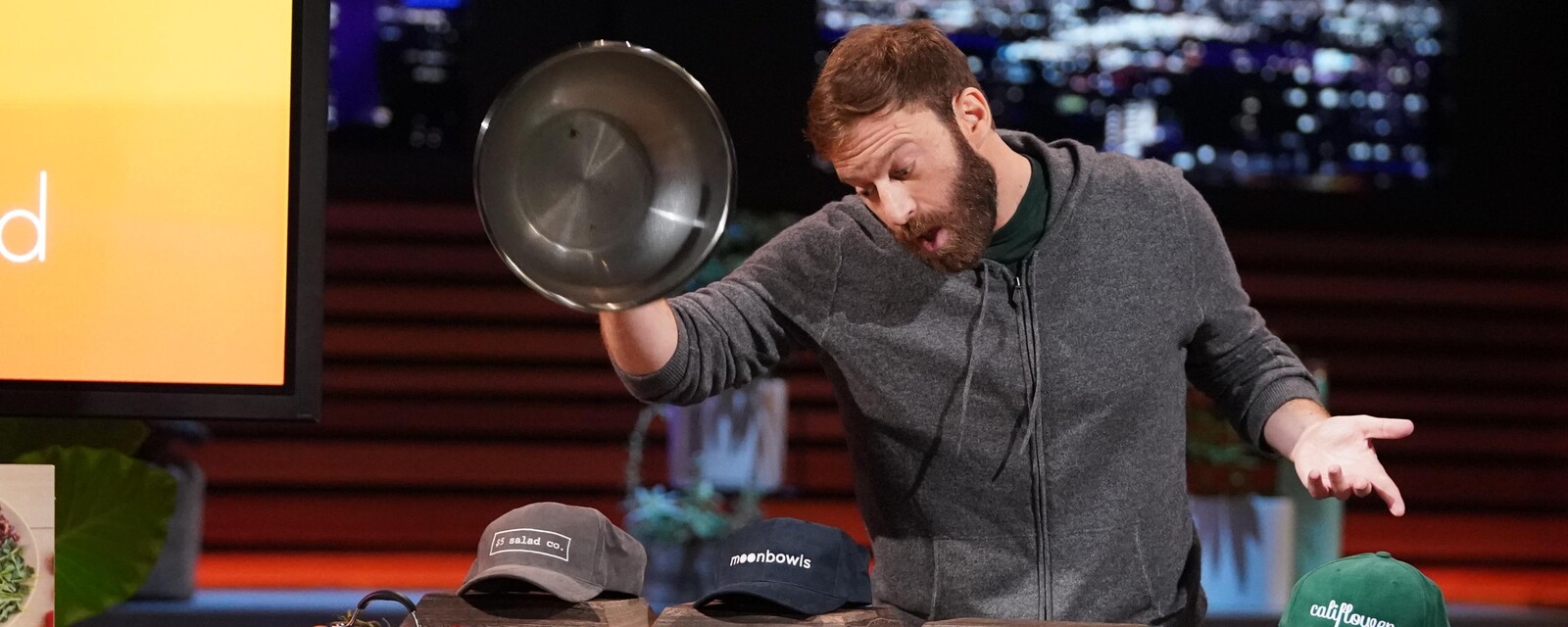
A television no, followed by a longer answer
In 2020, Appelbaum carried the model onto Shark Tank. He asked for $500,000 in exchange for 5 percent of the company. The panel tasted the food, examined the economics and declined. Television likes a verdict because a verdict fits neatly before the credits. Companies are inconsiderate that way. They keep operating after the episode ends.
Salted had 17 locations by 2021. That year it announced a $16 million Series A and spoke of itself not as a ghost-kitchen operator but as a builder of restaurant brands. The distinction mattered to Appelbaum. A kitchen can be invisible, but a brand cannot afford to be. The phrase “ghost kitchen” describes missing real estate. It says nothing about whether dinner is memorable, service is gracious or the next order ever happens.
Two years later came a $14 million Series B. Salted then had 25 locations in nine states. Appelbaum said each location averaged more than $1 million in annual orders and that all were profitable. The company had also begun looking beyond concepts invented in-house, testing and then acquiring Xenia, a Mediterranean brand. The operator was turning into a portfolio.
The onion is a data point
Restaurant scale is a grand phrase for a collection of tiny anxieties. Is the rice airy? Is the sweet potato charred properly? Are the pickled onions the right color? Salted built proprietary operations software because a recipe alone cannot police the distance between Los Angeles and Atlanta. The company collects information from roughly 25 interfaces, photographs items on its production lines and routes tagged feedback to kitchens. Training and retraining happen through the same loop.
There is something comic and rather noble about using a technology stack to pursue the correct shade of onion. It also reveals the tension in Appelbaum's project. The more locations he adds, the more the company must notice. A traditional restaurant has a manager in the room. Salted has to turn observation into a system without making the food feel as if it were prepared by a system.
- See itPhotograph food and ingredients as they move through production.
- Tag itConvert visual details into reviewable quality signals.
- Return itSend useful feedback to the kitchen for training and correction.
- Remember itCombine order, support and customer data to improve the next experience.
Appelbaum's own writing returns to hospitality, a deliberately old word for a digital business. Salted has offered direct customer support, a satisfaction guarantee, rewards and packaging meant to explain what each brand values. Delivery marketplaces bring discovery, but direct websites and apps provide a richer memory of the relationship. If a dining room once let a restaurateur recognize the regular at table six, the digital equivalent is a careful record of what happened after someone pressed “order.”
The company that does not fit in the bag
A recent anecdote brings the operating diagrams back to earth. At the end of a Los Angeles team session devoted to a Korean-Californian bowl lineup, about 35 colleagues gathered for drinks. Dominic, Salted's research and development leader, stood beside Appelbaum. He was described as the sort of perfectionist who might debate which way a lemon wedge should face, or whether an avocado cut into a fan sends a different signal from one cut into eighths.
Dominic asked whether Appelbaum understood what he had created. Appelbaum looked at the people around him and thought of the nearly 600 cooks then working across 10 states. His conclusion was that the finest thing Salted had built was not edible. For a founder whose company is designed to remove the conventional restaurant room, the meaningful moment arrived when the people who run the invisible rooms gathered in one place.
That story also hints at his management temperament. The public version of Appelbaum is ambitious about scale - he has spoken of thousands of locations - yet peculiarly occupied by minute execution. His aspirations stretch across a map; his examples shrink to a vegetable. It is a productive contradiction. Growth without standards produces a large disappointment. Standards without growth produce a treasured neighborhood place, which is lovely but belongs to another business plan.
The next phase is already visible. Salted is opening more freestanding sites designed from the first sketch for pickup and delivery: small front-of-house areas, little or no seating and several brands under one roof. The company still uses cloud-kitchen facilities, but these self-operated locations give it more control over real estate and the customer handoff. Appelbaum remains focused on the United States for now, building clusters around metropolitan areas while leaving international expansion on the distant prep list.
A restaurant is a promise with a travel time
The enduring question is whether a portfolio of digital brands can become as emotionally legible as the old names Appelbaum hopes to challenge. Delivery apps are crowded. Switching costs are a thumb movement. A clever name may win the first order; the fourteenth requires habit, satisfaction and a dinner that looks enough like the photograph to preserve faith in photographs.
Appelbaum's answer is not romantic. It consists of software, operating discipline, customer messages, compact leases, recipes designed for transit and people who care how an avocado is cut. Yet romance sneaks in through the side door. He believes a restaurant can be known without a room, can be hospitable without a waiter and can grow without becoming anonymous. The evidence is still being cooked, location by location.
Salted began by placing chefs on a screen and asking customers to follow along. Twelve years later, the screen is still there, but the company does the chopping. The useful continuity is not a product or business model. It is Appelbaum's insistence that convenience should not end the conversation. Dinner may arrive in a bag. The promise has to travel farther.