Jeff Key once set a target of 1,500 pharmacy locations in five years. PioneerRx reached it in five years and two months. Those last two months deserve to stay in the story. They are the little wrinkle in the business suit, the detail that turns a founder’s ambition into something with a calendar attached.
His career has since acquired several more calendars: software releases, conferences, podcast recordings and, in July 2026, a book publication. The subjects change. The question running through them is remarkably durable: what happens between making a promise to a customer and giving that customer something worth telling a friend?
Key founded PioneerRx, served as its president and CEO, and now leads Trade Show Savvy. His book, The Surprise Gap: Building a Business That Sells Itself, gives a name to the space between expectation and experience. The earlier chapters of his working life show why that space would interest him.
The classroom before the company
Before there was a national customer base, there were students. After leaving a local information technology company, Key taught computer science at Louisiana State University in Shreveport. Some of those students later became members of PioneerRx’s core development team, joining colleagues he had known through earlier work.
There is something pleasingly practical about this beginning. Recruitment often asks strangers to demonstrate their habits in an hour. A teacher has already watched people tackle problems, revise their answers and return to a difficult idea. In Key’s case, the connection between the classroom and the company became literal: people he had taught helped build the software.
In 2006, Mark Dickson, president of New Tech Computer Systems, approached him about a new pharmacy management system. Key attached conditions. The project needed national ambition, and it needed to work independently of a single wholesaler. A business confined to one wholesaler and nine states would have a ceiling built into its foundations.
That second condition is the revealing one. Software architecture and commercial reach met before the product reached a shop counter. The customer a company can serve is partly decided by the restrictions it accepts at the beginning.
A target with two extra months
On July 28, 2008, PioneerRx entered its first beta location: Country Drug in Vivian, Louisiana. Parallel testing and trial runs preceded the wider rollout. The first chapter of the business happened in an operating store, with the system being put through the unglamorous examination that every useful piece of software eventually faces.
A demonstration can proceed at the demonstrator’s pace. A working business supplies its own interruptions. That makes the first location a more interesting milestone than a launch announcement. Someone has to use what the team has built, repeatedly, while the rest of the day continues.
Key’s early 1,500-location prediction was met with doubt. His later recollection put the emphasis on execution and the steady work required to get there. The result took two months longer than the target. Keeping that small qualification makes the achievement legible. It lets ambition and elapsed time occupy the same sentence.
“I’m proud of the execution, the steady march”
Jeff Key, reflecting on PioneerRx’s early growth
The geographic expansion was substantial too. Between January 2011 and October 2012, PioneerRx grew from nine states to 45. By August 2022, the company reported almost 6,000 active locations and customers in all 50 states. These are dated milestones, snapshots of a business becoming larger through many individual decisions to adopt it.
Vivian, Louisiana
company’s footprint
reported by PioneerRx
A bigger room, then a microphone
Key’s work also took him beyond the company. In 2016, he was selected to join 12 other executives on the board of the newly created NCPA Innovation Center. Its brief included sharing ideas and developing strategies for independent pharmacy. The appointment put a software builder inside a broader industry conversation.
Conferences offered another setting for that exchange. At PioneerRx Connect in Orlando in 2019, almost 500 independent pharmacies came together. Key and marketing director Marsha Bivins welcomed attendees. Sessions included inventory management and operational efficiency, subjects with consequences long after everyone had collected their luggage.
Such gatherings help explain a career move that might otherwise look like a sudden change of scenery. Key’s later interest in event strategy had a substantial rehearsal space. A user conference brings the people building a product into the same room as people who have to make it earn its place in a business.
In 2020, he became one of the hosts of the Catalyst Pharmacy Podcast, alongside Josh Howland, Mark Bivins and Marsha Bivins. The format widened the conversation to business and technology. A software company now had a recurring appointment with listeners, as well as a product on their screens.
Key appeared on the other side of the microphone too. Richard Waithe interviewed him for episode 111 of Rx Radio in April 2021, a discussion that included PioneerRx’s origins. The founder who had helped assemble a development team was now being asked to explain what that team had built and how the business had grown.
The technical work beneath those conversations was specific. RxSafe described collaborating with PioneerRx on automated perpetual inventory, and featured Key with its CEO William Holmes and pharmacist Steven Boatwright in a podcast discussion. Inventory is a useful example of the territory a software founder inhabits: the screen must stay connected to what is actually on the shelf. Integration asks separate systems to communicate; the business using them needs the result to make sense.
The company changes hands; the relationships remain
RedSail Technologies finalized its purchase of PioneerRx in December 2020. The announcement said Key and the leadership team would continue leading the organization, with operations in Irving, Texas, and Shreveport, Louisiana. The deal placed PioneerRx alongside other software brands within a larger group.
The combined network figure in that announcement exceeded 9,000 pharmacies across RedSail’s platforms. It belongs to the combined business. For Key’s story, the more personal detail is continuity: an acquisition announcement that also specified who would keep running the organization.
His customer relationships had their own chronology. In January 2024, Key shared a photograph from a Montana Pharmacy Association event with Chad and Tracey, early PioneerRx customers. He recalled their joining in June 2011, when the software served 196 locations. In the same post, he put its later reach at nearly 7,000.
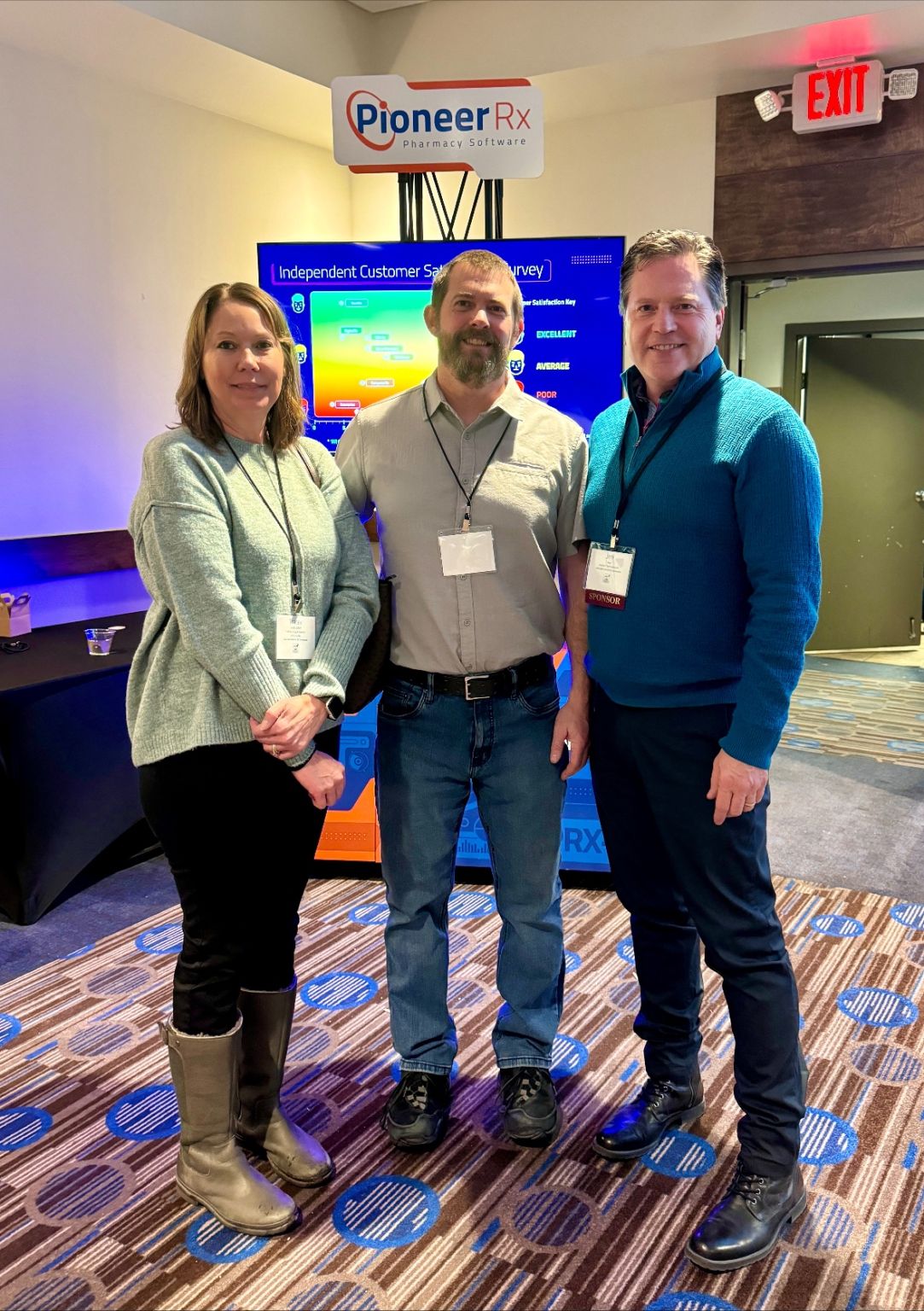
The photograph gives the numbers some company. A growth chart compresses thousands of choices into a line; here, two of the people behind those choices are standing beside him. The booth is present, naturally. In Key’s career, a conversation rarely seems to remain far from one.
The next appointment is on the calendar
By May 2024, PioneerRx was introducing Key as president emeritus. His current company, Trade Show Savvy, identifies him as president and a founder, drawing on his experience in software development, user conferences and event marketing. His LinkedIn profile lists a Certified Meeting Professional credential issued in February 2025.
Trade Show Savvy combines consulting, exhibits and software. Its public guidance has a practical impatience with numbers that look impressive while explaining very little. A stack of contacts may flatter the exhibitor. A scheduled conversation with a qualified account asks more of both people involved.
A March 2026 article on its site recommends making those meetings a primary measure of an event’s performance. It suggests booking them before the show, giving staff calendar links and converting useful conversations into agreed next steps. The humble appointment acquires a little dignity. It has persuaded someone to surrender part of Tuesday.
Another article widens the measurement to existing opportunities. Did a stalled discussion move? Did the team meet another person involved in a decision? What changed between the position before the event and the position 30 days later? These questions make the exhibition answerable to something beyond its own bustle.
- BeforeIdentify accounts.
Book useful meetings. - DuringListen, qualify.
Agree on a next step. - AfterAssign follow-up.
Track what moved.
Trade Show Savvy’s 90-day campaign approach, condensed.
The company also describes trade shows as 90-day campaigns, with work before, during and after the days on the floor. Preparation, a usable conversation and prompt follow-up become parts of one undertaking. It is an operational view of an occasion often remembered for its carpets, lights and astonishing quantity of tote bags.
The experience that earns a retelling
In July 2026, Key published The Surprise Gap. His launch announcement described a book about shaping the difference between what customers anticipate and what they receive. He presented it as a way to understand the experiences people feel compelled to discuss.
That idea connects his present work to PioneerRx without requiring the two businesses to look alike. Trade Show Savvy’s own account points to the everyday moments when an exhibitor discovers whether a promise was reliable: a booth arriving intact, an installation being handled, a plan making the next action clear.
The appeal is in the scale of the question. Customer experience can sound rather grand until it arrives as a missing crate or an unanswered question. Key’s work brings the subject down to an encounter someone can remember. A recommendation has to begin with a person having something to say.
At Catalyst Connect in 2024, he offered a compact thought: “You can’t have a great life without having a great day.” It fits a career whose reported milestones span years, but whose working material has been classes, installations, meetings and conversations. The five-year target still includes those two extra months. There was work to do in them too.