In August 2015, Jeff Doyle stood outside a Houston concert venue holding an enormous pair of scissors. Beside him were men in suits, a blue ribbon, and the entrance to a building that was taking his company’s name. Doyle wore a checked shirt and sneakers. Revention had arrived on the marquee, with a rather less glamorous assignment waiting inside: helping the place take people’s money.
The naming agreement with Live Nation included installation of Revention’s point-of-sale equipment. That detail makes the photograph more interesting. A restaurant software company was getting its name in front of concertgoers while putting its product to work behind the counter. For a founder whose business had begun in a two-bedroom apartment in 2003, it was quite a change of premises.
The route between those two addresses runs through pizza shops, customer requests, delivery drivers and computers expected to behave themselves during dinner. Doyle’s public business story is unusually full of additions. A register acquired online ordering. A transaction acquired a loyalty program. A piece of plastic became a way to bring someone back for another meal. Eventually, even the company’s online ordering product supplied the name for its successor: HungerRush.
The customer wanted it their way
Early in Revention’s development, Doyle described a market full of operators who wanted software tailored to their own establishments. His observation was practical. A system might be good in general and still fail to accommodate the way a particular shop worked. He put the difficulty plainly: “No one has exactly what you want.”
His response was to make customization part of the offer. There is something pleasingly appropriate about that approach in the pizza trade. An industry that lets customers specify dinner down to the toppings has ample reason to want similar latitude from its software. The operator buying the system also has preferences, routines and a firm idea of what should happen next.
In October 2005, Hungry Howie’s approved Revention for its locations after months of testing. The chain’s training director, Al Newman, described being invited to incorporate strengths from earlier systems. That invitation matters. Winning the business involved listening to a customer’s accumulated experience, including the parts of previous products the customer wished to keep.
Doyle’s ambitions were already forward-looking. “It is not enough to have a good product today,” he said. A founder can make that sentence sound like a slogan. In this case, the next several announcements gave it some substance. Revention kept attaching more of the restaurant’s daily work to the same system.
“It is not enough to have a good product today.”
Jeff Doyle, 2005
The driver and the gift card
November 2005 brought a partnership with Pi Star Communications. The plan connected Revention’s software to a delivery dispatch platform, allowing operators to see drivers’ locations and order fulfillment on screen. Patrick Moldt, Pi Star’s founder and chief software architect, was the counterpart in that agreement. The partnership extended Doyle’s product beyond the counter to the journey between kitchen and customer.
Delivery creates an awkward gap for a restaurant. The sale belongs to the shop, but part of the service happens elsewhere. Connecting dispatch to the point of sale made that outside activity visible within the operator’s working system. The proposed integration treated delivery as part of managing the restaurant, with information worth bringing back indoors.
A month later, Revention announced integration with the Givex gift card program. Sales director Laura Gaudin explained a particularly useful detail: a gift card could pay for a delivery order placed by telephone. Staff could enter the number and receive authorization through the system. The apparently small question of where a card could be redeemed had become a product requirement.
Doyle saw another benefit. A branded card sitting in a wallet could remind its owner of the restaurant. Here was his expanding idea of the transaction: payment could also carry a reason to return. The product was accumulating little connections between the operator’s immediate job and the next sale. None required a grand theory of human behavior. A wallet would do.
- 2005Take the orderHungry Howie’s approval
- 2005Follow the deliveryPi Star partnership
- 2005Redeem the gift cardGivex integration
- 2008Accept it onlineHungerRush partnership
- 2009Encourage a returnRepeat Returns integration
HungerRush, before it was the company
By July 2008, Doyle was discussing HungerRush as Revention’s online ordering product. Hungry Howie’s was again involved. A test in the Detroit area recorded more than 300 web orders in its first four weeks, with an average ticket 19 percent above orders placed at the store. Those were results from a particular test, rather than a promise about every restaurant.
One detail deserves a pause: 40 percent of those online orders were for pickup. Ordering on the web did more than change how a delivery customer reached the restaurant. It also let someone arrange a meal before arriving to collect it. The counter remained, but the conversation could begin somewhere else.
Doyle called development of the ordering product a natural extension of Revention’s existing work. The thread is easy to follow. If the software already helps a shop process an order, accepting that order through another channel creates another route into the business. The task is then to connect the new route to what the restaurant already does.
Higher average ticket in the 2008 Detroit-area Hungry Howie’s online ordering test.A reported pilot result, not a company-wide benchmark.
In 2014, Hungry Howie’s signed a multiyear agreement to use HungerRush online ordering exclusively. The announcement said participating locations had processed more than $50 million through the platform. Its technology director, Dan McKay, emphasized the ability to modify the interface. Years after the early point-of-sale approval, the customer was still talking about fit.
Doyle’s comment on that agreement gave credit to the chain’s organization and franchisees. His stated hope was that HungerRush would contribute to their growth. That is a useful way to understand the business he was building: its customers needed people to buy dinner, and the software had to earn its place in that exchange.
The work behind the promise
By 2009, Revention had also integrated with Repeat Returns, a restaurant marketing system. Sales information could pass to the marketing service when an order was paid. Doyle said operators increasingly wanted fewer vendors and more of the necessary components in one product. His preference for a broader system was explicit.
That breadth came with an ordinary engineering obligation: the equipment had to work. Revention began fitting terminals with solid-state drives in 2009, then encountered unacceptable failure rates from early suppliers. The company tested alternatives on the bench and in customers’ busiest workstations before selecting Samsung drives. Doyle’s appetite for new components required a willingness to scrutinize them after the sales pitch.
The hardware episode is a revealing counterpart to the steady flow of new features. Choosing a faster component is one decision. Establishing whether it will survive actual use is another. Revention asked restaurant employees to use the candidate drives without being told which ones they had. Their working day became part of the evaluation.
The employment side of the business also faced scrutiny. In September 2012, a federal court ruled that installation and support staff bringing an overtime case were nonexempt employees of Revention and Doyle. It denied Doyle’s dismissal motion and the defendants’ attempt to decertify the collective action. Questions about whether uncompensated overtime had actually occurred, and the good-faith defense, remained for trial. That ruling concerned the responsibilities of running the company as well as selling its systems.
A company name above the doors
The Live Nation agreement in 2015 made Revention visible in a different part of Houston life. The venue would carry its name, and a planned viewing area would be called the Revention Suite. Employees were offered opportunities around performances, including artist meet-and-greets and VIP access. Software work had acquired an entertaining fringe benefit.
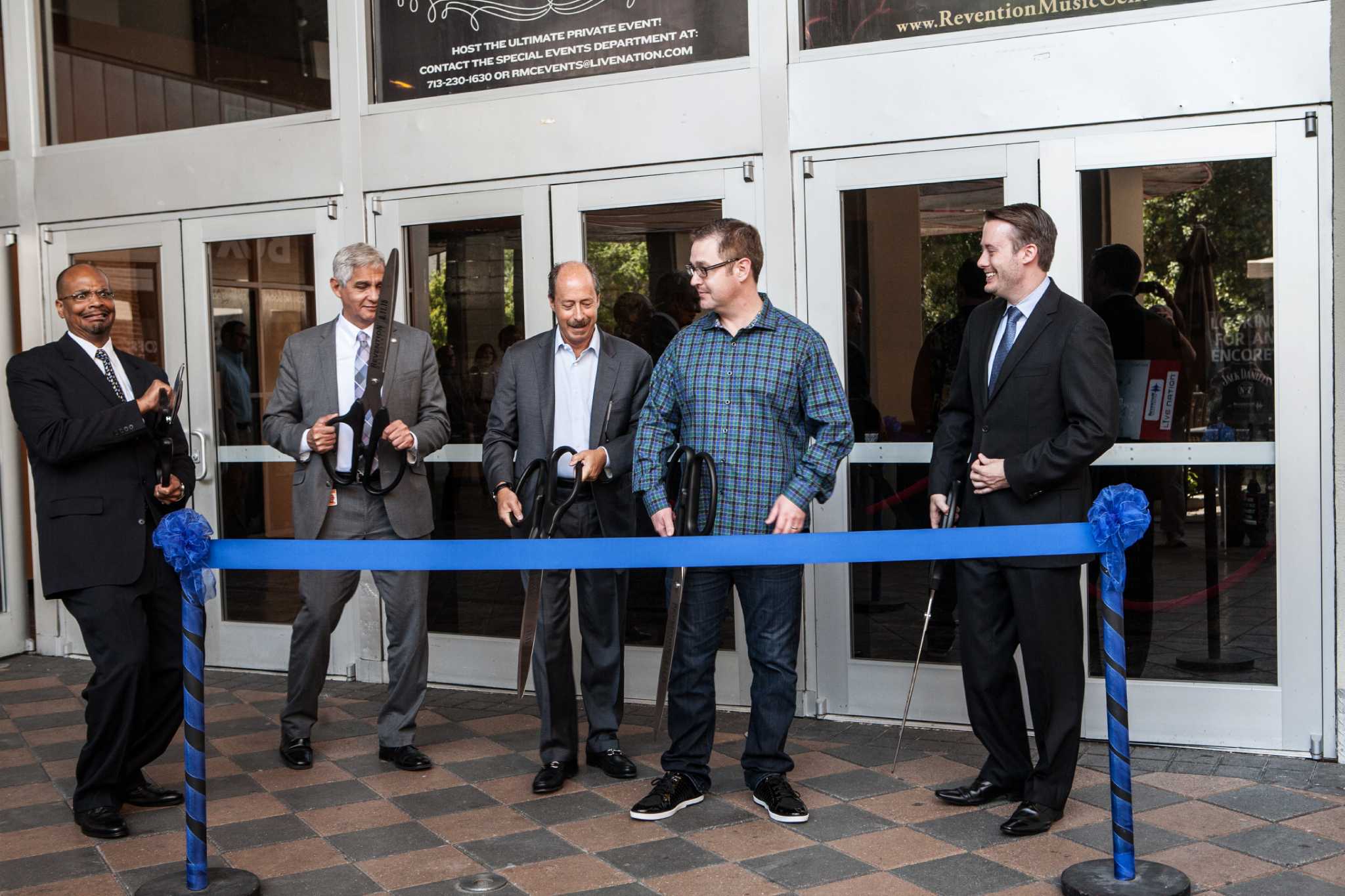
Drew Dixon, the venue’s general manager, described the arrangement as an opportunity to demonstrate Revention’s technology while entertaining the company’s clients and employees. The pairing had a working purpose as well as a social one. Guests could enjoy the performance; the business could show its equipment operating in the same building.
Revention appeared on the Inc. 5000 in 2015 and 2016. The listings put a recognizable business milestone alongside the more photogenic one at the theater. Doyle’s company was being counted among growing private businesses while its name circulated among people whose principal interest was the evening’s music.
The product name outlasted the original sign
The corporate story continued beyond Doyle’s tenure as CEO. CapStreet completed a majority recapitalization of Revention, and Revention and CRS Solutions consolidated in 2018. In June 2020, the business publicly presented itself as HungerRush, with Perry Turbes identified as CEO. The ordering brand Doyle had discussed years earlier had become the name over the broader operation.
That distinction keeps his part in the story clear. Doyle founded and led Revention, HungerRush’s predecessor. The subsequent company and its later leadership belong to the next chapter. His contribution is visible in the earlier decisions: accommodating the shop, connecting delivery, accepting orders online, and making those pieces work together.
The ribbon-cutting photograph offers a cheerful place to leave him. There is a company name above the doors, a founder in sneakers, and equipment destined for the people handling the transactions inside. Revention had traveled a long way from the apartment. Its business still depended on the next customer being able to place an order.