Founder · CEO · Snackpass
Kevin Tan
He wanted to send a girl a smoothie. He ended up rewiring how restaurants take an order.
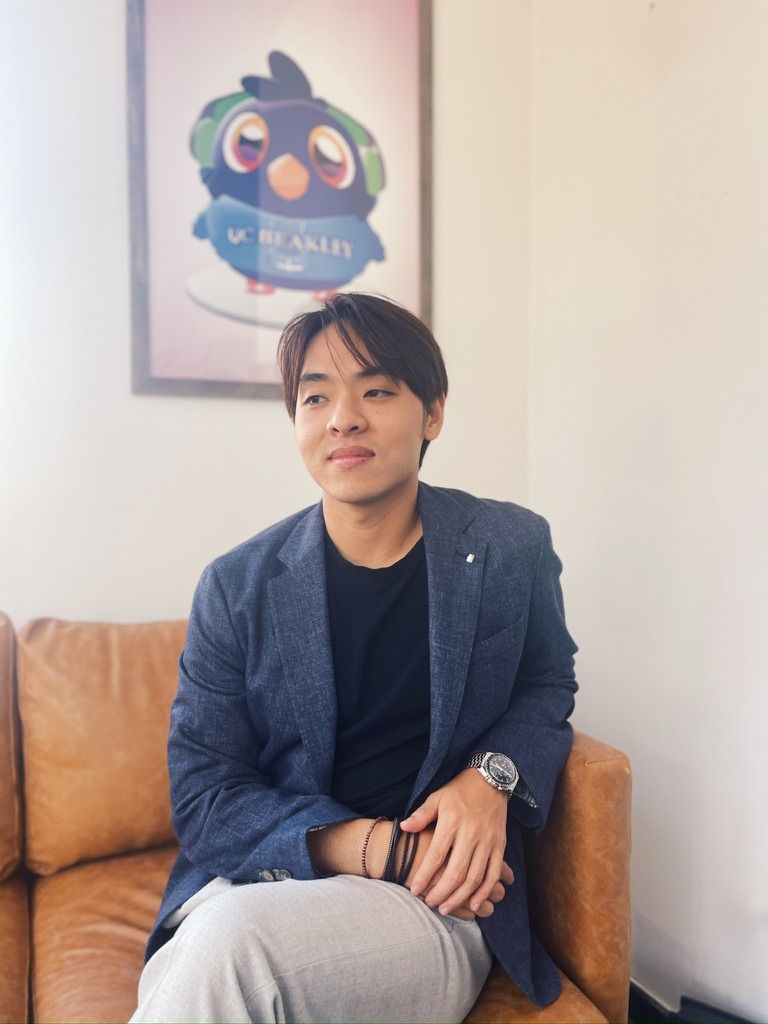
KEVIN TAN — the founder who bet on pickup over delivery.
He wanted to send a girl a smoothie. He ended up rewiring how restaurants take an order.
KEVIN TAN — the founder who bet on pickup over delivery.
Walk onto Snackpass today and you will find kiosks blinking in quick-service restaurants, order-ready screens, loyalty points, a point-of-sale stack, and a gifting feature people use to send a friend a smoothie. Kevin Tan runs all of it from San Francisco. He is the co-founder and CEO, and he is still the person most likely to explain why a 10% take rate matters more than a clever logo.
The premise is almost rude in its simplicity. Delivery is slow and expensive. Most people picking up lunch do not need a driver, a surge fee, or a thirty-minute wait. They need to skip the line. So Snackpass made pickup the headline act, not the consolation prize, and pointed the whole thing at the roughly 90% of the restaurant industry that still runs offline. Seven out of ten restaurants, Tan likes to note, are single-unit mom-and-pops. Those are the customers.
What makes the company strange is the part that has nothing to do with logistics. Early on, Tan added a way to send loyalty points to a friend. Order a coffee, gift a reward, and everyone could see it. It was meant as a small social hook. It became a language. Students used it to flirt, to apologize, to bond. A utility quietly turned into a social product, and the social product is what spread.
"What if you don't just get points for yourself but you get to send one to a friend?"
- Kevin Tan, on the feature that made Snackpass viralThe company was born in Tan's final semester at Yale, sketched out during an economics lecture he was probably supposed to be paying attention to. The first version started as a favor: he helped a friend who owned a pizza place set up student deals tied to .edu emails. The discount idea kept mutating until it landed on something better - mobile ordering without the friction of pulling out a credit card every time.
The first customer was his roommate. The next hundred came from flyers, the analog kind, taped to campus walls and pressed into the hands of people walking by. Within months, something close to 80% of Yale was on it. Running a startup while finishing a degree is a particular kind of comedy: Tan once took a call from a restaurant owner about an order that did not go through while he was walking into an exam.
The story has a meet-cute, and it is not the smoothie. Tan learned another Yale student was building something similar. Instead of treating him as competition, he sent a Facebook message offering to help in any way he could - genuinely, embarrassingly enthusiastic. They met at Book Trader Cafe, hit it off, and started brainstorming. Jamie Marshall, a Thiel Fellow, became a co-founder. Jonathan Cameron, from Tan's hometown, rounded out the founding team. Collaboration over rivalry turned out to be the whole personality of the company.
Snackpass took an early check from Dorm Room Fund, the student-run venture firm, back when it was still a campus experiment. The bet aged well.
Ask Tan what separates Snackpass from the delivery giants and the answer is unglamorous and exact: the cut. Snackpass has pitched take rates roughly ten times lower than DoorDash. For a single-location restaurant running on thin margins, that is not a feature - it is survival. Delivery platforms optimized for the chains and the dense city blocks. Tan went after everyone else, the corner shop that never wanted a driver in the first place.
The product follows the same logic. Kiosks and self-checkout cut labor friction at the counter. Order-ready screens shave seconds off pickup. Loyalty and gifting keep customers coming back without a marketing budget. None of it is flashy. All of it is aimed at the same target: make the independent restaurant run a little more like the chains, without charging them like a chain.
"It turned this utility product into a more viral social product."
- Kevin Tan, on gifting and growthWhen COVID-19 emptied dining rooms, Tan moved fast on contactless digital menus and ordering, the kind of pivot that reads as obvious in hindsight and terrifying in the moment. The willingness to get into the weeds is a recurring theme. People who have watched him work describe a CEO who will, if needed, do the nitty-gritty - cleaning dishes in a partner's kitchen to understand how the business actually breathes. Hard to fake that, and harder still to outsource it.
Run the company long enough and you collect a second life. Tan's is unusually well-documented because he keeps a personal site, kevintan.me, that has nothing to do with restaurants. He makes music - original tracks with names like "sine" and "flange," uploaded quietly to YouTube. He writes essays with titles like "Why Smart People Do Dumb Things" and "Limiting Factor," circling questions of focus, minimalism, and decision-making. The tagline he keeps coming back to, borrowed from Einstein, is a design philosophy disguised as a life philosophy: as simple as possible, but no simpler.
It is a tidy summary of the whole enterprise. A physics major who became a founder. A discount tool that became a social network. A takeout app that learned to flirt. Subtract everything that does not need to be there, and what is left is a guy who noticed that the line is the problem, and decided to delete it.
He studied physics at Yale, not business or computer science. The startup was the elective.
Snackpass began as a favor - student deals for a friend's pizza place, tied to .edu emails.
He cold-messaged a competitor on Facebook offering to help. That competitor became his co-founder.
He uploads original music to YouTube and writes essays on focus between board meetings.
His Series B investors included the Jonas Brothers and Steve Aoki. The pitch was: skip the line.
He has been known to wash dishes in a partner restaurant's kitchen to learn the business firsthand.
"Seven out of 10 restaurants are single-unit mom-and-pops."
"As simple as possible but no simpler."
"What if you don't just get points for yourself but you get to send one to a friend?"
"It turned this utility product into a more viral social product."