Jaymie Heil likes a business metaphor with pedals. The headlight is vision. The front wheel is the promise that sales and marketing make. The rear wheel is the delivery entrusted to manufacturing, supply chain and logistics. Processes, technology and the CRM make up the frame. If one wheel grows larger than the other, the ride turns comic and then costly. Missed lead times, excess inventory and broken expectations arrive in quick succession.
It is the kind of picture an operator develops after enough years spent between a showroom promise and a loading dock reality. Heil’s public career has run through Hearth & Home Technologies, EcoSmart Fire, Dansons and W.C. Bradley. The products have been pleasingly physical: fireplaces, outdoor fire products, pellet grills and the machinery of a good meal outdoors. They burn, smoke, ship in boxes and require retailers willing to give them floor space. Strategy here cannot survive as a slide. Eventually, someone has to turn the thing on.
Today his public profile points to Aligned Coaching and Consulting in Phoenix. The name fits the lesson he keeps returning to. Sales does not operate alone. Product does not hand down tablets from a mountain. Marketing cannot charm its way around a supply problem. The customer has a business model of its own, and the supplier who understands it has a better chance of becoming useful.
The business bicycle
Four parts. One direction. Balance supplies the momentum.
A career with heat in it
In 2003, Heil was International Business Manager at Hearth & Home Technologies. A British trademark proceeding from that period places him close to the practical details of taking the Quadra-Fire brand abroad: which distributor represented it, which products carried the mark and what the company did and did not sell under that name. It is dry work until one notices what it teaches. International growth is a chain of exact claims. Brand, product, paperwork and partner must agree.
By 2018, a hearth-industry directory listed him as Vice President of Sales and Marketing at EcoSmart Fire. The category had shifted toward upscale outdoor fire design, but the commercial puzzle remained familiar. A physical product has to make sense to a distributor, a retailer and the person imagining it at home. It must have a price, a place and a reason to exist next to everything else.
Heil moved into the orbit of W.C. Bradley and Dansons in 2019, working in international sales around brands including Pit Boss and Louisiana Grills. Public posts show the unglamorous muscle behind expansion: recruiting a sales manager for France and Belgium, developing dealers in the United Kingdom and talking about products in the language of channels, customers and margins. The grill may be the star on the patio. Distribution has to learn all the lines.
One former colleague in Europe credits Heil’s pragmatic control of sales, staff and cost during the launch of brands there. Another describes his habit of explaining the “why” behind goals and assuming good intent. Those observations put texture on the bicycle. A frame is not only a CRM or a meeting cadence. It is the trust that lets bad news move quickly and a reason that helps distant teams make a sound decision without waiting for headquarters to wake up.
“The wheels must be the same size. FULL STOP.”Jaymie Heil on balancing promise and delivery
The customer has a bicycle, too
Heil’s more interesting move is to put the supplier’s diagram beside the customer’s. A retailer has its own vision, promises, delivery system and processes. A product can be excellent and still fit badly. The price might collide with the customer’s margin model. Packaging may fight the shelf. Lead times may be absurd for the season. A promotion can create demand the retailer cannot fulfill. Alignment means studying both machines before pedaling harder.
His framework names six levers: people, programs, processes, products, pricing and promotions. The alliteration is tidy; the implications are not. Each lever belongs to a different conversation inside most companies. Heil’s argument is that the commercial leader has to connect them around the customer’s reality. Selling begins to look less like persuasion and more like systems design.
That logic also changes product development. In Heil’s telling, sales gathers the customer’s business model and the market’s signals. Product and marketing stay in the exchange. Cost, margin, competition, channels and discounts shape what can be built and where it belongs. Existing customers and salespeople should have enough participation to feel that the product was, in some measure, their idea. Ownership is not a launch-day speech. It begins while the product can still change.
Heil writes that after launching hundreds of products around the world, the process remains imperfect, difficult and fun. The last word matters. Operators are often portrayed as enemies of delight, arriving with a spreadsheet just as the creative people start enjoying themselves. Heil’s version makes rigor part of the enjoyment. A launch is a live puzzle involving taste, timing, economics and human vanity. Everyone wants to see a bit of their judgment in the finished object.
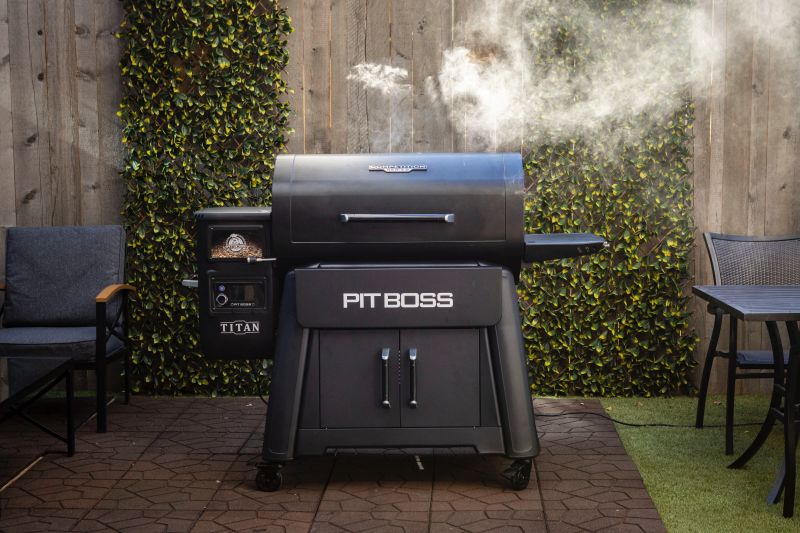
The Pit Boss Titan offered a useful case study in 2024. Heil shared news that the pellet grill had received Best Barbecue Product recognition at the SOLEX trade show and was headed for Europe in 2025. The feature list was long: a touchscreen controller, wireless monitoring, adjustable racks, a divided pellet hopper and temperature controls. The commercial question was shorter. Would dealers choose to carry it? A product crosses a border twice: first through logistics, then through local belief.
The ethics question
For more than a decade, Heil says he has asked candidates to define ethics in their own words. Some answers land. Some stumble. Some collapse. He insists it is not a “gotcha” question. He wants to know whether the person has considered how they intend to live. It is an unusual opening into a topic companies often flatten into mandatory training.
The question works because it cannot be answered entirely by policy. A candidate has to reveal a personal operating system. In international sales, that system will be tested far from the manager, across differing norms and under pressure to make a quarter. The answer does not guarantee good conduct. It does show whether reflection has happened before the stakes arrive.
“I want to see if they are living with intent, and if ethical conduct is a fundamental principle in their life.”Jaymie Heil on what he listens for in interviews
That focus on intent carries into his writing about culture. Heil says he has led teams containing as many as ten cultures and languages. He describes the work as rewarding when done well and dependent on effort. There is no exotic theory underneath it. Explain why. Build trust. Assume good intent. Make room for people to understand the goal and their place in it. Culture becomes less a vibe than a set of repeated managerial choices.
Before the promotion
His recent advice on sales management has the same practical grain. Companies routinely promote the top representative, then seem startled when individual brilliance does not convert into patient coaching. The rep knows how to sell. The manager must learn how to teach selling. The rep measures personal numbers. The manager succeeds through other people’s development. The title changes in an afternoon; the identity takes longer.
Heil suggests support before trouble: coaching ahead of the promotion, explicit player-coach expectations and a mentor who remembers the crossing. He also proposes candid questions. Which parts of selling does the candidate love? How many will remain in management? What might they enjoy or dislike in the new role? This is the ethics interview translated into career design. Ask the person to think intentionally before circumstance thinks for them.
There is a pleasing continuity to Heil’s trajectory. Communications studies led into a career where communication had consequences measured in inventory, accounts and product adoption. Fireplaces led to outdoor fire, then grills. International selling led to lessons about multicultural teams. Years spent aligning a customer, channel and factory now feed a coaching and consulting practice named for alignment.
The bicycle is memorable because it refuses to make strategy grander than it is. A company needs somewhere to go, a promise people want, a way to deliver it and a frame that holds together under motion. It also needs riders willing to look at the customer’s bicycle rather than admire their own. Heil’s career offers no magic shortcut around that coordination. It offers something more durable: a way to see the wobble early.