A restaurant usually pays to be noticed. A good corner, a bright sign, a window that catches a passing appetite: visibility is part of the bill. Jaydeep Barman found himself paying that bill for customers who had never seen his shops. They knew Faasos. They ordered its food. The expensive address was contributing surprisingly little to the relationship.
In 2014, he found that roughly seven in ten customers did not know where their Faasos outlet was. They were ordering by phone or online. For someone trying to build a restaurant chain, this was an awkward discovery. For someone willing to reconsider what a restaurant needed, it was useful. Barman moved away from high streets and into less visible kitchens. The customer could keep the roll; the company could lose some rent.
The discovery has become part of Rebel Foods' origin story. It also introduces a recurring problem in Barman's career: how to hold on to an ambition while changing the machinery beneath it. He has changed premises, brands, hiring habits and, eventually, his own job. Each change has required him to give up something he had previously worked to build.
First, a complaint about lunch
The first ambition was much smaller. Barman and Kallol Banerjee missed the rolls of Kolkata. Both were working at Brainvisa, an e-learning business in Pune, and the food they wanted was not reliably available nearby. In 2004, they began Faasos. Before there was a platform, there was the familiar expatriate conviction that dinner had been better back home.
They did not initially treat the shop as the rest of their working lives. Each went to INSEAD for a second management education. Barman subsequently joined McKinsey in London; Banerjee went to Bosch in Singapore. The shop continued while the founders pursued the sorts of careers that tend to reassure a family. A roll counter was an unusually edible item to leave behind on the way to business school.
Barman's early life offered little obvious preparation for restaurant ownership. He grew up in Kolkata, studied engineering at Jadavpur University and management at IIM Lucknow. His father taught economics; his mother taught mathematics. In his telling, entrepreneurship arrived later than the degrees. Selling Onida televisions and then software at Brainvisa preceded the business that would occupy him for years.
Brainvisa mattered because it showed him what working inside a young company felt like. Its founders included Supam Maheshwari and Anand Lunia, who would go on to FirstCry and India Quotient respectively. Barman was seeing entrepreneurs at close range while travelling to sell software. The route towards his own company ran through other people's small beginnings.
The sabbatical that kept going
By 2010, Barman was an associate partner at McKinsey. He took a sabbatical and returned to India, where he and his wife wanted to raise their daughter. Faasos was waiting. The move became a return to the food business, with the ambition to build a chain across India. The sabbatical, as a career category, proved rather elastic.
The model to admire was easy to find. Domino's had shown that a focused food offering, delivery and repeatable operations could travel. Barman wanted Indian food to have that sort of reach. The attraction of a roll was partly structural: a base, a filling, a familiar meal that could be assembled and carried. There was pleasure in the food and an engineer's interest in its format.
In February 2015, Faasos announced a $20 million financing round led by Lightbox. It then had 90 outlets in six cities and said 70 percent of orders came through the internet. Those numbers captured a business straddling two worlds. Its physical estate looked like a chain, while much of its demand was already arriving through a screen.
A historical snapshot, before the multi-brand platform took shape.
One kitchen, several appetites
Removing the storefront changed one set of costs. Putting several brands into the kitchen changed the possibilities. Faasos could remain a wraps brand while other names addressed other cravings. Behrouz Biryani arrived in 2016, Oven Story in 2017 and Lunch Box in 2018. The kitchen no longer needed to spend its entire working day pretending that everyone wanted the same lunch.
The distinction matters. A brand is a promise someone recognises when choosing dinner. A kitchen is the place that makes the promise practical. Rebel could give biryani, pizza and everyday meals their own identities while sharing parts of the infrastructure behind them. More names on the phone did not necessarily require more shopfronts on the street.
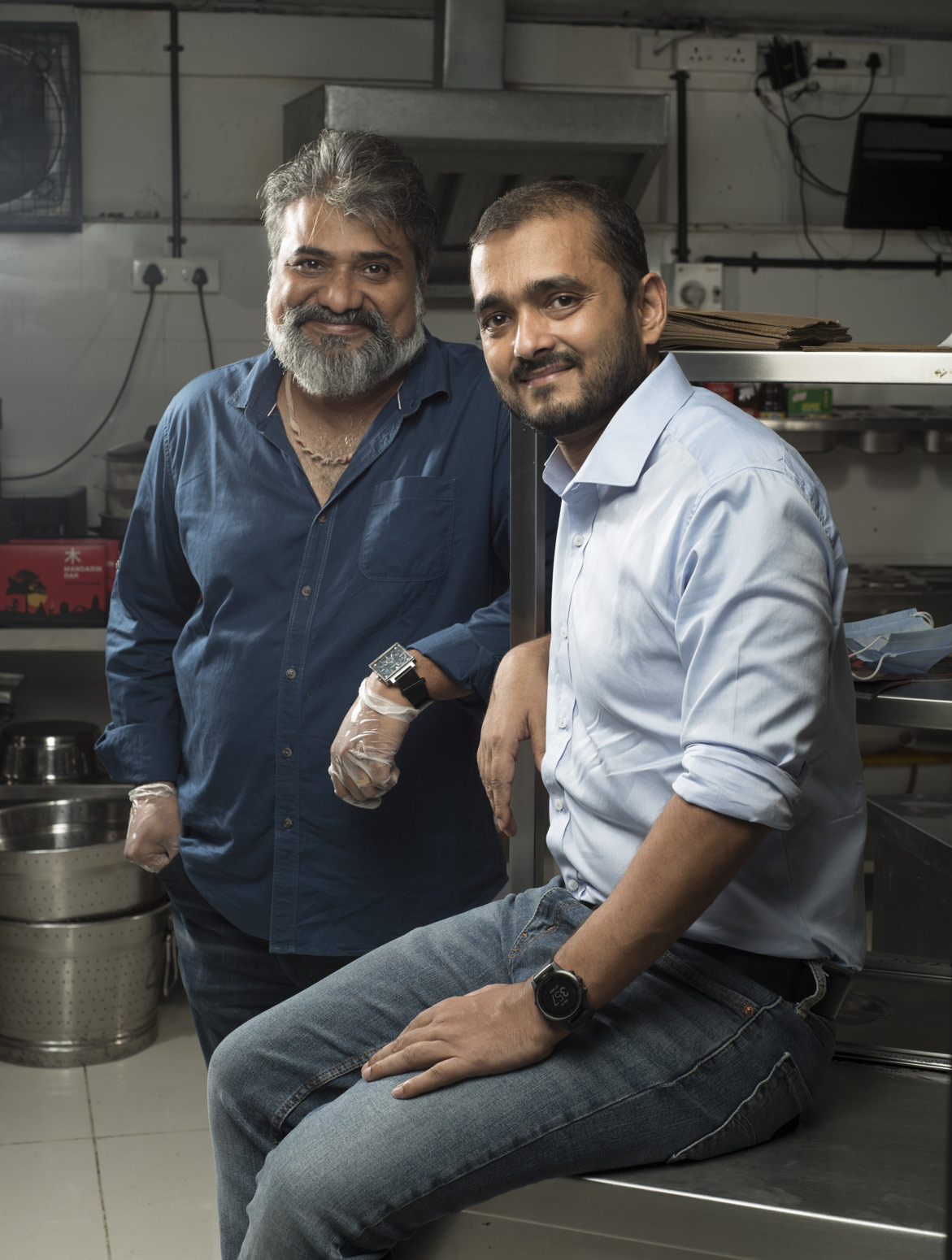
The company now describes its brands around different food occasions: lunch, snacks, dinner and gatherings. A customer choosing Behrouz for an occasion and Faasos for a wrap need not care about the common machinery. Barman's work lives in that gap between the specific thing someone wants to eat and the shared system that can prepare it.
Operations · supply chain · technology
Conceptual illustration of shared infrastructure, not a kitchen floor plan.
A hiring process with an essay question
A different restaurant model needed people prepared to work without a comfortable precedent. In 2011, Barman emailed alumni groups looking for colleagues to build Faasos. He asked them to explain themselves in writing. A conventional CV was not the ticket in. He wanted to understand why anyone would choose this particular uncertainty.
The approach suited a founder who said he and Banerjee struggled to micromanage. It also put a difficult question ahead of the usual credentials: would this person take responsibility when the job changed? The company needed people willing to solve whatever problem appeared, even if it had little resemblance to the title they had accepted.
“I did not ask for a CV”
Jaydeep Barman, recalling his early recruitment email
Barman has since described a founder mentality as a willingness to take on a large problem, recruit someone senior to oneself, or leave a large team to grow a small new undertaking. That is a demanding definition of ownership. It makes status provisional. The useful person is the one prepared to move towards the work.
By 2025, he was writing about the people who had come through that early hiring effort. Some had become Rebel leaders; others had built companies including The Whole Truth, Mosaic Wellness and FableStreet. His account makes the hiring experiment part of a wider circle of founders. The email had consequences well beyond the next vacant role.
The expansion that deserved its name
Rebel reached a $1.4 billion valuation in 2021. That figure is a company financing milestone, rather than a measure of Barman's personal fortune. The more revealing reading comes from his later writing about decisions that went badly. In January 2026, he published an account of major mistakes, including an expansion programme called Wildfire.
Wildfire put Rebel brands into other restaurants' kitchens. The appeal was expansion with less capital tied up in premises. Barman said product ratings fell and the company retreated. He also described periods when newly raised money encouraged hiring and expansion before the strategy had earned them. The diagnosis is uncomfortable precisely because it comes from someone who had championed experimentation.
There is a difference between testing an idea and committing a company to it. His later argument puts more weight on the evidence required before increasing the commitment. The lesson leaves room for ambition. It asks ambition to wait for the results of its own experiment. Even a business named Rebel needs a way to say, politely or otherwise, enough.
Making room at the top
In July 2025, Barman chose Ankush Grover to become Rebel Foods' CEO. He moved to chairman and group CEO, with responsibility for the wider portfolio and long-term direction. Core functions including technology, finance, marketing and human resources would report to Grover. The change gave organisational substance to Barman's arguments about trusting people to own the work.
It also changed the scale of his question. Running the company each day and deciding what the group should become require different uses of attention. A founder can hire for ownership for years, then discover that the next test is his own willingness to hand over responsibility. Barman's handover makes that tension visible without pretending that a title change finishes the work.
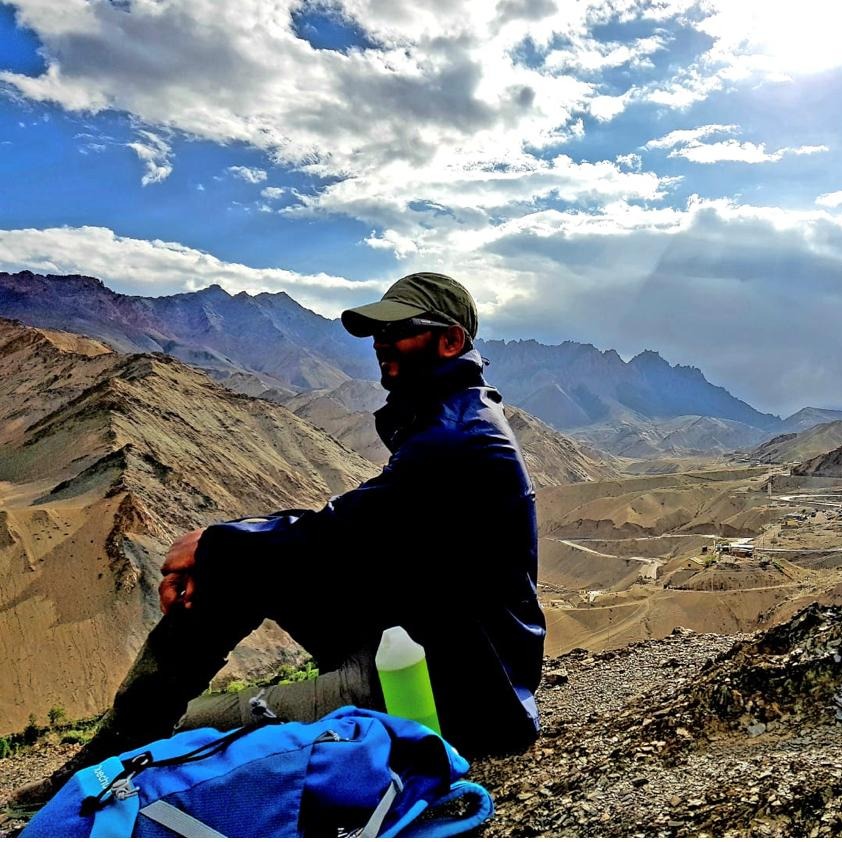
He has another vocabulary for uncertain terrain. Mountaineering became an interest during his Jadavpur years, and the friendships formed around those trips endured. In 2020, he spoke of a group of ten who still gathered for climbing expeditions. Business fills much of his public story; the mountains supply a continuing thread from the years before Faasos.
Now he is looking for the next newcomer
In March 2026, Barman announced Rebel Ventures, a small fund intended to partner with early founders working on new ideas around food. He singled out Clayton Christensen's The Innovator's Dilemma as a favourite business book. The concern is recognisable: an established company can become so absorbed in what works that it misses what might replace it.
He asked prospective founders for a short written explanation of themselves, their idea and their progress. The preference for prose survives. So does the desire to find people whose work does not yet fit a familiar category. After years spent making a roll shop into something harder to describe, Barman is looking for the next awkward proposition.
The request brings his story back to a small beginning. A taste of home once gave him a reason to try a shop. Customers who ignored the address gave him a reason to change it. Now, with someone else running Rebel's daily business, he has made room to hear what an unfamiliar founder might want to try next.