A restaurant can spend a great deal of money being seen by people who never look at it. Ankush Grover helped build a business around that peculiar possibility. At Faasos, the wrap chain he joined in 2012, a customer survey exposed an awkward expense: most customers had never seen the outlets. The food had found them. The expensive shopfront had apparently stayed at home.
Grover recalled the proportion as 75% in a 2024 interview. The precise lesson was more useful than any restaurant rulebook. If people were ordering delivery without visiting, what exactly was the company buying with its high street rent? For an operator, this is a pleasingly uncomfortable question. It makes the familiar arrangement of a business look suddenly optional.
In July 2025, Grover became global CEO of Rebel Foods, the company that grew out of Faasos. Thirteen years separated his arrival from that appointment. In between came North India expansion, automation work, a growing family of food brands and the practical education of getting dinner out of many kitchens. His career makes more sense when followed through those decisions than through the title at the end.
of customers had never seen the outlets, Grover recalled in 2024.
The respectable route, with an exit
Grover completed his MBA at IIT Bombay in 2010. His public education record puts him there from 2008 to 2010, and includes a runner-up finish in the 2009 NUS Cerebrations Global Business Challenge. He was already practising the respectable arts of business: studying a problem, working with a team and making a case for a solution.
Consulting followed. Then Jaydeep Barman was looking for a resident entrepreneur in 2012. Grover later identified that opening as the turning point in his career. Faasos offered him a company still being made, with room to take responsibility before the job could become entirely predictable. He joined the business that year and became part of its co-founder group.
His later advice about this choice was refreshingly unsentimental. “A definite path will always have definite return,” he said. An engineering degree and an MBA might make a route legible; they could hardly guarantee an interesting destination. His own next step required leaving some of that legibility behind. There was no claim that the timing was perfect.
Inside the company, his responsibilities spread across functions. He helped expand North India operations and drove automation efforts as chief business officer. Those are useful details because they put substance under the eventual promotion. A new market asks whether the business travels. Automation asks which parts can be repeated. Both force a manager to learn where an attractive plan becomes difficult work.
“A definite path will always have definite return.”
Ankush Grover, 2024
A kitchen with more than one ambition
The move into cloud kitchens changed the use of physical space. A delivery kitchen could serve customers without paying for the same prominence as a storefront. It also raised another possibility: several food brands could use a shared operating base. Wraps no longer had to be the limit of what that infrastructure could produce.
Faasos remained part of the story, alongside brands including Behrouz Biryani, Oven Story Pizza, Sweet Truth and The Good Bowl. The arrangement gave the company different ways to meet different appetites. For the customer, the distinction was a choice of meals. Behind that choice sat the less photogenic work of kitchens, equipment, staff and order management.
At TechManch in 2023, Grover traced the first cloud kitchen to Gurgaon in 2015. He described a technology effort developed over a decade. He also discussed a physical digital food court on Pune’s Law College Road, where customers could walk in and order. Delivery had changed the economics; it had not made every in-person occasion disappear.
That willingness to use different formats is a revealing part of his operating story. Closing off a format forever would make a tidier slogan. A customer’s habits are less tidy. Someone can want a meal delivered on Tuesday and a place to order with friends on Saturday. The useful discipline is to understand what each location contributes, rather than treating the location itself as the achievement.
The burger arrives with its own name
Wendy’s gave Grover a different kind of building task. Rebel was accustomed to developing its own brands; here was an established international name with its own identity. Rebel became Wendy’s master franchisee in India in 2023. The proposition involved taking that name into more places through the infrastructure and operating experience the company had assembled.
By March 2025, Wendy’s had reached 200 stores in India, with the latest opening in Gurugram. Rebel’s stated plan at that point was to reach 500 locations by 2028. That was a target, with several years of work attached. Store openings make a crisp announcement. Maintaining the experience across them is a less convenient unit of publicity.
Grover’s thinking extended beyond major cities. In an April 2025 interview, he described a mix of cloud kitchens, small stores and locations in malls and along highways for reaching smaller markets. He also emphasised local flavours. An international brand carries recognition across a border; a menu still has to earn an order where it lands.
The attraction of this work is easy to understand. An operator can apply an existing system to a new brand, then discover which assumptions survive the encounter. Grover was also discussing bringing other global brands to India. His stated ambition was to help brands expand at a pace Rebel’s network could support. Each partnership would test the network as well as the name on the packaging.
Why biryani on Friday?
For someone whose career includes automation, Grover has an unexpectedly human test for a marketing conversation. He has described sitting through a succession of candidates fluent in acquisition costs, returns on advertising and customer cohorts. The technical competence was there. The conversations had begun to sound alike.
Then one candidate asked about the people doing the ordering. Why did biryani orders rise on Fridays? Why did customers return after an initial purchase, or fail to return? Why did families choose a brand for birthdays and game nights? Grover remembered the interview because it went looking for the behaviour behind the numbers.
His description of the people he wanted to hire allowed room for culture, cricket, memes and the restaurant that was suddenly always full. Those interests can sound like distractions until they explain a purchase. A dashboard can count a celebration order perfectly well. Understanding why someone trusted you with the celebration requires a different kind of attention.
There is a related lesson in his account of festival menus. He has described weak seasonal sales prompting the company to introduce fasting menus and offerings such as modak during Ganpati. The early attempt attracted poor ratings. The team went back and improved it. This is a rather more convincing picture of experimentation than the version in which every new idea arrives fully cooked.
It also gives his customer focus a practical shape. The calendar changes what people want to eat. A kitchen has to notice, produce the appropriate meal and learn when the response is disappointing. Curiosity starts the process. Repetition, feedback and someone willing to revisit an unsuccessful launch have to finish it.
The promotion came from across the table
Barman’s explanation of the July 2025 handover was unusually direct. He praised Grover’s judgement about food, capital efficiency and customer value, along with his ability to organise people around priorities. “He’s an execution machine,” Barman said. It was a colleague’s assessment after thirteen years of shared work, rather than an introduction composed for a new arrival.
Barman moved into the chairman and group CEO role. Grover’s expanded remit brought core functions including technology, finance, marketing and human resources under him. He had previously led India and MENA operations. The promotion widened the field of responsibility while keeping the relationship with the person who had recruited him.
There is some humour in the resulting arrangement. Barman described being available as a sounding board while resisting the temptation to interrupt with a fresh idea every morning. Anyone who has worked with an enthusiastic founder can appreciate the ambition of that promise. Giving an operator authority includes giving him enough quiet to use it.
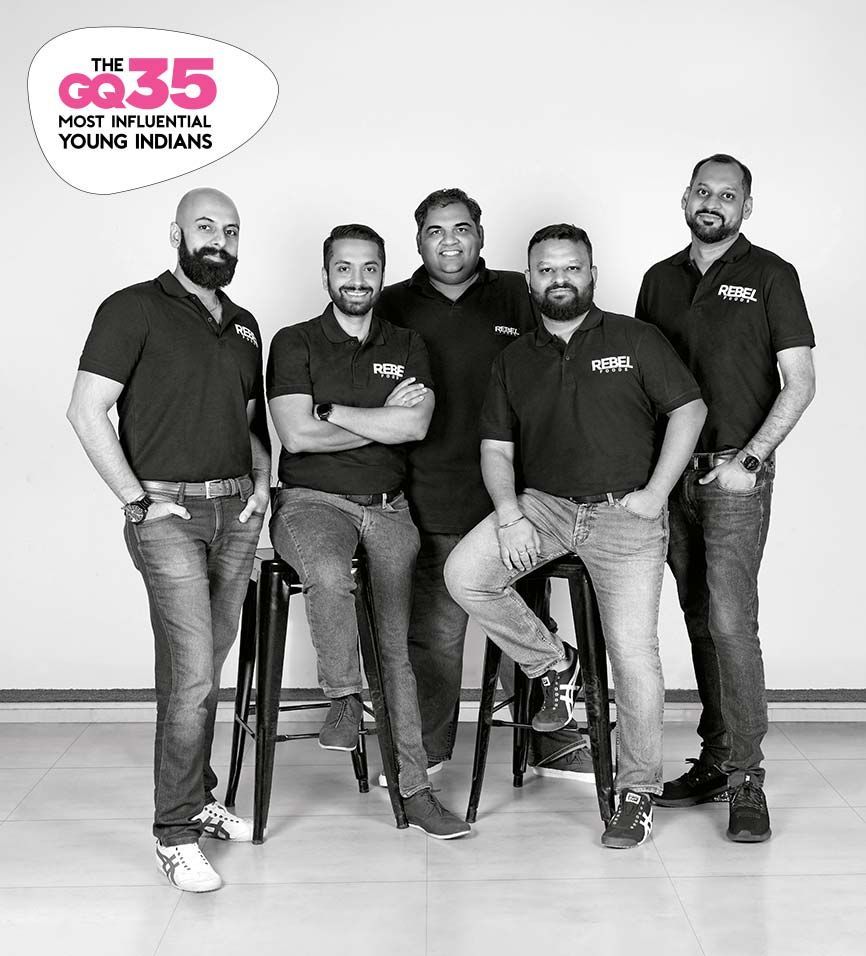
Recognition had already arrived through Fortune India’s 2024 40 Under 40 list and the 2023 GQ selection shared with fellow co-founders. His response to his later Economic Times recognition put the emphasis on colleagues, family, learning and doubts alongside progress. The picture he offered was cumulative: people working through problems over years, with small wins counting too.
By March 2026, he was discussing Rebel’s next phase as global CEO. The larger ambition remained building and scaling food brands. The earlier question about rent still offers a useful way to read that ambition. Grover’s work has involved looking closely at what customers actually do, then changing the machinery around them. Dinner is an everyday event. Building a company around its changing habits is work that keeps finding another question.