Jason Spievak has a test for a prospective investment that requires neither a spreadsheet nor a demonstration. Imagine sitting beside the founder on an airplane for six hours. Would you want the seat? It is an awkwardly useful question. A promising business can occupy a pitch deck for ten minutes. The person running it may occupy your working life for years.
Spievak’s career gives that question some weight. He has been the executive preparing an initial public offering, the founder explaining a new market, the person inviting a successor to take his chair, and the investor hearing somebody else’s explanation. At Invoca, he helped make a phone call legible to an advertising business trained to count clicks. Later, he helped make early capital easier to approach in Santa Barbara.
A telephone interrupts the internet
Long before Invoca had its name, Spievak worked in product management at Nextel and Netopia. The work put him close to communications technology while the internet was changing how people connected. Netopia completed its IPO in 1996. His next education included an MBA at Northwestern’s Kellogg School and technology mergers and acquisitions at Broadview in Silicon Valley.
There is a useful variety in that apprenticeship. A product manager asks what somebody will use. A banker asks what somebody will buy. A finance executive must explain what all that activity adds up to. Spievak moved through those jobs before starting the business most closely associated with his name. He had encountered the telephone as a product, an industry, and a source of revenue.
At CallWave, where he served as chief financial officer, those questions became concrete. The company offered internet call-waiting software to people whose dial-up connections occupied their phone lines. Its service attracted a large free audience. The commercial problem was to work out what that audience would pay for, and how to turn usage into an enduring business.
Spievak helped lead CallWave’s 2004 IPO. During his time on the senior team, the company delivered twelve consecutive quarters combining revenue growth, profitability, and positive cash flow, and reached more than 750,000 paid subscribers. Those are refreshingly unromantic accomplishments. A subscriber who pays again next month offers a more demanding review than an enthusiastic acquaintance.
CallWave also exposed an advertising problem. The team bought traffic through affiliate networks while its own software displayed advertisements. It understood both the advertiser paying for a customer and the publisher expecting credit for delivering one. When a customer moved from a website to a telephone conversation, the accounting became harder. The sale could happen somewhere the click-tracking machinery could not readily follow.
In 2008, Spievak, Colin Kelley, and Robert Duva started RingRevenue in Santa Barbara. Their shared CallWave experience supplied a practical starting point. Advertisers needed to identify which marketing activity produced a call; publishers needed a reliable way to be paid for it. A phone number could become the connection between an advertisement and the conversation it generated.
The appeal was particularly clear for purchases that invite questions. Someone may research online, then want to speak to a person before committing. RingRevenue allowed a marketing business to follow that change of medium. The customer had merely picked up a phone. For the people dividing the advertising bill, that small movement created a sizeable administrative mystery.
Two words on a whiteboard
The original name explained the mechanism quite neatly to people already familiar with it. Other people were less obliging. Focus groups did not consistently understand what RingRevenue did. During a brainstorming meeting in the autumn of 2013, Spievak wrote “inbound” and “voca,” for voice, on a dry-erase board. Combined, they produced Invoca.
“We wanted something that said voice, and we wanted something that said inbound.” The explanation is almost aggressively practical. A name has to survive a conversation with somebody who has other things to do. By spring 2014, the company was operating under its new identity, hiring, and introducing additional call-intelligence technology. The whiteboard had earned its keep.
The business was changing size as well as vocabulary. A January 2014 financing brought in $20 million, taking total funding to $30.8 million. At that point, Invoca had roughly 75 employees and planned a Bay Area office alongside its Santa Barbara operation. Its reported revenue had reached $5.2 million in 2012, following three-year growth of 654.5 percent.
These figures describe a particular stage, when the company had evidence of demand and more work than its existing organization could comfortably absorb. Hiring meant translating the founders’ understanding into something new employees could sell, explain, and support. In an expanding company, a useful idea must survive being repeated by people who were absent when it was first written down.
The founder makes room
In June 2015, Invoca announced that Mark Woodward would become chief executive. Spievak had initiated the appointment. Woodward had already led publicly traded software businesses; Spievak would remain full-time as executive vice president and chairman, with responsibility for strategy, corporate development, and business development. The change gave the company another kind of operating experience.
That choice deserves a place beside the financing rounds. The founding CEO was helping to select the person who would succeed him. It is a decision with a public consequence and a private adjustment built into it. Spievak’s stated ambition was to add experience appropriate to the company’s next scale. The title could move while his work continued.
Invoca subsequently continued under other leadership. Gregg Johnson, who joined as CEO in 2016, now leads the business. The company’s present description centers on AI-powered revenue execution, and its leadership biography credits Johnson with scaling it beyond $100 million in annual recurring revenue. The distance from RingRevenue is considerable, although the original concern remains recognizable: understanding what happens when a prospective customer calls.
From phone calls to fruit
Spievak’s next operating chapter involved a different sort of shelf life. He became chief commercial officer at Apeel Sciences, the Santa Barbara company founded by James Rogers. Apeel had won UCSB’s 2012 New Venture Competition. Spievak became an early investor and board member, then worked on bringing its produce-preservation technology into commercial use.
In 2017, he was explaining a plant-derived coating intended to slow the deterioration of fruit and vegetables. The setting had changed from digital advertising to growers and produce distributors. The underlying commercial task was familiar: take something technically possible and establish how it would function for customers. An interesting laboratory result still needed a route into somebody’s working day.
His connection to UCSB ran through the classroom too. He taught in its Technology Management program, including the market-tested startup course feeding the New Venture Competition. Students were expected to test their assumptions with people outside the classroom. The process made a business idea answerable to potential users before it became too expensive to change.
The competition also let him see those ideas return in a different form. He later served among the judges at its 23rd annual finals. Teacher, investor, operator, judge: the roles overlapped around the same university. For a student founder, that proximity meant the person asking a difficult question might also understand the trouble involved in finding the answer.
Capital, with somebody to talk to
In 2018, Spievak co-founded Entrada Ventures with fellow technology operators and investors. Its early proposition addressed a gap that money alone did not fill. Santa Barbara had people able to invest. Young companies also needed practical help with fundraising, operations, finance, and marketing. Experience can be abundant in a town and still prove difficult for a newcomer to reach.
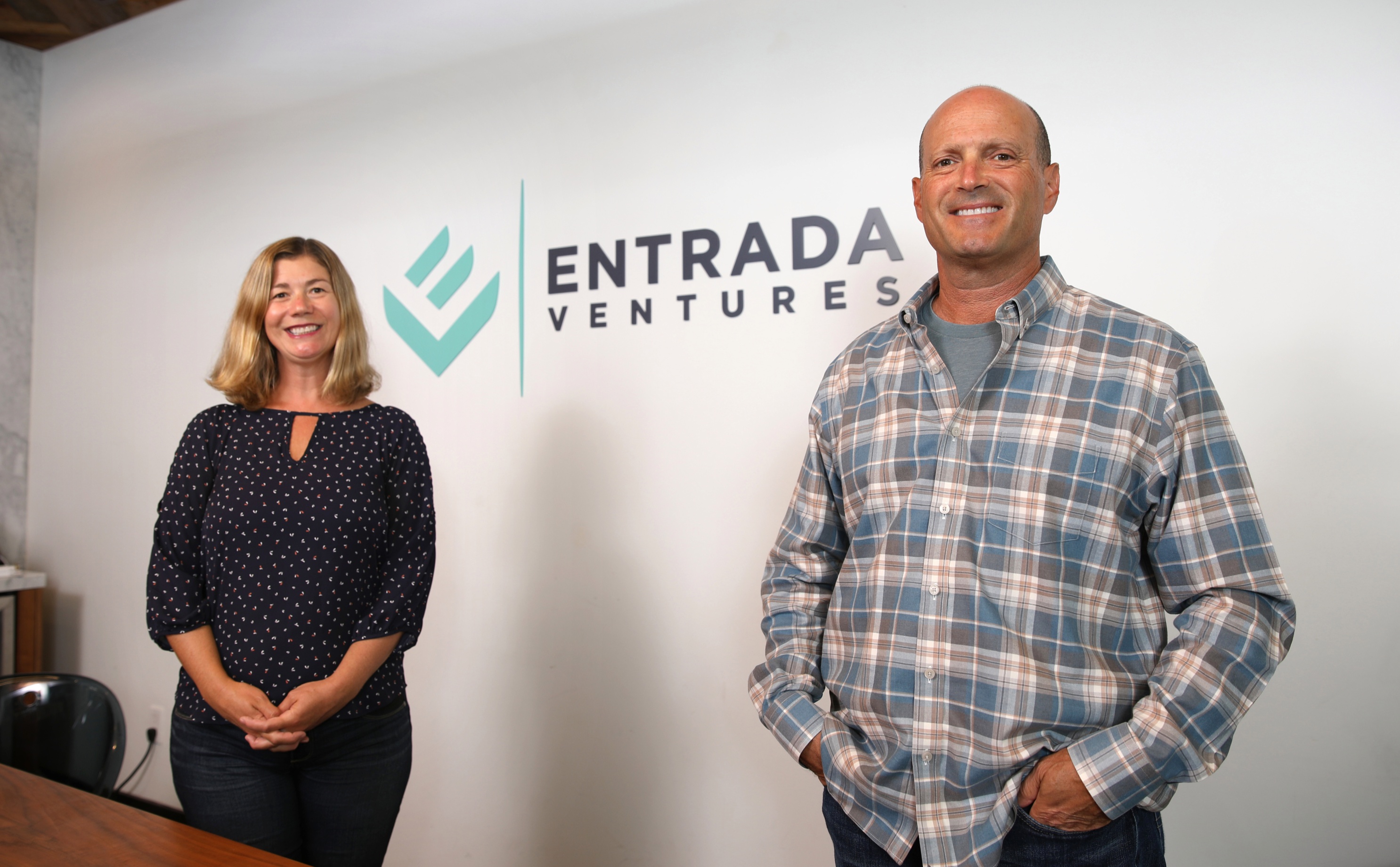
By 2020, Entrada’s approach included office hours at UCSB, Cal Poly, and Kiva Cowork. Spievak credited Julie Henley McNamara with inspiring that outreach. Founders could arrive for an introduction without having assembled a formal pitch. Removing some ceremony from the first conversation gave inexperienced entrepreneurs a chance to ask what they needed to know.
The warmth came with selection criteria. Spievak’s investor checklist began with integrity, followed by suitability for the job, belief in one’s ability to succeed, a personal reason to persist, and chemistry. His question about the six-hour flight belongs to that last category. Investment creates repeated conversations, including difficult ones. Getting along has practical value when the work extends well beyond the presentation.
“Would you want to sit next to this person on an airplane for six hours?”
Jason Spievak / on investor-founder chemistry, 2020
At Santa Barbara’s 2024 Ventech PitchFest, he was still examining teams at close range. Serving as a judge alongside Dave Adornetto and Max Menke, he discussed the need to back founders capable of executing and persisting, including when a business had yet to acquire customers. The emphasis gave his checklist a setting: actual people presenting incomplete companies, with decisions to be made.
The city mattered to him as more than an attractive location for those meetings. Reflecting on his 1990 graduation from UCSB, he recalled a much narrower local technology scene. By 2024, he could point to decades of effort spent building an early-stage business community. His own career had carried him repeatedly between that community’s companies, classrooms, and investment tables.
In July 2025, he was advertised as a featured guest at a Santa Barbara AI discussion with entrepreneur Scott Hamilton. The subject had moved on again. Phones, marketing, produce, and artificial intelligence make an untidy set of interests until one considers the work between an invention and a customer. Spievak has spent much of his career in that interval, asking who will use something and who will help build it.
There is a pleasing economy to the airplane test after all those transactions. It asks a question that an elaborate financial model cannot settle. You can admire a market, understand a product, and still need to decide whether you want the next conversation. For Spievak, the prospective seatmate is part of the business.
CONTINUE THE CONVERSATION