Jason Malki went looking for an entrepreneurship club and discovered an inconvenient detail: his university didn’t have one. He had transferred from Rutgers to Montclair State and wanted to meet people interested in starting businesses. “So I reached out to a bunch of local universities,” he recalled. The search took him beyond his own campus and into the orbit of New York’s startup organizers. Before there was a company bearing his ambitions, there were other people’s events to help run.
That beginning gives his career a particular shape. Today Malki is the founder and CEO of StrtupBoost, the New York startup community and digital agency launched in 2014. Its website reports more than 30,000 members. Yet his route into that business started with a much smaller problem: finding some entrepreneurial company. The missing club supplied a reason to introduce himself.
A club becomes a calendar
Through that university outreach, Malki met Haithem ELembaby, who was running NYC Startup Mixers. Malki joined to gain experience and build a network. After the series merged with a coworking space, his responsibilities grew to coordinating and promoting as many as three events a week, from meetups to hackathons. A large email list and an established network followed. Those became part of the foundation for his own venture.
By 2016, the business was operating under the AlleyBoost name. It later became StrtupBoost. A name can change in an afternoon; a calendar makes recurring demands. Malki’s early work gave him repeated practice in the business of gathering people around a subject they considered worth leaving their desks to discuss.
An invitation is a working document
An AlleyBoost web-development evening in May 2016 offers a small, useful picture of Malki at work. He was the moderator. The venue was The Farm Soho. The agenda gave three startups a chance to pitch, followed by a panel, audience questions and business-development networking. The subjects included choosing an outsourcing partner, hiring a chief technology officer and managing a development team.
That is a very particular kind of party. The refreshments share billing with project-management deliverables. For someone trying to build a company, however, the attraction is easy to understand: the people answering questions may have already dealt with a problem currently occupying your entire Tuesday.
The panel included founders working in software development, design and hospitality. Malki’s job placed him between those people and an audience seeking practical answers. The schedule gave conversation a structure without pretending everyone had arrived with the same question. His later work would keep returning to that task of deciding who should meet, and what they might usefully discuss.
The sports fan builds his own stand
Malki also wanted to build something for people whose specialist subject happened to involve a scoreboard. SportsWonks, discussed publicly in 2017, was a social network aimed at dedicated sports fans. Members could post, share links and photographs, and watch highlights curated from YouTube. The intended company was other fans who enjoyed the details: lineups, player histories and statistics.
He described a frustration with general social networks, where sports discussion competed with everything else in the feed. SportsWonks would gather people around a shared appetite. The same interest in a relevant audience appears here in a different outfit, possibly a team jersey.
At the time, the project was self-funded. Malki said the priority was building an active user base before accepting outside investment. Advertising and relevant ticket or merchandise offers were possibilities, rather than a reason to skip the work of attracting users. It was an early view of him on the founder’s side of the pitch: making a product, looking for an audience and deciding when outside money should enter the picture.
Keep the salary. Find the customer.
Malki’s advice to aspiring founders has included a distinctly practical instruction: “Keep your day job.” It is an appealingly sober sentence from someone in the startup business. The proposed arrangement was to use an income to help support the venture, then devote additional time to building until the company could sustain a different commitment. Rent, regrettably, is rarely persuaded by a promising deck.
A later argument of his concerns the gap between knowing a market and having a finished product. If a founder understands a problem well enough to develop software for it, Malki suggests there may already be a service customers would pay to receive. Delivering that service can generate revenue while the product takes shape.
The appeal of this approach is that early customers bring more than receipts. Manual delivery exposes the awkward details a product will eventually have to handle. Malki’s argument puts earning and learning on the same schedule. For a founder contemplating months of development, it raises a concrete question: what useful outcome could a customer buy today?
“Keep your day job.”
Jason Malki, on starting a business
The work before the handshake
StrtupBoost eventually developed an agency alongside its events. Its current menu includes digital marketing, design, sales enablement and fundraising support. Malki also founded BizDecks, described in his Disrupt appearance as a business offering deck design and investor relations. The presentation and the introduction became services in their own right.
The fundraising process is set out in three steps: identify investors suited to the round, review the email and supporting materials, then arrange meetings with investors who have opted in. The sequence leaves preparation ahead of access. Before a founder gets a place on someone else’s calendar, there is a case to make and an audience to choose.
BEFORE THE INTRODUCTION
- Find the fitInvestor + current round
- Prepare the caseEmail + supporting material
- Arrange the meetingOpted-in investor
The sales service works through a similar set of ordinary, consequential tasks. Define the ideal customer. Improve the message. Follow up. Keep the customer records in order. Qualify interest before booking a meeting. This is the part of entrepreneurship that produces fewer photographs than a stage appearance, though it does rather more to populate the following week’s diary.
It also helps explain the breadth of Malki’s company. An event can introduce a founder to a potential customer or investor. Agency work addresses the material and follow-through around that conversation. The services take on distinct jobs, but the shared concern is making an introduction specific enough that another person has a reason to respond.
A matching problem, now with software
With SuperWarm AI, which identifies Malki as a co-founder and CEO, that concern became a software proposition. The platform describes matching startups and investors using their sector, stage and traction. For investors, the stated aim is relevant deal flow aligned with an investment thesis. For founders, it is a more directed search for potential backers.
The distinction between access and agreement remains useful. Matching can help identify a plausible conversation; the participants still have to decide what to do with it. A sector label supplies a beginning. A company’s circumstances, progress and needs provide the substance.
In 2023, Malki was invited to speak in the Nasdaq Entrepreneurial Center’s event series about fundraising, sales and go-to-market strategy. The session title, Gain Traction While Mitigating Risk, fitted the practical questions running through his work. In 2024, his conversation with Jarie Bolander returned to recurring revenue, organizing sustainable events and learning to delegate. The organizer was also dealing with the work of running his own business.
The questions he keeps asking
Malki has another regular seat in entrepreneurial conversations: interviewer. His published work includes discussions with founders and investors. Forefront Venture Partners lists his interview with Phil Nadel in its newsroom. In September 2025, he interviewed AutoDS co-founder Lior Pozin about building products, growth and delegation.
These conversations extend the range of people encountered through an event calendar. A published interview lets a founder explain a business to readers who were never in the room. It also preserves questions about beginnings, difficulties and plans that might otherwise vanish into the noise after a panel.
In his own commentary, Malki has singled out the point when an investor asks a question outside a founder’s prepared answers. He describes attention shifting to the response: whether the founder becomes defensive, evades the issue or thinks it through candidly. Anyone can rehearse the opening. The meeting becomes more revealing when the slides stop being quite so helpful.
A smaller table, a longer answer
His recent programming gives those exchanges more deliberate space. A roundtable announcement dispensed with pitches and formal presentations, proposing discussion of risk, diligence mistakes and fundraising momentum. “Spots are limited because we keep groups small,” he wrote. The format gave participants permission to bring a difficult question without first turning it into a performance.
September 2026 Capital Room announcements described structured ten-minute founder-investor conversations, including separate tracks for B2B AI and sports, media and entertainment, followed by open networking. The choice of track narrowed the subject before the conversation began. The ten-minute structure gave each meeting a defined place in the evening.
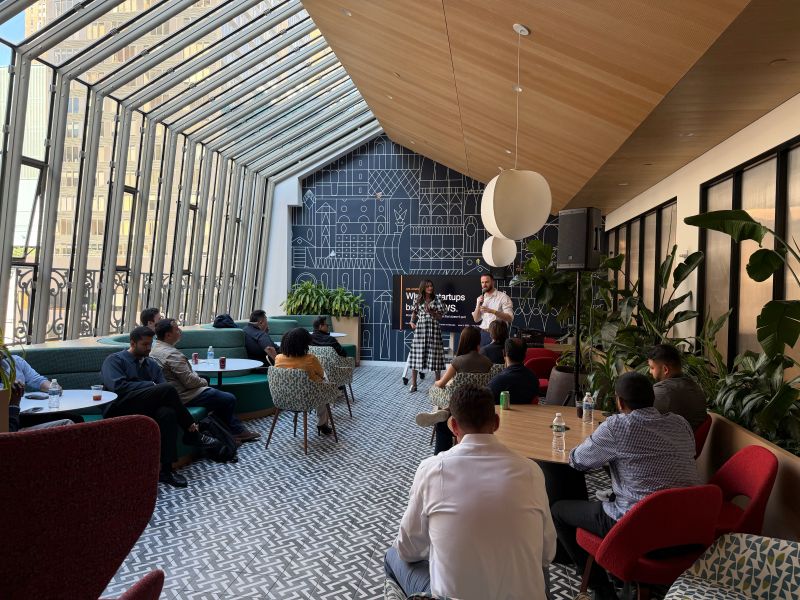
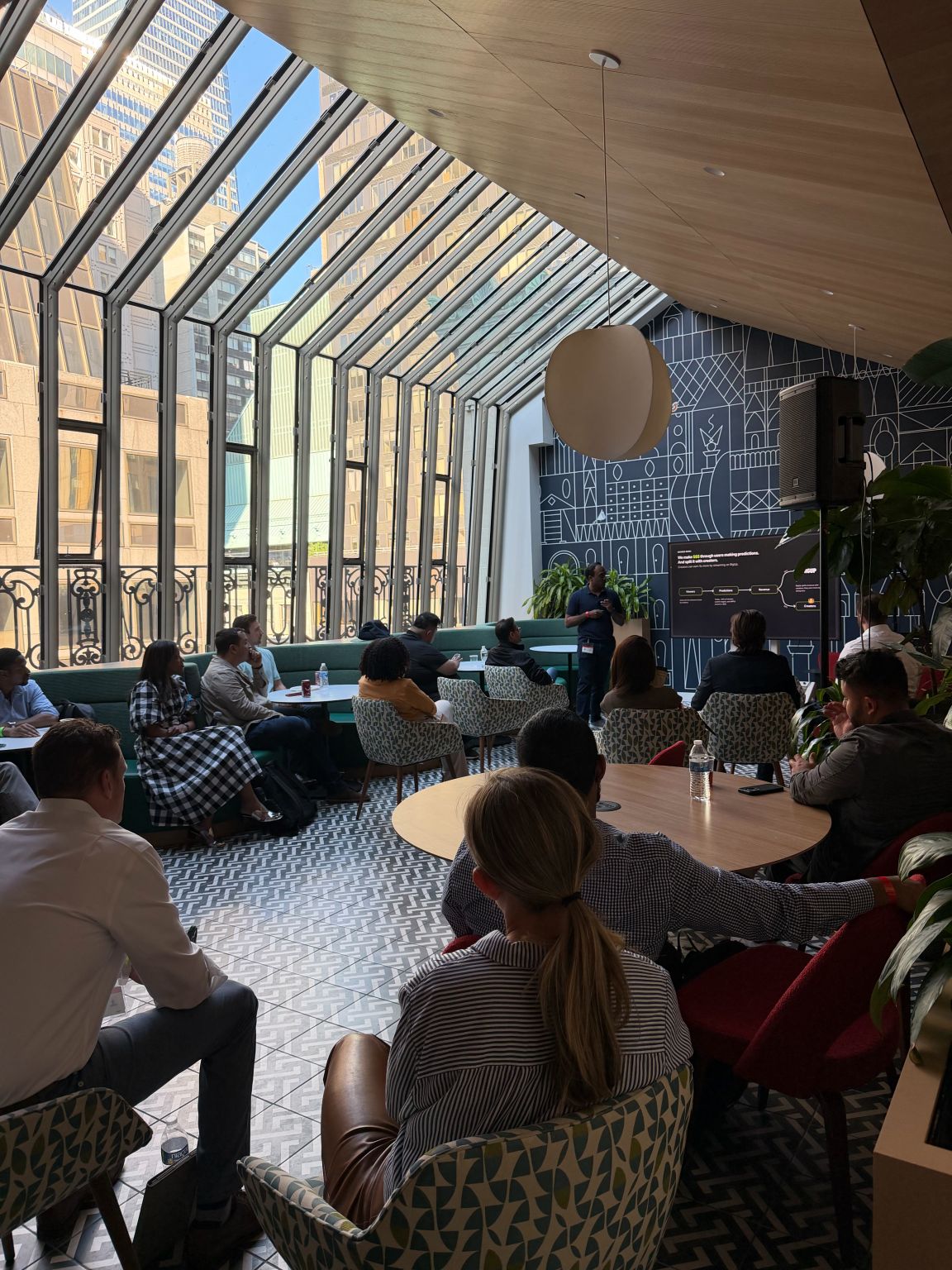
Malki’s work with AWS adds another setting: founders and investors gathering to discuss the practical uses of AI. The photographs he shared show chairs, tables, a screen and people listening. After years of event organizing and a move into matching software, his work still includes the familiar business of getting people into a room.
The missing college club remains a useful place to leave the story. Malki wanted access to people who shared an interest, so he contacted people beyond campus and helped organize their gatherings. He now runs businesses that offer versions of that access to other founders. The scale has changed. Someone still has to send the invitation, prepare the conversation and leave enough time to hear the answer.