The consequential object in James Monsees's career was small enough to disappear in a closed hand. The idea behind it was rather larger. It began in Stanford's Design Loft, where graduate students lived in that figurative, collegiate sense that usually means too much coffee and no reliable understanding of weekends. Monsees arrived with a bachelor's degree in physics and studio art from Kenyon College. Adam Bowen, another physics graduate, brought an appetite for electronics and high technology. They found common ground in design, and then in a conversation about smoking.
It was an oddly complete pairing. Physics explained the heat, materials and airflow. Art explained why anyone might want to hold the result. The two students began to imagine an alternative whose engineering would not announce itself like a hobbyist's apparatus. Their graduate thesis, presented in spring 2005, was called Ploom. There were early prototypes, patent research and interviews, but the object was still mostly a proposition: could an old category be reconsidered through the manners of modern consumer technology?
Many student projects end with a critique, a grade and an awkwardly shaped model left in a cupboard. This one escaped.
An orchard, a hundred refusals, and one useful corner
After graduation, Monsees became a founding fellow at Stanford's new d.school while continuing to work on Ploom. Bowen lived with friends in a house on an old apple orchard near Palo Alto. The pair took over a room. There, between research and business planning, they kept making the thing less hypothetical. It is a pleasingly Silicon Valley scene, except that the valley had not yet decided it wanted them.
Tobacco-adjacent hardware was not a standard venture pitch. Monsees later recalled that he and Bowen met with roughly 100 investors and angels before they understood the mechanics of fundraising. Friends offered them a desk in a San Francisco office in exchange for two hours of brainstorming every week. Their first headquarters was therefore both modest and faintly bartered: one corner, paid in ideas.
In 2007 they raised seed capital and incorporated Ploom. Monsees first served as chief operating officer, then as chief executive from 2011 to 2015. The working method remained physical. Foam core and cardboard were fair game in early brainstorming. For high-temperature parts, the team used stereolithography and experimented with ceramic-based resins. The founders were not merely styling a shell around somebody else's mechanism. They were moving repeatedly between bench, hand and market.
“Anyone who wants to work in hardware needs to be ready for a rough ride.”James Monsees, 2012
The warning was practical. Hardware demanded capital, manufacturing plans and unlovely quantities of patience. It also suited Monsees. He argued that physical products possessed an intrinsic value that software rarely matched for him. One can dispute the philosophy, but not its consistency. His career has been an extended attempt to make difficult mechanisms feel obvious in the hand.
II. The pocket testWhen a mechanism learned some manners
PAX arrived in 2012 as a portable loose-leaf vaporizer. The important design move was not ornament. It was the removal of the visual language that made earlier products look technical, specialist or faintly homemade. Monsees described competing devices as gizmos that made people feel triumphant merely for figuring them out. His alternative reduced controls, quieted indicators and treated the human interface as the product rather than a polite afterthought.
The team also hid jokes in the machine. PAX's light system included playful interactions and Easter eggs, tiny rewards with no functional burden. Monsees said the device should be the most fun thing in a person's pocket. This sounds frivolous until one remembers how much consumer technology is bought because it appears to understand its owner. Function earns a place in the pocket. Charm keeps it there.
The object keeps changing its context
The company took the name Pax Labs. Juul launched in 2015, drawing on years of development but presenting itself with an even barer visual vocabulary. In 2017 Juul Labs became a separate company, and Monsees served as chief product officer. The chronology can sound like a sequence of renamings. In practice it was a widening radius: thesis, startup, product family, independent company, mass phenomenon.
Along the way, Monsees's job widened too. At a young hardware firm, the chief designer does not enjoy the luxury of being only a designer. He moved through operations, fundraising, manufacturing, brand architecture and management. A former colleague described him as present in board meetings, new-employee welcomes, package approvals and even office layouts while still directing future products. The portrait is less of a solitary sketchbook genius than of an editor with a very large red pencil. Every surface told the same story or it went back for revision. That appetite for coherence helped PAX stand apart in a messy category. It also concentrated responsibility. When product, package, message and environment all bear the same hand, success is difficult to call accidental and criticism is difficult to hand off to somebody in another department.
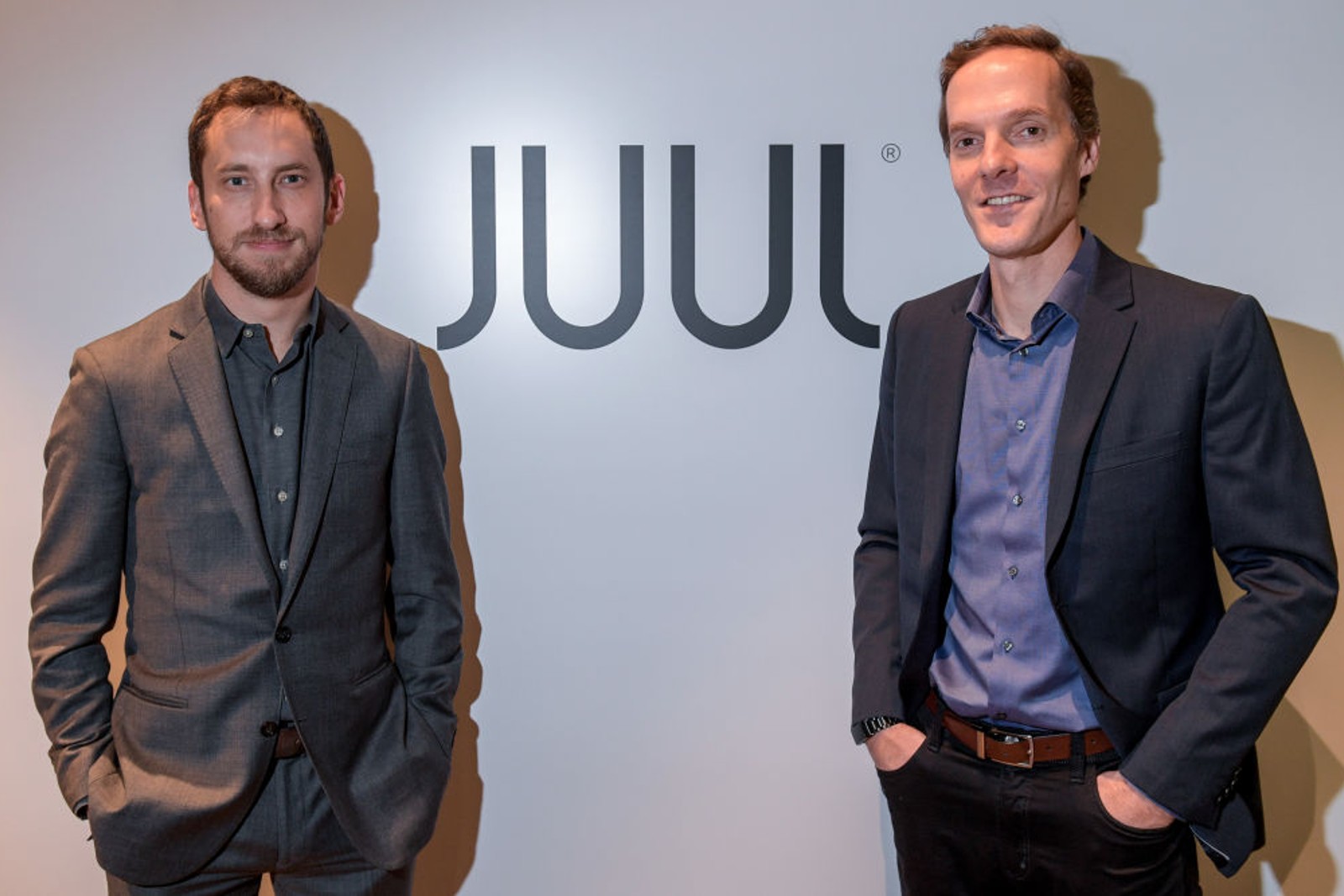
Scale is design's least obedient material
Juul's rise compressed years of patient hardware work into the hectic grammar of a consumer craze. By 2018 it held more than 70 percent of the American nicotine-vape market. That December, Altria paid $12.8 billion for a 35 percent stake, implying a $38 billion company valuation. Forbes estimated Monsees's fortune at $1.1 billion the following March. For a founder whose first institutional footprint was a borrowed desk, the arithmetic was indecently tidy.
Culture was not tidy. Juul drew intense criticism over its early marketing, flavored products and popularity among underage users. The company insisted its intended customer was the adult smoker. Critics looked at the imagery, the adoption and the sales curve and asked whether intention was enough. A product celebrated for removing friction had discovered the ethical inconvenience of frictionless adoption: people outside the brief could find it just as easy to use.
Monsees became the public explainer for choices that no longer fit inside industrial design. At a 2019 congressional hearing, legislators questioned the company's marketing and oversight. He said the board held final authority over campaigns and repeated the company's adult-only mission. His answers were careful and managerial. The Design Loft had been replaced by committee lights, sworn testimony and the peculiar discomfort of seeing a product discussed as evidence.
That same year, Monsees and Bowen appeared on the TIME 100. Influence, the honor accurately implied, is not the same thing as approval. It simply describes an ability to alter what other people do. Few product designers receive such an unambiguous demonstration.
A designer can control the radius of a curve. The radius of a product's cultural life is another matter.
The Altria deal sharpened the contradiction. Monsees acknowledged that partnering with a cigarette company invited a reasonable gut reaction, then argued that its reach could take Juul's switching message directly to adult smokers. The deal offered distribution on an immense scale. It also tethered the young disruptor to the incumbent industry it had once positioned itself against. Strategy had produced an alliance that branding alone could not make uncomplicated.
The valuation soon fell. Investor write-downs ended the founders' brief appearance among the billionaire ranks. Monsees moved out of his chief product role in 2019. In March 2020, after 15 years with the enterprise that began as a thesis, he resigned as adviser and board member. There was no theatrical reinvention. The most visible chapter simply stopped.
The second career is quieter by design
Since 2020, Monsees has worked as an independent investor and adviser on business and product strategy. Siddhi Capital, a firm focused on food and consumer brands, lists him as an adviser. It is a lower-volume role, at least publicly. The founder once responsible for complete product and brand architecture now offers experience from one step removed.
That experience is unusually broad. Monsees has been a consultant, design fellow, operations chief, chief executive, product chief, director, witness, investor and adviser. He has watched prototypes acquire factories, packaging, distribution and political meaning. The lesson is not simply that products can have unintended consequences. Every product manager already says this, usually just before the meeting ends. The sharper lesson is that consequences can grow from the very qualities the designer worked hardest to perfect.
Ease of use is not selective. Beauty does not ask for identification. A compact form can travel into settings the designer never sketched. The better the object performs socially, the less its maker controls the company it keeps. Juul's story turned these abstractions into a balance sheet, a hearing record and a name that entered everyday speech.
Monsees once said his team's technological curiosity had no bounds. The sentence belongs to an earlier, more optimistic period, yet it remains the key to his story. Boundless curiosity is excellent fuel for invention. The world supplies the boundaries later.